“ In a dry, hot, monotonous forested plateau, seemingly boundless, you come suddenly and without warning upon the abrupt edge of a gigantic sunken landscape of the wildest, most multitudinous features, and those features, sharp and angular, are made out of flat beds of limestone and sandstone forming a spiry, jagged, gloriously colored mountain range countersunk in a level gray plain. ”
Plateau
Definition and stakes
A plateau, a high, flat terrain sharply elevated above surrounding areas, is a defining geographical feature shaped by volcanic, tectonic, or erosional processes. From John Muir’s vivid depiction of a "gigantic sunken landscape" to Guy Boothby’s image of a "tableland backed by a forest-crowned hill," writers have captured its stark contrasts and vastness.
Sir Thomas Hungerford Holdich emphasized its rugged challenges, while Lady Duffus Hardy highlighted its sweeping grandeur. Whether as a metaphor for isolation or a setting for human habitation, the plateau’s dual role as both a physical and symbolic landscape underscores its enduring presence in geographical and literary discourse.
Quotes about “plateau”
 Guy Boothby,
The Beautiful White Devil
(1897)
Guy Boothby,
The Beautiful White Devil
(1897)
“ To begin with, you must endeavour to imagine a small harbour, at most half a mile long by three-quarters wide, having upon the side towards which I looked a wide plateau extending almost to the sands that fringe the water's edge. Picture this tableland, or plateau, as I have called it, backed by a tall, forest-crowned hill, almost a mountain, which soars up and up a couple of thousand feet or more into the azure sky ”
“ Looking down from this level plateau, we are more impressed with a feeling of being on the top of everything than when looking from the summit of a mountain. From side to side of the vast gulf, temples, palaces, towers, and spires come soaring up in thick array half a mile or nearly a mile above their sunken, hidden bases, some to a level with our standpoint, but none higher. ”
Sir Thomas Hungerford Holdich, The Gates of India: Being an Historical Narrative
“ The deep valleys traversing the storm-ridden plateau are often beautiful exceedingly, and form a strange contrast to the dull grey expanse of rocky ridge and treeless plain of the weird plateau land; but in order to reach them, or to pass from one to the other, high altitudes and rugged pathways must always be negotiated. ”
Thaddeus A. Browne, The Belgian Mother, and Ballads of Battle Time
“ Stone on stone they laid and set me, tier on tier my structure rose, On the plateau by the river, sweeping seaward as it flows. They have hewn me to being, they have shaped with skilful hands, And the chateau on the plateau o'er the river proudly stands, Deemed a miracle of beauty, classic, stately, and refined, Reared as fitting habitation for the leaders of mankind. ”
“ The city stands on a lofty plateau—a hill, indeed, of great elevation, and the surrounding country, sloping away in all directions, lies around us a perfect panorama of natural beauty. Whichever way we turn our eyes, they travel downwards and outwards, far away, over wide stretches of wooded country. ”
Sara Weiss, Journeys to the Planet Mars; or…
“ Southward the plateau rises gradually in broad terraces, on which are white and gold structures like stately palaces, amid blooming gardens and the feathery foliage of bûda̤s trees. Some are less spacious, but scarcely less attractive in the beauty of their architecture and surroundings. ”
 Karl Gjellerup,
Minna — BOOK I
Karl Gjellerup,
Minna — BOOK I
“ On the top of this plateau, with the mountainous land beneath, one finds, again, these solitary, towering rocks that give the land its characteristic physiognomy, which is, to tell the truth at the expense of the aesthetic, a rather warty one. ”
 Mrs. Henry Wood,
The Red Court Farm: A Novel (Vol…
Mrs. Henry Wood,
The Red Court Farm: A Novel (Vol…
“ The most superstitious race of men on the earth's surface are sailors; and fishermen partake of the peculiarity.Turning round on the plateau now--it is called the plateau just as the beach below is called the Half-moon--with our backs to the sea, we look inland It is only the plateau that is high; the coast itself and the lands around lie rather low. On the left hand (remember that our hands have been reversed) a long line of dreary coast stretches onwards, not a habitation to be seen; on the right lies the village--Coastdown. ”
 Herbert Thirkell White,
Provincial Geographies of India
(1923)
Herbert Thirkell White,
Provincial Geographies of India
(1923)
“ A few feet short of the top is a cleared plateau which forms a spacious camping ground, shaded by great banyan trees. To the West lies a country of broken mountains and steep valleys straight across which from the sea comes a breeze, salt, strong, invigorating. ”
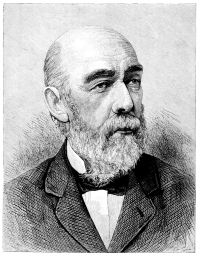 James Fergusson,
History of Indian and Eastern Architecture
James Fergusson,
History of Indian and Eastern Architecture
“ The plateau may be four or five miles east and west, and three miles north and south, most pleasingly diversified in surface, abounding in water, and fertile in the highest degree, as is too plainly evidenced by the rank vegetation, which is tearing the buildings of the city to pieces or obscuring them so that they can hardly be seen. ”
John Cecil Clay, Cupid's Cyclopedia
“ The view is so wonderful in the early Dawn that the most phlegmatic will become enthusiastic. This little plateau is known as the Plateau Platonic and is quite flat. In spite of its beauty and charm few travellers are satisfied to rest here long. ”
S. Baring-Gould, A Book of the Riviera
“ It rises precipitously to a plateau that is bald and desolate, but which is rent by ravines of great majesty and beauty, through which rush the waters from the snowy Alps. The chalk and the limestone are fissured, and allow the water flowing over their surface to filter down and issue forth in the valleys, rendering these fertile and green, whereas the plateaux are bare. The plateaux rise to the height of 3,000 or 4,500 feet. ”
 James Geikie,
Fragments of Earth Lore: Sketches & Addresses Geological and Geographical
James Geikie,
Fragments of Earth Lore: Sketches & Addresses Geological and Geographical
“ Should this sunken area be once more elevated en masse—pushed up bodily until it attains a height of several thousand feet—it will form a plateau, composed of a series of horizontal strata resting on the contorted and convoluted rocks of the ancient denuded mountain-chain. The surface of the plateau will now be traversed by streams and rivers, and in course of time it must become deeply cleft and furrowed, the ground between the various valleys rising into mountain-masses. Should the land remain stationary, its former fate shall again overtake it ”
 Carl Ritter,
Comparative geography
(1865)
Carl Ritter,
Comparative geography
(1865)
“ The great typical forms already considered, highland, plateau, mountain, lowland, terrace, and river, which all claim so large a share of attention in studying their physical characteristics, are no less worthy of careful attention, in consequence of their influence on human culture. ”
The New Student's Reference Work (1914)
“ In the latter case the rise to the higher slopes may be abrupt or gentle. If abrupt, the separation of plateau and mountain is distinct; if gentle, the one grades into the other. If a high plateau become narrow and long, and if it descend in all directions or on both sides, it may approach a mountain range in form. ”
 Archibald Geikie,
Landscape in History, and Other Essays
Archibald Geikie,
Landscape in History, and Other Essays
“ Though they may rise steeply out of the lower grounds, we have only to climb to their summit to find ourselves at the edge of a wide rolling platform, which may stretch for leagues without ever rising into any sharp prominence, or departing from the same monotony of moorland. Yet if we attempt to cross this seemingly continuous tableland, we find our progress barred by many valleys which, deep sunk beneath the general level, divide the plateau into separate blocks or ridges. ”
Carl Ritter,
Comparative geography
(1865)
“ In cases where a mountain chain rests upon a plateau, rising up in the very heart of it, its summits seem to be not high, although the basis, the true foot of the chain, may not be at the level of the plateau, but far lower, and such mountains may, therefore, be of great absolute height. ”
Russia, as Seen and Described by Famous Writers
“ A broad belt of hilly tracts—in every respect Alpine in character, and displaying the same variety of climate and organic life as Alpine tracts usually do—skirts the plateau-belt throughout its length on the north and north-west, forming an intermediate region between the plateaus and the plains. ”
Various, The Continental Monthly, Vol. 5…
“ But we should never end were we to characterize all the beautiful spots, the entrancing walks and drives to be found amid these cool and healthful slopes and plateaus. A difference of at least ten degrees is felt between the mountain resorts and the villages on the river bank, and the air is inexpressibly fresh and invigorating. ”
W. A. Hawley, Oriental Rugs, Antique and Modern
“ The general topographic features of this plateau include great stretches of comparatively level land, broad tracts from which there is no drainage to the sea, and sandy desert wastes. On almost every side it is bounded by mountain chains and is intersected by transverse ridges that lift still higher peaks where rests the perpetual snow. ”
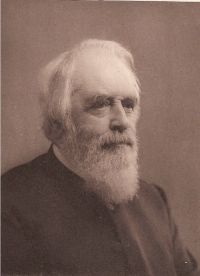 William Garden Blaikie,
The Personal Life of David Livingstone…
William Garden Blaikie,
The Personal Life of David Livingstone…
“ The country in many parts rises up to plateaus, slopes up to which are diversified by valleys lined with trees; or here and there rocky bluffs jut out; the plateaus themselves are open prairies covered with grass dotted over with trees, and watered by numerous streams. Nor are they absolutely flat, their surface is varied by picturesque undulations. Deep gorges and ravines leading down to the lower levels offer special beauties, and landscapes from the edges of the higher plateaus are in their way unequaled. ”
Japan: From the Japanese Government History
“ Valleys lying deep in the bosoms of the hills, plateaus along the margins of the great rivers, gentle slopes at the foot of mountain ranges, or stretches by the seashore, are the only comparatively level places to be seen. ”
“ During a long walk to-day, I stopped to sketch some singular hills, consisting of two, and sometimes of three, plateaus or terraces, each terrace being supported by a layer of rock, resting on a stratum of clay, or soft sandstone, which, in many places was worn out a foot or two beneath the rock, and making a distinct dark line in the landscape.Before sketching one of these hills, I ascended it and clambered up the rock, which varied from six to eight feet in height. Here, among some bushes, I saw a smoke arising, and on one of the shrubs hung an Indian's cap and his lance. ”
Lady Anne Blunt, A Pilgrimage to Nejd, the Cradle of the Arab Race…
“ The general character of the central plateaux, and of the peninsula, is that of vast uplands of gravel, as nearly destitute of vegetation as any in the world, and incapable of retaining water, even at a great depth. ”
James Fowler Rusling, Across America; Or, The Great West and the Pacific Coast
“ They constitute in reality a great system of plateaus or valleys, morticed as it were into the very heart of the mountains, from twenty-five to fifty miles long by half as many wide, disconnected by intervening ranges, yet all alike in their general features. ”
Carl Ritter,
Comparative geography
(1865)
“ The most elevated highlands, the loftiest plateaus, uniform in their aspect, immense in their extent, isolated, without trees, having the thin soil characteristic of steppes, and useful only for grazing, are the home of the primitive nomadic races. ”
“ Due west I see across the deep valley into my friend’s house, where it crowns the ridge, and then beyond to that vast plain which, in its miles and miles of forest-covered flatness, broken by great river-mouths, long vistas of deep lagoons, and a group of shining pools scattered over its surface, forms one of the strangest features in this matchless panorama of mountain, river and plain, sea, sky, and ever-changing cloud-effects. ”
William Ross King, Campaigning in Kaffirland; Or, Scenes and Adventures in the Kaffir War of 1851-52
“ The extensive range of country seen from this hill increased in beauty as we ascended the road which ran along the edge of the ravine, fringed with majestic euphorbias; in the distance deep blue mountains, and plains of red sand, then wavy bush-covered hills, and in the valley below us the winding river, and our rear guard, with their long line of waggons slowly advancing. ”
Thos. D. Murphy, Oregon, the Picturesque
“ From the summit, at an altitude of seventy-four hundred feet, we had a vast panorama of lake, forest, and mountain—but I might be accused of48 monotonous repetition were I to endeavor to describe even a few of the scenes that enchanted us. Every hilltop, every bend in the road, and every opening through the forests that lined our way presented views which, taken alone, might well delight the beholder for hours—only their frequent recurrence tended to make them almost commonplace to us. ”
Winthrop Packard, White Mountain Trails (1912)
“ Behind the boulder, terrace by terrace, the mountain rises to the top of Slide Peak, whence one may see the magic of the air lenses change this mingling of vivid colors to a blend which is a rich violet and loses its red as the distance grows greater till it ends on the far horizon in a pure blue that seems born of the very sky itself, and to sleep in its arms. ”
“ On the long, smooth, finely folded slopes of the main ridge, at a height of five to six thousand feet above the sea, they reach most perfect development and are marshaled to view in magnificent towering ranks, their colossal spires and domes and broad palmlike crowns, deep in the kind sky, rising above one another,—a multitude of giants in perfect health and beauty,—sun-fed mountaineers rejoicing in their strength, chanting with the winds, in accord with the falling waters. ”
 Charles Dudley Warner,
In the Levant
Charles Dudley Warner,
In the Levant
“ As we rise, we begin to get glimpses of the snowy peaks which make a sharp contrast with the ravishing view behind us,—the terraced gorges, the profound ravines, the vineyards, gardens, and orchards, the blue sea, and the white road winding back through all like a ribbon. As we look down, the limestone walls of the terraces are concealed, and all the white cliffs are hidden by the ample verdure. ”
 Henry David Thoreau,
A Week on the Concord and Merrimack Rivers
(1849)
Henry David Thoreau,
A Week on the Concord and Merrimack Rivers
(1849)
“ The most familiar sheet of water viewed from a new hill-top, yields a novel and unexpected pleasure. When we have travelled a few miles, we do not recognize the profiles even of the hills which overlook our native village, and perhaps no man is quite familiar with the horizon as seen from the hill nearest to his house, and can recall its outline distinctly when in the valley. We do not commonly know, beyond a short distance, which way the hills range which take in our houses and farms in their sweep. ”
Emilie Van Beil Jacobs, Where We Live
“ Some streets and roads are flat and level. Others slope like hills. Can you name a street which is level, and one that slants or slopes? Which road is easier to walk on? Why? Do you prefer the level or the sloping street when roller-skating? Why? Which is the best when you are coasting?You may have noticed that some of the fields in the park or in the country are nearly flat. Other fields lie on slopes or hills. We call the flat part of the land a plain, whether it is in the city or in the country. The sloping part of the land forms a hill. ”
Thomas Wright Blakiston, Transactions of the Asiatic Society of Japan (1874)
“ I refer to river terraces, those comparatively horizontal steps which are sometimes on one side and sometimes on the other, and occasionally on both, and which form a series of terraces ascending the valley; frequently varying as to difference of level, but often remarkably regular in their gradations. Many persons are under the impression that these terraces are the remains of former sea beaches; that to have formed them the sea must have covered whole continents, and reached near the tops of high mountains; that the land has either risen out of the sea, or that the sea has receded. ”
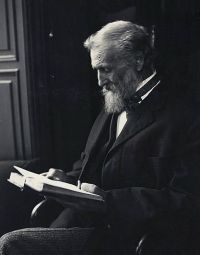 John Muir,
The Grand Cañon of the Colorado
John Muir,
The Grand Cañon of the Colorado
“ From terrace to terrace, climate to climate, down one creeps in sun and shade, through gorge and gully and grassy ravine, and, after a long scramble on foot, at last beneath the mighty cliffs one comes to the grand, roaring river. ”
 George Rawlinson,
History of Phoenicia
George Rawlinson,
History of Phoenicia
“ Below the upper line of bare and worn rock, streaked in places with snow, and seamed with torrent courses, a region is entered upon where the freshest and softest mountain herbage, the greenest foliage, and the most brilliant flowers alternate with deep dells, tremendous gorges, rocky ravines, and precipices a thousand feet high. ”
L. P. Gratacap, A Woman of the Ice Age
“ An intermediate region, between the palisaded or tenuous coast-line and these mysterious untenanted rents and time, wind and water worn ravines, revealed scenes more mild and radiant, wherein the apparel of nature was more colored, and where she bore those features of appropriate beauty where river and lake, forest land and flowered field unite in their abundance to appeal to the hearts of men. ”
C. C. Long, Home Geography for Primary Grades
“ All around are illustrations of lake and river, upland and lowland, slope and valley. These forms must be actually observed by the pupil, mental pictures obtained, in order that he may be enabled to build up in his mind other mental pictures of similar unseen forms. The hill that he climbs each day may, by an appeal to his imagination, represent to him the lofty Andes or the Alps. From the meadow, or the bit of level land near the door, may be developed a notion of plain and prairie. ”
