Summary

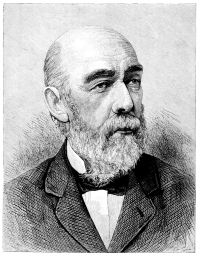
Portrait of James Fergusson James Fergusson History of Indian and Eastern Architecture

In every school their history and their arts are taught, memorials of their greatness meet us at every turn through life, and their thoughts and aspirations become, as it were, part of ourselves. So, too, with the Middle Ages: their religion is our religion; their architecture our architecture, and their history fades so insensibly into our own, that we can draw no line of demarcation that would separate us from them. How different is the state of feeling, when from this familiar home we turn to such a country as India.
Source: Gutenberg

Portrait of James Fergusson James Fergusson History of Indian and Eastern Architecture

What, however, really renders India so interesting as an object of study is that it is now a living entity. Greece and Rome are dead and have passed away, and we are living so completely in the midst of modern Europe, that we cannot get outside to contemplate it as a whole. But India is a complete cosmos in itself; bounded on the north by the Himalayas, on the south by the sea, on the east by impenetrable jungle, and only on the west having one door of communication, across the Indus, open to the other world.
Source: Gutenberg

Portrait of James Fergusson James Fergusson History of Indian and Eastern Architecture

As an artistic design, nothing can be worse. The gateways, irregularly spaced in a great blank wall, lose half their dignity from their positions; and the bathos of their decreasing in size and elaboration, as they approach the sanctuary, is a mistake which nothing can redeem. We may admire beauty of detail, and be astonished at the elaboration and evidence of labour, if they are found in such a temple as this, but as an architectural design it is altogether detestable.
Source: Gutenberg

Get perspective with Kwize: daily news enlightened by great literature