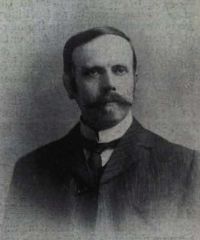
Ernest Binfield Havell

Ernest Binfield Havell

Summary

Portrait of Ernest Binfield Havell Ernest Binfield Havell A Handbook of Indian Art (1920)

The Hindu artist, on the other hand, was both a court chronicler and a religious teacher. Vaishnava and Saiva legends, in which the gods descended to earth, lived the life of the people, and performed wondrous miracles, were their favourite themes, treated with all the reverence of the earnest devotee. But though the Hindu painter imbues such subjects with a sensitiveness and artistic charm which are peculiarly his own, the appeal which he makes to the Indian mind is not purely æsthetic. His is no art for art's sake: for the Hindu draws no distinctions between what is sacred and profane.
Source: Wikisource

Portrait of Ernest Binfield Havell Ernest Binfield Havell A Handbook of Indian Art (1920)

The most sacred places both of Buddhist and Hindu India are those where a mountain torrent pours over a scarp of rock curved like the crescent moon on Siva's brow, reminding the pious pilgrim of the holy Ganges as she descends into the plains of India at Hardwar over Himālayan wooded precipices—the tangled locks of the Great Yogi of Kailāsa, who represents the Brahman ideal of the Enlightened One.
Source: Wikisource

Portrait of Ernest Binfield Havell Ernest Binfield Havell A Handbook of Indian Art (1920)

Image-worship on the whole, with all its elaborate temple ritual, was the almost inevitable concomitant of the bhakti-marga, a response to the human impulse which craves for the sight of the object of hero-worship, whether it be human or divine. Only the philosopher, or those who are under the compulsion of a stern hierarchical decree, can resist the craving. Vedic religion tried to satisfy it by using the sun and moon and nature elements as its symbols, but the Rishis who taught divine wisdom were worshipped as equal to or sometimes even greater than the gods.
Source: Wikisource

Get perspective with Kwize: daily news enlightened by great literature