Summary

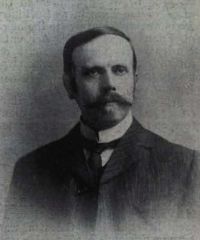
Portrait of E. B. Havell E. B. Havell A Handbook to Agra and the Taj…

The beauty of the Taj, as in all great art, lies in its simplicity. One wonders that so much beauty can come from so little effort. Yet nothing is wanting, nothing in excess; one cannot alter this and that and say that it is better.
The garden, as originally planned, was an integral part of one great design. The solemn rows of cypresses were planted so as to help out the lines of the architecture; the flowering trees and flower-beds completed the harmony with a splendid glow of colour.
Source: Gutenberg

Portrait of E. B. Havell E. B. Havell A Handbook to Agra and the Taj…

There is a subtle rhythm in the placing of the three domes over the seven arches of the mosque, which saves the whole design from monotony, while the marvellous grace of the contours, which is so characteristic of the finest of Shah Jahan's buildings, makes each dome grow up from the roof like a flower-bud on the point of unfolding. The octagonal pavilions at the four corners of the mosque, and the dainty little kiosques placed as decoration over the arches and over the gateways of the courtyard, echo the harmonies of the larger constructive details, and give completeness to the composition.
Source: Gutenberg

Portrait of E. B. Havell E. B. Havell A Handbook to Agra and the Taj…

The palace called after Jahangir, the Jahangiri Mahal, is in many respects the most remarkable building of its class in India. Nothing could be more striking than the contrast between the extreme elegance, bordering on effeminacy, of the marble pavilions of Shah Jahan's palaces, and the robust, virile, yet highly imaginative architecture of this palace of Akbar; for though it bears Jahangir's name there cannot be much doubt that it was planned, and partially, if not completely, carried out by Akbar with the same architects who built Fatehpur Sikri.
Source: Gutenberg

Get perspective with Kwize: daily news enlightened by great literature