Aurangzeb

Definition and stakes

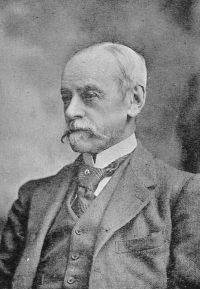
M. Longworth Dames,  Folk-Lore (1893)

“ Aurangzeb directed his troops to surround the palace on all four sides. He came to meet his father, bringing with him some fetters of gold, and he said to his father: "Put these fetters on your feet respectfully, or I will have you killed." Shah-Jehan took the fetters and put them on his feet, and Aurangzeb kept him as a prisoner. He had the royal kettle-drums beaten, and made a proclamation that Shah-Jehan was a prisoner, and Aurangzeb was king of the land. So Aurangzeb became king, and all the royal army and possessions came into his hands. ”
Source: Wikisource

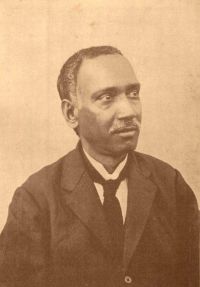
Various,  Encyclopaedia Britannica, 11th Edition…

“ The second son, Shuja, governor of Bengal, a dissolute and sensual prince, was dissatisfied, and raised an army to dispute the throne with Dara. The keen eye of Aurangzeb saw in this conjuncture of events a favourable opportunity for realising his own ambitious schemes. His religious exercises and temperate habits gave him, in popular estimation, a great superiority over his brothers, but he was too politic to put forward his claims openly. ”
Source: Gutenberg

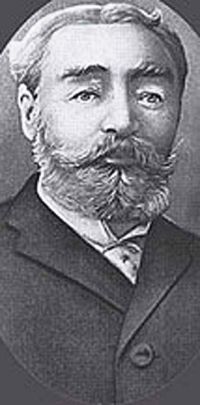
Portrait of Max Arthur Macauliffe Max Arthur Macauliffe,  The Sikh Religion (1909)

“ We shall further on see that it was Aurangzeb who put Guru Teg Bahadur, the ninth Guru of the Sikhs, to death in Dihli. According to the author of the Dabistan the emperor ordered the Guru's body to be quartered and the parts thereof to be suspended at the four gates of the city. [9] Aurangzeb also persecuted Guru Gobind Singh, the tenth and last Guru of the Sikhs, and forced him to fly from the Panjab; and it was a result of the same monarch's tyranny that Guru Gobind Singh's four sons lost their lives and that none of his descendants survived. ”
Source: Wikisource

Get perspective with Kwize: daily news enlightened by great literature