“ The hornet, one of my first favourites, has, to our minds, nothing mysterious like our glow-worm, and nothing serpentine or supernatural about him, but he is a nobler, more powerful and splendid creature than any dragon-fly. I care not to look at a vulgar wasp nor at any diurnal insect, however fine, when he is by, or his loud, formidable buzzing hum is heard. As he comes out of the oak-tree shade and goes {129} swinging by in his shining golden-red armature, he is like a being from some other hotter, richer land, thousands of miles away from our cold, white cliffs and grey seas. ”
Hornet
Definition and stakes
The hornet, a sturdy wasp-like insect known for its powerful sting and complex social behaviors, has fascinated writers through its dual character as both a symbol of natural magnificence and a bringer of danger. Authors such as W. H. Hudson praise its "noble" presence, comparing its golden-red color to a being from a faraway, exotic place, while Edward S. Ellis anchors the hornet in concrete reality, describing its nest as a "gray, enormous" structure akin to a "watermelon.
" W. Hamilton Gibson emphasizes its solitary lifestyle and careful nest construction, drawing comparisons to the wren’s flexibility. Meanwhile, Jeremiah Curtin places the hornet within folklore, where it transforms into a mystical cornerstone of life and death. These differing viewpoints—from scientific study to mythical representation—portray the hornet as a multifaceted symbol of nature’s intricacy, revered for its strength yet dreaded for its threat.
Quotes about “hornet”
Edward S. Ellis, The Jungle Fugitives — That Hornet's Nest
“ There hung the hornet's nest from the lower limb of an oak, so near the ground that it could be easily reached by one of the larger boys. It was gray in color and of enormous size. It resembled in shape an overgrown football or watermelon, pendant by one end. In some portions faint ridges were visible, like the prints left by tiny wavelets on the sand. Near the base was a circular opening about as large as an old-fashioned penny. This was the door of the hornets' residence, through which all the occupants came and went. ”
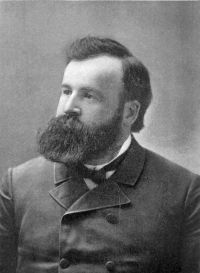 W. Hamilton Gibson,
My Studio Neighbors
W. Hamilton Gibson,
My Studio Neighbors
“ This interesting little hornet is a common summer species, known as the solitary hornet—one of them—Odynerus flavipes. The insect is about a half-inch in length, and to the careless observer might suggest a yellow-jacket, though the yellow is here confined to two triangular spots on the front of the thorax and three bands upon the abdomen.Like the wren among birds, it is fond of building in holes, and will generally obtain them ready-made if possible. Burroughs has said of the wren that it "will build in anything that has a hole in it, from an old boot to a bombshell." ”

Related terms
Authors who wrote about “hornet”
W. Hamilton GibsonJosh BillingsEdward Saunders Algernon Blackwood
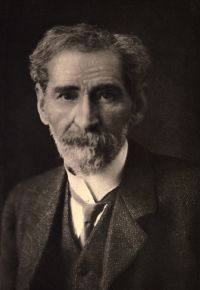 W. H. Hudson
 Jean-Henri FabreBaron Edward Bulwer Lytton Lytton
 Jeremiah Curtin
 John BurroughsJ. G. WoodJames RennieEdmund SelousEdward S. Ellis
 Florence HolbrookTheodore Wood
 Hallie Erminie Rives
 Samuel Scoville, Jr.Winthrop PackardJonathan Ceredig Davies
 Frank Belknap Long