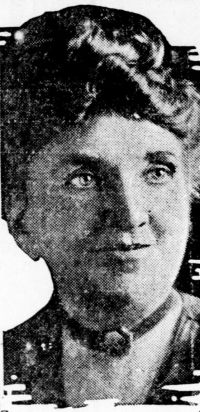
Florence Holbrook

Florence Holbrook

Summary

Portrait of Florence Holbrook Florence Holbrook The Book of Nature Myths

The magician bent to lift a stone, and an arrow flew from the warrior's bow. It buzzed and stung like a wasp. It came so close to the crest of feathers that the magician trembled with terror. Before he could run, another arrow came, and this one struck him right on his crest. His heart grew cold with fear. "Death has struck me," he cried.
"Your cruel life is over," said the warrior. "People shall no longer fear your fatal breath." Then he said to the woodpecker, "Little bird, you have been a good friend to me, and I will do all that I can for you."
Source: Gutenberg

Portrait of Florence Holbrook Florence Holbrook The Book of Nature Myths

In the morning the men of the tribe went to the mountain top in search of Moneta and her sons. They were nowhere to be seen, but where the tears of the lonely mother had fallen, there was a brightness that had never been seen before. The tears were shining in the sunlight as if each one of them was itself a little sun. Indeed, they were no longer tears, but diamonds.
The dearest thing in all the world is the tear of mother-love, and that is why the tears were made into diamonds, the stones that are brightest and clearest of all the stones on the earth.
Source: Gutenberg

Portrait of Florence Holbrook Florence Holbrook The Book of Nature Myths

One night the moon looked down from the sky upon the people on the earth and said to herself, "How sorrowful they look! I wish I knew what troubles them. The stars and I are never sad, and I do not see why men should be troubled." She listened closely, and she heard the people say, "How happy we should be if death never came to us. Death is always before us."
The path of the moon lies across the sky, and she could not leave it to go to the earth, but she called the white rabbit and said, "Rabbit, should you be afraid to go down to the earth?"
Source: Gutenberg

Get perspective with Kwize: daily news enlightened by great literature