“ Sometimes I fancied it came from the bushes on our left, and then again from the clumps on our right. More often it hovered directly overhead like the whirring of wings. It was really everywhere at once, behind, in front, at our sides and over our heads, completely surrounding us. The sound really defies description. But nothing within my knowledge is like that ceaseless muffled humming rising off the deserted world of swamps and willows.We sat smoking in comparative silence, the strain growing every minute greater. ”
Humming
Definition and stakes
Humming, a term encompassing both a low-pitched sound and the rapid wing vibrations of hummingbirds, has been examined by naturalists and writers to evoke the delicate interplay between nature’s mechanics and sensory experience. Authors like John Seely Hart observed the birds’ darting movements, while Charles Waterton noted their reliance on nectar and insects, emphasizing their ecological role.
Louise Manly portrayed them as floral guardians, and others, such as William Swainson, admired their iridescent plumage and ethereal presence. The theme connects the tangible—wingbeats, blossoms—and the intangible—a hum that resists precise description, uniting observers in awe of nature’s intricate design.
Quotes about “humming”
 John Seely Hart,
Humming-birds
(1852)
John Seely Hart,
Humming-birds
(1852)
“ Often of a summer’s evening have we watched the humming-birds flitting about the meadows, passing from one tuft of clover to another, then resting a moment on a tall spear of timothy grass, then off again to fresh clover, scarcely touching the other flowers, and continuing frequently in the same field until the very latest twilight. ”
F. W. Burbidge, The Gardens of the Sun
“ As the sunbeams glitter on their bodies, they sparkle like so many precious stones, and exhibit at every turn a variety of bright and evanescent hues. As they hover around the honey-laden blossoms, they vibrate their tiny pinions so rapidly, as to cause a slight whirring sound, but not so loud as the humming noise produced by the true humming birds. Occasionally they may be seen clinging by their feet and tail busily engaged in rifling the blossoms of the trees. ”
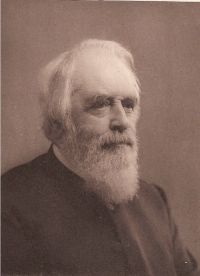 William Garden Blaikie,
The Personal Life of David Livingstone…
William Garden Blaikie,
The Personal Life of David Livingstone…
“ The woods present an aspect of strangeness, for everywhere the eye meets the foreign-looking tree from which the bitter aloes is extracted, popping up its head among the mimosa bushes and stunted acacias. Beautiful humming-birds fly about in great numbers, sucking the nectar from the flowers, which are in great abundance and very beautiful. ”
Louise Manly, Southern Literature From 1579-1895
“ No sooner has the returning sun again introduced the vernal season, and caused millions of plants to expand their leaves and blossoms to his genial beams, than the little Humming-Bird is seen advancing on fairy wings, carefully visiting every opening flower-cup, and, like a curious florist, removing from each the injurious insects that otherwise would ere long cause their beauteous petals to droop and decay. ”
Various, Vick's Illustrated Monthly Magazine…
“ When on a long journey, as during migration, they pass through the air in long undulations, raising themselves to a considerable height and then falling so as to form a curve. When feeding on a flower they keep themselves poised in one position as steadily as if suspended on a bough—making a humming sound with the rapid motion of their wings. ”
Various, Popular Science Monthly (1891)
“ IF we would hear the children of the sun, we must shut the door of our prosaic room behind us, and hurry out before the coming on of dusk to the pond, into the green field, on the moor, to the edge of the wood where life in the double form of animal and plant unfolds itself without restraint. From up in the air, from plants, flowers, grass, holes in the ground, and the moisture of puddles, come a chirping and rattling, a humming and buzzing, a piping and singing of the host of winged and wingless creeping and hopping insects. ”
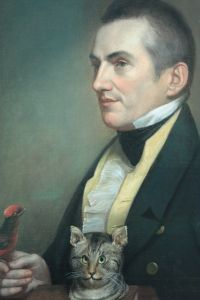 Charles Waterton,
Wanderings in South America
Charles Waterton,
Wanderings in South America
“ As you advance towards the mountains of Demerara other species of humming- birds present themselves before you. It seems to be an erroneous opinion that the humming-bird lives entirely on honey-dew. Almost every flower of the tropical climates contains insects of one kind or other. Now the humming-bird is most busy about the flowers an hour or two after sunrise and after a shower of rain, and it is just at this time that the insects come out to the edge of the flower in order that the sun's rays may dry the nocturnal dew and rain which they have received. ”
by William Swainson, Zoological Illustrations — Vol II. Pl… (1820)
“ Like the resplendent jewels of the earth, the Humming Birds are the living gems of the air. United to the most delicate form, these fairies of creation have the dazzling effulgence of every tint that sparkles from the ruby, the topaz, the sapphire, and the emerald, lavished on their plumage; they seem created but for our admiration, to sport in the ardent beams of a tropical sun, and to feast on the nectar of the sweetest blossoms; and, like sparks of many coloured fire, they shoot from flower to flower, exulting in their little life of brightness and pleasure. ”
Charles Waterton,
Wanderings in South America
“ The trees on the river's bank are particularly exposed to violent gusts of wind, and while I have been sitting in the canoe and looking on, I have seen the slender branch of the tree which held the humming-bird's nest so violently shaken that the bottom of the inside of the nest has appeared, and had there been nothing at the rim to stop the eggs they must inevitably have been jerked out into the water. I suspect the humming-bird never lays more than two eggs. ”
 John Randolph Spears,
The Gold Diggings of Cape Horn…
John Randolph Spears,
The Gold Diggings of Cape Horn…
“ It does not seem to be a region of flowers and honey, as we commonly expect a humming bird's resort to be, though it abounds in insects such as humming birds like, but both flowers and honey are there, and so, too, are several kinds of humming birds in the summer season. ”
 Alfred Edmund Brehm,
Cassell's book of birds; vol. 4
Alfred Edmund Brehm,
Cassell's book of birds; vol. 4
“ All these active exertions, which often continue for half an hour at a time, are accompanied by a most strange humming sound, respecting which naturalists are not yet agreed, some considering it to be produced by the rapid action of the powerful pinions, while others have supposed it to be occasioned by the long tail-feathers. ”
Edith S. Clements, Flowers of Mountain and Plain
“ The plants are widely distributed on plains, foothills and open places in the mountains at 6000-10000 ft. and they bloom throughout the summer. The humming-bird is a regular visitor of this flower for the sake of its nectar. ”
Catharine Parr Strickland Traill, In the Forest; Or, Pictures of Life and Scenery in the Woods of Canada…
“ The humming sound is produced by the wing, in the act of keeping itself balanced while feeding in this position. They resemble the hawk-moth, which also keeps up a constant vibratory motion with its wings. ”
Various, The Atlantic Monthly, Volume 02…
“ The warm and humming air is filled with insect sounds, ranging from the murmur of invisible gnats and midges, to the impetuous whirring of the great Libellulae, large almost as swallows, and hawking high in air for their food. Swift butterflies glance by, moths flutter, flies buzz, grasshoppers and katydids pipe their shrill notes, sharp as the edges of the sunbeams. Busy bees go humming past, straight as arrows, express-freight-trains from one blossoming copse to another. ”
 Rabindranath Tagore,
The Post Office
Rabindranath Tagore,
The Post Office
“ If only they let me, I'll go right into the dense forest where you can't find your way. And where the honey-sipping hummingbird rocks himself on the end of the thinnest branch, I will flower out as a champa. ”
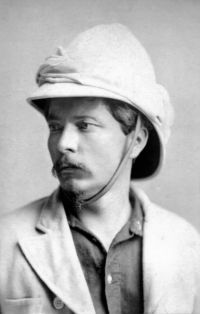 Henry M. Stanley,
In Darkest Africa, Vol. 2; or, The Quest…
Henry M. Stanley,
In Darkest Africa, Vol. 2; or, The Quest…
“ Where the humus is deep we find a tall and stately forest, with an impervious underwood of young trees, bound together and sometimes altogether hidden by countless climbing vines and robust plants; where the humus is thinner, as near the foot of the range, dense crops of cane-grass, from ten to fifteen feet in height, flourish luxuriant and impenetrable. Every tree-stem has its green robe of soft moss, dripping with dew, and each tree-fern or horizontal branch has its orchids, or broad elephant-eared plant. ”
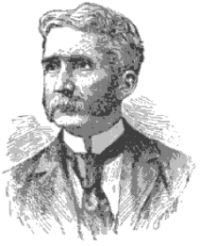 James Baldwin,
The Sampo: A Wonder Tale of the Old North
James Baldwin,
The Sampo: A Wonder Tale of the Old North
“ Then, at length, when all were peacefully feeding, he sat down upon a grassy hummock and looked around him, sad, lonely, vindictive. The autumn sun beamed hot upon his head, and the fresh sea breeze fanned his face and played in his yellow hair. [263] The grasshoppers chirped at his feet and the crows scolded him harshly from the treetops. ”
 Adeline Knapp,
This Then is Upland Pastures
Adeline Knapp,
This Then is Upland Pastures
“ Only the last treasured drops chase one another along the leaves and down the stems of the plants. Our picnickers are venturing forth The wet blades of grass sparkle in the sunlight. Over on the bank a ruby-throated hummer is flying back and forth across a tiny stream that patters and splashes against a rock. ”
Thomas Anderson, Elements of Agricultural Chemistry
“ On examining the table it becomes manifest, that as far as its mechanical properties are concerned, humus is a substance of the very highest importance, for it confers on the soil, in a high degree, the power of absorbing and retaining water, diminishes its tenacity and permits its being more easily worked, adds to its hygrometric power and property of absorbing oxygen from the air, and finally, from its dark colour, causes the more rapid absorption of heat from the sun's rays. ”
George Vivian Poore, The Dwelling House
“ This stronger growth, by chemical action and physical force, works further into the rock, on which the soaking rains and rending frosts have an increasing effect, and thus, partly by the disruption of the inorganic rock, and partly by the increase in ever-growing quantities of vegetable decay, the humus rises, as it were, 'on stepping-stones of its dead self' until it is able to afford footing and nourishment for the stately forest tree, and its fertility finally becomes sufficient to attract the attention of the husbandman. ”
 Fergus Hume,
The Harlequin Opal: A Romance. Vol…
Fergus Hume,
The Harlequin Opal: A Romance. Vol…
“ Pools of water sparkled here and there; babbling brooks winding capriciously in and out in wayward circles; at times, the sudden gleam of a waterfall, threading downwards in white streaks from a giant rock; and again, the miasma of a swamp, black and evil-looking, in whose waters rolled the trunks of fallen trees. Everywhere flowers bursting into bloom; everywhere new leaves swelling into being; everywhere the exuberant life of a tropic climate. ”
 Marion Harland,
When Grandmamma Was New: The Story of a Virginia Childhood
Marion Harland,
When Grandmamma Was New: The Story of a Virginia Childhood
“ I take a great deal of pains to keep a succession of plants in flower, for, after all, hive-honey isn't quite as pure and delicate after it has gone through the bee's body as when the hummer sips it fresh from the flower-cup. You must come over next winter, Molly Belle, and bring the little lady to see my nasturtiums, and hyacinths, and morning-glories. Roses and cape-jessamines, and the like are of no use to us. Our flowers must be shaped like wine-glasses, with a drop of honey-dew in the bottom, to please us perfectly. The hummers and I understand that. ”
Various, The Atlantic Monthly, Volume 16…
“ Nothing loth, and gayly, Flor plunged after.The hummocks on which they went were light, spongy masses of greenery. Their footprints filled at once behind them with clear dark water; there were glistening little pools everywhere about them; the ground was so covered with mats of brilliant blossoms that what appeared solid for the foot was oftenest the most treacherous place of all; and at last they stayed to take breath, planting themselves on the trunk of a fallen tree so twisted and twined with variegated vines and flowers, and deadly, damp fungi, that it was like some gorgeous daïs-seat. ”
Bernice Brilmayer, All about miniature plants and gardens indoors and out (1963)
“ Woods plants grow naturally in soil so rich in humus that it will hold many times its weight [215] in water. Season after season the trees drop leaves, needles, twigs, and branches that decay and maintain the high level of humus, which contains micro-organisms that help sustain the plants. In our area and in most other woodsy sections, forest soil is very acid. But the loam in a cleared area adjoining the forest may contain little or no humus, and may not be nearly acid enough for the native plants growing a hundred feet away. ”
Henry M. Stanley,
My Kalulu, Prince, King and Slave…
“ Steadily they advanced, crouching close beneath the grass-heads, hiding behind the numberless hummocks which rose in their front at intervals, behind the tall mysterious palms whose fan-like leaves kept up an unceasing rustle, and waving as the breeze swayed them up and down, and blew them with a startling noise against the tall trunks. ”
Harry Roberts, The Book of Old-Fashioned Flowers
“ In a soil which is nearly all sand, or in one which is nearly all clay, few flowers will thrive, but in what is called a loamy soil—that is, one in which clay and sand are nearly equal—nearly all plants will grow and prosper if other conditions be favourable. The presence of humus in the soil is important in many ways, for not only does it contain much that is essential food for plant growth, but also it assists the earth in retaining that moisture without which life is impossible. ”
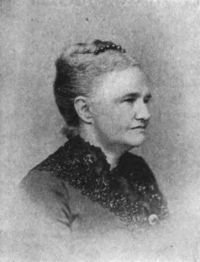 Olive Thorne Miller,
Upon The Tree-Tops
Olive Thorne Miller,
Upon The Tree-Tops
“ One morning, attracted by the shimmering floor of jewel which Lake Champlain presented under the morning sun, I sat looking out over my neighbor's cornfield, where goldfinch babies were filling the air with their quaint little two-note cries, absorbed in the lovely view, when suddenly I heard a whir of wings and looked up to see a hummer flying about near the nest where madam was sitting. ”
Ontario. Department of Education, Ontario Teachers' Manuals: Nature Study
“ Most of our farm land consists of these four soils mixed in various proportions, and it gets its name from the one that preponderates. Thus we have our sandy, gravelly, or clay loams. Humus is likely to be present in all fields, because vegetable matter grows, to some extent, everywhere; but freshly broken land, reclaimed swamps, and prairie lands are likely to be especially well supplied. The great value of humus in the soil will appear in later studies. ”
 Thomas Wallace Knox,
The Boy Travellers on the Congo
Thomas Wallace Knox,
The Boy Travellers on the Congo
“ The soil on which this thrives is a dark-brown vegetable humus, the débris of ages of rotting leaves and fallen branches, a very forcing-bed of vegetable life, which, constantly fed with moisture, illustrates in an astonishing degree the prolific power of the warm, moist shades of the tropics. ”
“ A few sticks and branches and tufts of grass are already fast in the embrace of the powerful stems and green leaves, while at the end that faces the stream the water-driven sand has risen at the obstacle, and has shyly protruded a small round hump or two above the ripples. ”
Steve Solomon, Organic Gardener's Composting
“ Probably without realizing it, many non-gardeners have already scuffed up that thin layer of nearly pure humus forming naturally on the forest floor where leaves and needles contact the soil. Most Americans would be repelled by many of the substances that decompose into humus. But, fastidious as we tend to be, most would not be offended to barehandedly cradle a scoop of humus, raise it to the nose, and take an enjoyable sniff. There seems to be something built into the most primary nature of humans that likes humus. ”
John Christopher Augustus Voelcker, 1911 Encyclopædia Britannica (1911)
“ Of it, farm-yard manure is to a large extent composed, and many “organic manures,” as they are termed, contain it in quantity. Dead leaves, decayed vegetation, the stubble of cereal crops and many waste materials add humus to the land, and this humus, by exposure to the air, is always undergoing further changes in the soil, opening it out, distributing carbonic acid through it, and supplying it, in its further decomposition, with nitrogen. The principal effects of humus on the soil are of a physical character, and it exercises particular benefit through its power of retaining moisture. ”
George P. Marsh, The Earth as Modified by Human Action
“ The surface of a forest, in its natural condition, can never pour forth such deluges of water as flow from cultivated soil. Humus, or vegetable mould, is capable of absorbing almost twice its own weight of water. The soil in a forest of deciduous foliage is composed of humus, more or less unmixed, to the depth of several inches, sometimes even of feet, and this stratum is usually able to imbibe all the water possibly resulting from the snow which at any one time covers, or the rain which in any one shower falls upon it. ”
Jane Eayre Fryer, The Mary Frances Garden Book; or…
“ They drink it through their roots, you know.Not only does humus help with the matter of food, but it holds moisture in the soil, and in some almost magic way makes other plant food into a form which the plant can use.Of course, you wish to give your plants the best kind of food, and of course you will want humus.But suppose you cannot readily get stable manure, or leaf mold from the woods, why then, you can make humus. Every day the very things you need to make humus may be going to waste. To Make a Compost HeapSave all the vegetable tops, leaves, grass, etc. ”
