Sensory experience

Definition and stakes

William Henry Pyle The Science of Human Nature: A Psychology for Beginners

By primary, sensory experience is meant our immediate, direct knowledge of any aspect of the world. In this field of our conscious life, we are entirely dependent upon sense organs and nerves and brain. Injuries to the eyes destroying their power to perform their ordinary work, or injuries to the optic nerve or to the visual center in the brain, make it impossible for us to see.
These facts are so self-evident that it seems useless to state them. One has but to hold his hands before his eyes to convince himself that the mind sees by means of eyes, which are physical sense organs.
Source: Gutenberg

Portrait of Herbert George Wells Herbert George Wells The Works of H. G. Wells (1924)

They will know that in the real world of sensory experience, will is free, just as new sprung grass is green, wood hard, ice cold, and toothache painful. In the abstract world of reasoning science there is no green, no colour at all, but certain lengths of vibration; no hardness, but a certain reaction of molecules; no cold and no pain, but certain molecular consequences in the nerves that reach the misinterpreting mind.
Source: Wikisource

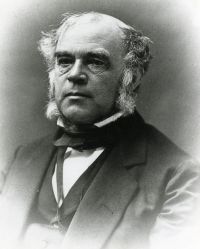
Portrait of John William Draper John William Draper History of the Conflict Between Religion and Science… (1874)

Those that exist in the sensorium in like manner do not attract our attention so long as the sensory organs are in vigorous operation, and occupied in bringing new impressions in. But, when those organs become weary or dull, or when we experience hours of great anxiety, or are in twilight reveries, or are asleep, the latent apparitions have their vividness increased by the contrast, and obtrude themselves on the mind.
Source: Wikisource

Get perspective with Kwize: daily news enlightened by great literature