Summary

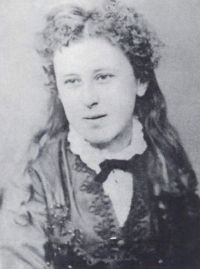
Portrait of Vernon Lee Vernon Lee The Beautiful: An Introduction to Psychological Aesthetics

These are what everyday life affords but rarely to our longings. And this is what, thanks to this strange process of Empathy, a few inches of painted canvas, will sometimes allow us to realise completely and uninterruptedly. And it is no poetical metaphor or metaphysical figment, but mere psychological fact, to say that if the interlacing circles and pentacles of a Byzantine floor-pattern absorb us in satisfied contemplation, this is because the modes of being which we are obliged to invest them with are such as we vainly seek, or experience only to lose, in our scattered or hustled existence.
Source: Gutenberg

Portrait of Vernon Lee Vernon Lee The Beautiful: An Introduction to Psychological Aesthetics

The mountain is so far off that its detail is entirely lost; all we can see is a narrow and pointed cone, perhaps a little toppling to one side, of uniform hyacinth blue detaching itself from the clear evening sky, into which, from the paler misty blue of the plain, it rises, a mere bodiless shape. It rises. There is at present no doubt about its rising. It rises and keeps on rising, never stopping unless we stop looking at it. It rises and never has risen.
Source: Gutenberg

Portrait of Vernon Lee Vernon Lee The Beautiful: An Introduction to Psychological Aesthetics

The shape of the things we make and use offers itself for contemplation in those interludes of inattention which are half of the rythm of all healthful work. And it is this normal rythm of attention swinging from effort to ease, which explains how art has come to be a part of life, how mere aspects have acquired for our feelings an importance rivalling that of things.
Source: Gutenberg

Get perspective with Kwize: daily news enlightened by great literature