Aesthetic appreciation

Definition and stakes

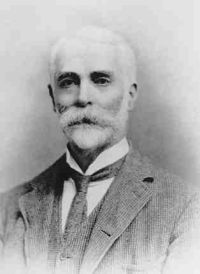
De Witt H. Parker The Principles of Aesthetics

I may take pleasure in the vision of purpose well embodied in an object which another man possesses, and my admiration will be as disinterested as my appreciation of a statue. And even if I do make use of the object, I may still get an aesthetic experience out of it, whenever I pause and survey it, delighting in it as an adequate expression of its purpose and my own joy in using it. Then beauty supervenes upon mere utility, and a value for contemplation grows out of and, for the moment, supplants a value in use.
Source: Gutenberg

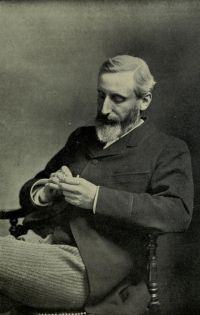
Portrait of Grant Allen Grant Allen Popular Science Monthly (1881)

What is the center from which the widening circle of æsthetic sensibility takes its departure? In other words, what is the primitive source of the appreciation of beauty? Putting the question into a concrete form, what objects did man, as a whole, and does each man in particular, first find beautiful? If we look at a cultivated European, we see that he derives great æsthetic enjoyment from contemplating the sunset clouds, the green trees, the lakes, rivers, and waterfalls, the flowers, birds, and insects around him.
Source: Wikisource

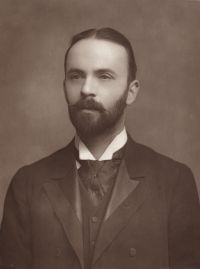
Portrait of Vernon Lee Vernon Lee The Beautiful: An Introduction to Psychological Aesthetics

The deduction from these two converging statements is that, contrary to the a-priori theories making aesthetic contemplation an exception, a kind of bank holiday, to daily life, it is in reality one-half of daily life's natural and healthy rythm. That the real state of affairs, as revealed by psychological experiment and observation, should have escaped the notice of so many aestheticians, is probably due to their theories starting from artistic production rather than from aesthetic appreciation, without which art would after all probably never have come into existence.
Source: Gutenberg

Get perspective with Kwize: daily news enlightened by great literature