Summary

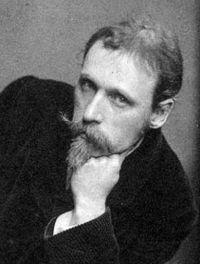
Portrait of Walter Crane Walter Crane William Morris to Whistler

Certain things are assumed to be excellent, and then excellence is to be striven for in them and in them alone. But how often in life—in the history of art and humanity has it been that some great artist and inventor has taken some poor despised thing and made it excellent. Think of the wealth of beauty and invention which makes alive the smallest fragment of Gothic carving, and invests every cup and bowl, every bench end and knife-handle of the middle ages with beauty and romance.
Source: Gutenberg

Portrait of Walter Crane Walter Crane William Morris to Whistler

To paint great masterpieces and make fame and fortune is an ambition given to few to realize. The masterpiece at all events must be a labour of love, whether fame or fortune follow or not, and in the history of art it has happened over and over again that masterpieces have not been instantly recognized, and the master usually has had to wait for recognition and reward—if that can be said in any real sense to lie outside the accomplishment of his work. Good art, like virtue, is its own reward.
Source: Gutenberg

Portrait of Walter Crane Walter Crane William Morris to Whistler

Every new and sincere movement in art has been in direct protest and conflict with the prevailing conditions, and has measured its progress by its degree of success in counteracting them, and, in some sense, producing new conditions. The remarkable revival of the handicrafts, or arts and crafts movement, of late years may be quoted as an instance; but it is a world within a world; a minority producing for a minority; although the movement has done valuable work even as a protest, and has raised the banner of handwork and its beauty in an age of machine industry.
Source: Gutenberg

Get perspective with Kwize: daily news enlightened by great literature