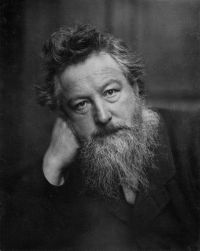
William Morris

Definition and stakes

Various,  Popular Science Monthly (1903)

“ I have heard the late William Morris speak contemptuously of science, and in his admirable lecture on 'The Aims of Art' (1887) he says that if socialism does not prevail 'science will grow more and more one-sided, more incomplete, more wordy and useless, till at last she will pile herself up into such a mass of superstition, that beside it the theologies of old time will seem mere reason and enlightenment.' Yet Morris was himself an admirable observer of nature, and possessed many of the best qualities of a naturalist. ”
Source: Wikisource

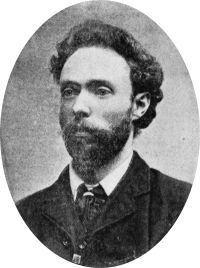
Portrait of John Bruce Glasier John Bruce Glasier,  William Morris and the Early Days of the Socialist Movement (1921)

“ Morris had the disability, if it be such, of being incapable of assuming any character or views other than his own. He could never have been an actor; he had no histrionic talent. In his speech, his writings, his art, in all things that he did, he was always William Morris. There never perhaps was an artist or writer whose work was invariably so unmistakably his own. From but a sentence or two of any writing of his, or the smallest scrap of one of his designs, his authorship can be discovered at once. ”
Source: Wikisource

Progress and History

“ We know at last that there is a connexion between the art of man and his intellect and his conscience. It was because William Morris saw that connexion that he, from being a pure artist, became a socialist and spoke at street corners. Such a change, such a waste and perversion as it seemed to many, would have been impossible in any former age. It was possible and inevitable, it was a natural process for Morris in the nineteenth century, because he was determined to exercise his will upon art, just as men in the past had exercised their will upon religion or politics ”
Source: Gutenberg

Get perspective with Kwize: daily news enlightened by great literature