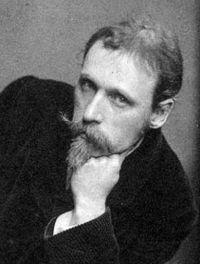
Walter Crane

Walter Crane

Summary

Portrait of Walter Crane Walter Crane The Bases of Design

Gothic art, too, was a familiar art, intimate and sympathetic with human life in all its varieties.
In the beautiful illuminated Psalters, Missals, Books of Hours, and chronicles of the Middle Ages, the life of those days is presented in bright and vivid colours. We see the labourers at work in the fields, ploughing, sowing, reaping, threshing, treading the wine-press. We see the huntsman, the fisherman, and the shepherd; the scribe at his work, the saint at his prayers, the knight at arms. The splendour and pomp of jousts and tournaments, with all their bright colour and quaint heraldry
Source: Gutenberg

Portrait of Walter Crane Walter Crane The Bases of Design

The ash tree Igdrasil, the sustainer of the Norse universe, reminds one of the eastern tree of life—the tree of life of the garden of Eden, and the fountain of the rivers of the Asiatic paradise which, with the figures of Adam and Eve, the typical father and mother of the whole human race, have so constantly figured in art of all kinds, both eastern and western, and continue to stand in the midst of the garden in endless designs and pictures, surrounded by the birds and beasts, as the type and emblem of the origin of the world in the Christian cosmos.
Source: Gutenberg

Portrait of Walter Crane Walter Crane The Bases of Design

Germany might follow, great in bold and brave heraldry, or with a Gothic accent in richly-scrolled mantling, and a redundant display of Renascence ornament.
France, as a more volatile Pallas Athene, might, perhaps, bear the wavering lamp of executive and imitative skill, and dramatic instinct in design. 221
Spain would look coquettishly under a fan, wrapped in faded embroidery, bearing the Alhambra, like a pendent jewel: while for England, what artistic emblems are left? Well, we have been described as inveterate colonists, even in art.
Source: Gutenberg

Get perspective with Kwize: daily news enlightened by great literature