“ It is at this point in art that symbolism reveals itself as the interrelating principle between the life of the soul and objective life; that is to say that just as the symbol of the word is the interchanging coin between ancient and modern concepts, so in art, the symbolic meaning is the interchanging medium between the modern and the antique. ”
Symbolism
Definition and stakes
Symbolism denotes the practice of representing abstract concepts through symbols, serving as a bridge between the tangible and the intangible. Authors like Alfred North Whitehead emphasize its fundamental role in human life, noting that language itself is a form of symbolic expression.
William Blake critiques its potential for redundancy, while Manly Palmer Hall highlights its function in safeguarding esoteric knowledge. Evelyn Underhill underscores symbolism's ability to stir emotion and communicate truth through beauty. This theme interweaves with mysticism, art, and poetry, revealing how symbols act as intermediaries between thought, feeling, and objective reality.
Quotes about “symbolism”
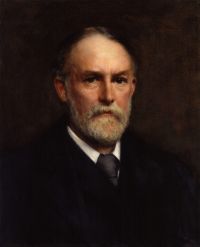 F. W. H. Myers,
Human Personality and Its Survival of Bodily Death
F. W. H. Myers,
Human Personality and Its Survival of Bodily Death
“ I am not speaking, of course, of symbolism of a forced and mechanical kind—symbolism designed and elaborated as such—but rather of that pre-existent but hidden concordance between visible and invisible things, between matter and thought, between thought and emotion, which the plastic arts, and music, and poetry, do each in their own special field discover and manifest for human wisdom and joy. ”
 William Blake,
Facsimile of the original outlines before colouring of the songs of innocence and of experience…
(1893)
William Blake,
Facsimile of the original outlines before colouring of the songs of innocence and of experience…
(1893)
“ Symbolism, as they know, often springs from a systematic use of metaphor, persisted in until figures of speech become technical terms, so that what was once a beautiful image and a vivid illustration descends into a slavery of repetition and becomes—or would become but for its beauty—little better than an addition to that degraded language of the illiterate classes called slang. Symbolism is, indeed, all this, and more. ”
Geneva Armstrong, Woman in Art (1900)
“ Out of symbolism of the first and second centuries of our era was developed so-called Christian art, which in later years evolved from symbolism the ideal. The Ideal, from those early times to our present, has pictured for the eye the Faith, Hope, and Charity that make life sweet and worth living. The ideal gives us in forms of female loveliness, graces of mind and spirit, till memory, truth, and love become symbols of God-given attributes. ”
 Alfred North Whitehead,
Symbolism, Its Meaning and Effect
(1927)
Alfred North Whitehead,
Symbolism, Its Meaning and Effect
(1927)
“ Symbolism is no mere idle fancy or corrupt degeneration: it is inherent in the very texture of human life. Language itself is a symbolism. And, as another example, however you reduce the functions of your government to their utmost simplicity, yet symbolism remains. ”
 Evelyn Underhill,
Mysticism: A Study in Nature and Development of Spiritual Consciousness
(1911)
Evelyn Underhill,
Mysticism: A Study in Nature and Development of Spiritual Consciousness
(1911)
“ In another respect, however, there is a great deal to choose between them: and here the visionary, not the philosopher, receives the palm. The greater the suggestive quality of the symbol used, the more answering emotion it evokes in those to whom it is addressed, the more truth it will convey. A good symbolism, therefore, will be more than mere diagram or mere allegory: it will use to the utmost the resources of beauty and of passion, will bring with it hints of mystery and wonder, bewitch with dreamy periods the mind to which it is addressed. ”
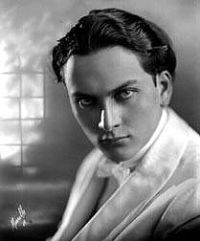 Manly Palmer Hall,
The Secret Teachings of All Ages…
(1928)
Manly Palmer Hall,
The Secret Teachings of All Ages…
(1928)
“ Rejecting man-conceived dialects as inadequate and unworthy to perpetuate divine ideas, the Mysteries thus chose symbolism as a far more ingenious and ideal method of preserving their transcendental knowledge. In a single figure a symbol may both reveal and conceal, for to the wise the subject of the symbol is obvious, while to the ignorant the figure remains inscrutable. ”
Alfred North Whitehead,
Symbolism, Its Meaning and Effect
(1927)
“ Language, written or spoken, is such a symbolism. The mere sound of a word, or its shape on paper, is indifferent. The word is a symbol, and its meaning is constituted by the ideas, images, and emotions, which it raises in the mind of the hearer. ”
J. A. K. Thomson, Greeks & Barbarians
“ But it is not like modern Symbolism, which is often content to gaze ecstatically on the symbol itself, instead of using it dramatically to flood a situation with the light that is hidden in the heart of Time. ”
Various, Popular Science Monthly (1890)
“ We live among symbolical representations, from the flags over our public buildings to the bank-note in our strong-box; symbolism is mingled with all our intellectual and social life, from the morning hand-shaking to the applause we give to the actor in the evening. ”
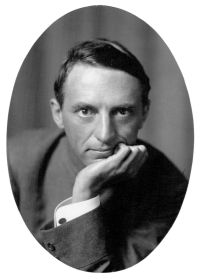 Kenneth Morris,
The Crest-Wave of Evolution
Kenneth Morris,
The Crest-Wave of Evolution
“ You know nothing about symbolism; and yet, if you have any inner life, those who understand symbolism can read your inner life in you symbol. That is because symbolism is a universal science, real, and with nothing arbitrary about it ”
John Doughty, The Garden of Eden (1885)
“ For symbolism was founded on the very nature of things, and the man of that time was able to analyze the attributes of his soul, and to name each correctly, and estimate its relative value, and assign to it its proper rank. ”
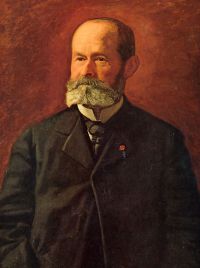 Daniel G. Brinton,
The Religious Sentiment
Daniel G. Brinton,
The Religious Sentiment
“ The one, esthetic symbolism, has its field in musical and architectural art, in the study and portraiture of the beautiful; the other, scientific symbolism, claims to discover in the morphology of organisms, in the harmonic laws of physics, and in the processes of the dialectic, the proof that symbolism, if not a revelation, is at least an unconscious inspiration of universal truth. ”
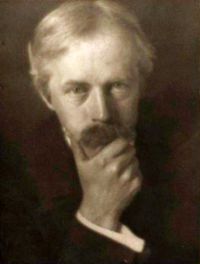 Arthur Symons,
The Symbolist Movement in Literature
Arthur Symons,
The Symbolist Movement in Literature
“ Without symbolism there can be no literature; indeed, not even language. What are words themselves but symbols, almost as arbitrary as the letters which compose them, mere sounds of the voice to which we have agreed to give certain significations, as we have agreed to translate these sounds by those combinations of letters? Symbolism began with the first words uttered by the first man, as he named every living thing ”
Alfred North Whitehead,
Symbolism, Its Meaning and Effect
(1927)
“ In a discussion of instances of symbolism, our first difficulty is to discover exactly what is being symbolized. The symbols are specific enough, but it is often extremely difficult to analyse what lies beyond them, even though there is evidently some strong appeal beyond the mere ceremonial acts. ”
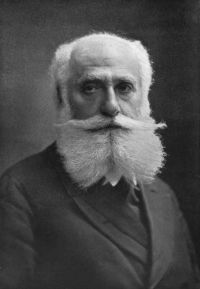 Max Simon Nordau,
Degeneration
Max Simon Nordau,
Degeneration
“ Finally, it is affirmed that Symbolism connotes ‘the inscribing of a symbol in human form.’ Expressed unmystically, this means that in the poems of the Symbolists the particular human form should not only exhibit its special nature and contingent destiny, but also represent a general type of humanity, and embody a universal law of life. ”
Cicely Kent, Telling Fortunes By Tea Leaves…
“ Who need be dull or bored when the language of symbolism remains to be learned? Perhaps I should say, studied; for completely learned it can never be, seeing that fresh events are constantly occurring in the world, and new symbols appear representing each. ”
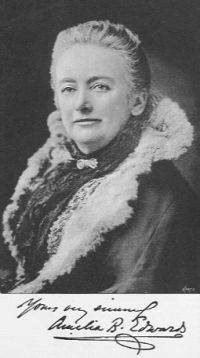 Amelia B. Edwards,
In the Days of My Youth: A Novel
Amelia B. Edwards,
In the Days of My Youth: A Novel
“ The symbolism of art evolved itself, as it were, from below the surface; and instead of beholding in paintings and statues mere studies of outward beauty, I came to know them as exponents of thought--as efforts after ideal truth--as aspirations which, because of their divineness, can never be wholly expressed ”
 Georg Wilhelm Friedrich Hegel,
The Philosophy of Fine Art, volume 2…
Georg Wilhelm Friedrich Hegel,
The Philosophy of Fine Art, volume 2…
“ And for the reason that in the stage of our process where we now find ourselves, this task is capable of only a symbolic solution, we may easily fall under the impression that we stand already in the sphere of genuine symbolism. ”
Alfred North Whitehead,
Symbolism, Its Meaning and Effect
(1927)
“ But symbolism is very fallible, in the sense that it may induce actions, feelings, emotions, and beliefs about things which are mere notions without that exemplification in the world which the symbolism leads us to presuppose. I shall develop the thesis that symbolism is an essential factor in the way we function as the result of our direct knowledge. ”
Guillaume Durand, The Symbolism of Churches and Church Ornaments
“ The necessity which the body seems to feel for this symbolism may be seen in the constantly occurring fact, that in making signs, whether of inquiry or adieu, to a person at a distance, we naturally speak the words, though inaudible to him, which the gestures we use express. ”
Manly Palmer Hall,
The Secret Teachings of All Ages…
(1928)
“ Symbolism is the language of the Mysteries; in fact it is the language not only of mysticism and philosophy but of all Nature, for every law and power active in universal procedure is manifested to the limited sense perceptions of man through the medium of symbol. Every form existing in the diversified sphere of being is symbolic of the divine activity by which it is produced. By symbols men have ever sought to communicate to each other those thoughts which transcend the limitations of language. ”
Daniel G. Brinton,
The Religious Sentiment
“ A symbol stands for the supernatural, an emblem for something known. The elucidation of symbolism is in the laws of the association of ideas. Associations of similarity give related symbols, of contiguity coincident symbols. Symbols tend either toward personification (iconolatry) , or toward secularization. ”
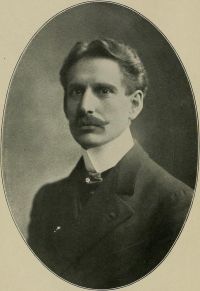 L. W. De Laurence,
The Illustrated Key to the Tarot…
L. W. De Laurence,
The Illustrated Key to the Tarot…
“ As poetry is the most beautiful expression of the things that are of all most beautiful, so is symbolism the most catholic expression in concealment of things that are most profound in the Sanctuary and that have not been declared outside it with the same fullness by means of the spoken word. ”
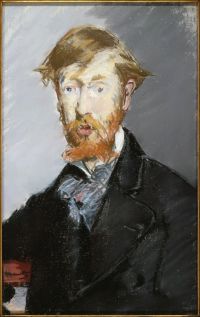 George Moore,
Confessions of a Young Man
George Moore,
Confessions of a Young Man
“ But what is symbolism? Vulgarly speaking, saying the opposite to what you mean. For example, you want to say that music which is the new art, is replacing the old art, which is poetry. First symbol: a house in which there is a funeral, the pall extends over the furniture. The house is poetry, poetry is dead. Second symbol: "notre vieux grimoire," grimoire is the parchment, parchment is used for writing, therefore, grimoire is the symbol for literature, "d'où s'exaltent les milliers," thousands of what? ”
Guillaume Durand, The Symbolism of Churches and Church Ornaments
“ In endeavouring shortly to develop the practice of symbolism, according to our view of the subject, we are fully aware that to those who have never yet bestowed a thought upon it, we shall appear mere visionaries or enthusiasts. ”
Georg Wilhelm Friedrich Hegel,
The Philosophy of Fine Art, volume 4…
“ In symbolism generally, as we have already established in the first part of this enquiry, the conjunction of general significance and the actual phenomenon, in association with which Art embodies its content, is of a less coherent character: as a result of this we find that what is particular in one direction preserves a greater consistency ”
 John Wesley Powell,
On Limitations to the Use of Some Anthropologic Data
John Wesley Powell,
On Limitations to the Use of Some Anthropologic Data
“ There is a symbolism inherent in language and found in all philosophy, true or false, and such symbolism was cultivated as an occult art in the early history of civilization when picture-writing developed into conventional writing, and symbolism is an interesting subject for study, but it has been made a beast of burden to carry packs of metaphysic nonsense. ”
Evelyn Underhill,
Mysticism: A Study in Nature and Development of Spiritual Consciousness
(1911)
“ Such symbolism as this—a living symbolism of experience and action, as well as of statement—seems almost essential to mystical expression. The mind must employ some device of the kind if its transcendental perceptions—wholly unrelated as they are to the phenomena with which intellect is able to deal—are ever to be grasped by the surface consciousness. ”
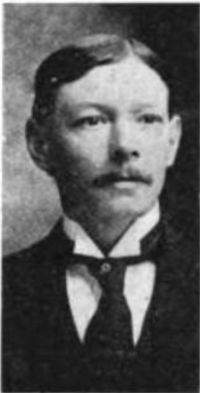 Oscar Kuhns,
Studies in the Poetry of Italy…
Oscar Kuhns,
Studies in the Poetry of Italy…
“ Symbolism took possession of all literature. The phenomena of nature became types of religious life—even the writings of pagan antiquity were treated symbolically and made to reveal prophecies of Christian doctrine ”
Various, Popular Science Monthly (1910)
“ The symbolism that to-day interpenetrates our language, and indeed our life generally, has mostly been inherited by us, with the traditions of civilization, from an antiquity so primitive that we usually fail to interpret it. The rare additions we make to it in our ordinary normal life are for the most part deliberately conscious. But so soon as we fall below, or rise above, that ordinary normal level—to insanity and hallucination, to childhood, to savagery, to folk-lore and legend, to poetry and religion—we are at once plunged into a sea of symbolism. ”
 Franz Delitzsch,
Biblical commentary the Old Testament…
Franz Delitzsch,
Biblical commentary the Old Testament…
“ The manner in which he works out this vision and other symbols certainly gives evidence of his capacity to describe, distinctly and attractively in words, what he had beheld in spirit; although the symbolism itself is, just as little as the vision, a mere product of poetic art, or the subjective framework of a lively fancy, without any real objective foundation ”
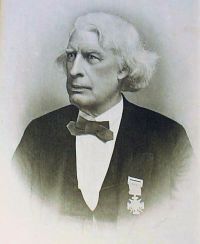 Albert Mackey,
The Symbolism of Freemasonry — Chapter X
(1882)
Albert Mackey,
The Symbolism of Freemasonry — Chapter X
(1882)
“ But symbolism is not only the most ancient and general, but it is also the most practically useful, of sciences. We have already seen how actively it operates in the early stages of life and of society. ”
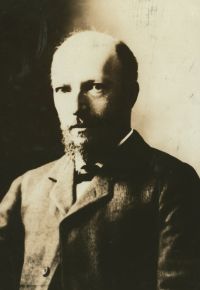 Felix Adler,
Creed and Deed: A Series of Discourses
Felix Adler,
Creed and Deed: A Series of Discourses
“ There is, on the other hand, a species of symbolism peculiarly adapted to the needs of the present generation, and which, if properly understood, might be employed to incalculable advantage in the interest of a revival of the religious sentiment. We allude to the symbolism of association. ”
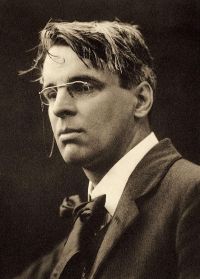 W. B. Yeats,
The Collected Works in Verse and Prose of William Butler Yeats…
W. B. Yeats,
The Collected Works in Verse and Prose of William Butler Yeats…
“ Allegory and, to a much greater degree, symbolism are a natural language by which the soul when entranced, or even in ordinary sleep, communes with God and with angels. [69] They can speak of things which cannot be spoken of in any other language, but one will always, I think, feel some sense of unreality when they are used to describe things which can be described as well in ordinary words. ”
Alfred North Whitehead,
Symbolism, Its Meaning and Effect
(1927)
“ We enjoy the symbol, but we also penetrate to the meaning. The symbols do not create their meaning: the meaning, in the form of actual effective beings reacting upon us, exists for us in its own right. ”
Thomas S. Sozinskey, Medical symbolism in connection with historical studies in the arts of healing and hygiene (1891)
“ Referring to the words symbol, image, and allegorical figure as well as attribute, he says, “Their shades of difference are so slight that it would be most convenient to regard them all under the general term symbol.” [6] I may add these remarks of Tiele: “A symbol is a simple or complex thought clothed in a sensuous form. A myth is a phenomenon of nature represented as the act of a person. Usually symbols originate in myths, and in every case mythology is antecedent to symbolism.” ”
Sepharial, Cosmic symbolism (1912)
“ Meanwhile by the dim light of our minds we grope our way among the scattered symbols, seeking in them for some intelligible answer to our questionings, hoping to find in them, when all are understood, a solution of the problem of the human soul. ”
Alfred North Whitehead,
Symbolism, Its Meaning and Effect
(1927)
“ A clear theoretic intellect, with its generous enthusiasm for the exact truth at all costs and hazards, pushes aside symbols as being mere make-believes, veiling and distorting that inner sanctuary of simple truth which reason claims as its own. ”
Giles Fletcher, Elizabethan Sonnet Cycles: Phillis - Licia
“ Equally tantalising are the fleeting symbolisms that suggest [Pg xii] themselves now and then. The confession sometimes made by the poet, that high-flown compliment and not true despair is intended, prepares us to accept the symbolic application where it forces itself upon us, and to feel the presence here and there of platonic or spiritual shadowings. ”
Alfred North Whitehead,
Symbolism, Its Meaning and Effect
(1927)
“ But such a common element in the two natures does not of itself necessitate symbolic reference, nor does it decide which shall be symbol and which shall be meaning, nor does it secure that the symbolic reference shall be immune from producing errors and disasters for the percipient. We must conceive perception in the light of a primary phase in the self-production of an occasion of actual existence. ”
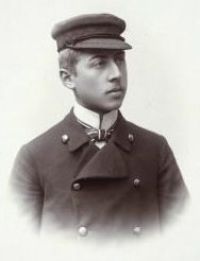 Herbert Silberer,
Hidden Symbolism of Alchemy and the Occult Arts
Herbert Silberer,
Hidden Symbolism of Alchemy and the Occult Arts
“ What is to be maintained through variations of meaning, is not the meanings but the symbols themselves. To each person symbols represent his own truth. To every one they speak a different language. No one exhausts them. ”
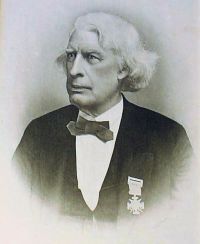 Albert Gallatin Mackey,
The Symbolism of Freemasonry
Albert Gallatin Mackey,
The Symbolism of Freemasonry
“ Now, in this special or individual interpretation, the Word, with its accompanying myth of a loss, a substitute, and a recovery, becomes a symbol of the personal progress of a candidate from his first initiation to the completion of his course, when he receives a full development of the Mysteries.The aspirant enters on this search after truth, as an Entered Apprentice, in darkness, seeking for light—the light of wisdom, the light of truth, the light symbolized by the Word. ”
Alfred North Whitehead,
Symbolism, Its Meaning and Effect
(1927)
“ When in an act of human experience there is a symbolic reference, there are in the first place two sets of components with some objective relationship between them, and this relationship will vary greatly in different instances. In the second place the total constitution of the percipient has to effect the symbolic reference from one set of components, the symbols, to the other set of components, the meaning. ”
Alfred North Whitehead,
Symbolism, Its Meaning and Effect
(1927)
“ It seems probable that in any ceremonial which has lasted through many epochs, the symbolic interpretation, so far as we can obtain it, varies much more rapidly than does the actual ceremonial. Also in its flux a symbol will have different meanings for different people. ”
Related terms
Authors who wrote about “symbolism”
Guillaume DurandAlbert MackeyL. W. De LaurenceAlfred North WhiteheadEvelyn UnderhillManly Palmer HallDaniel G. BrintonGeorg Wilhelm Friedrich HegelVariousGeneva ArmstrongF. W. H. MyersWilliam BlakeJ. A. K. ThomsonJohn DoughtyArthur SymonsCicely KentMax Simon NordauKenneth MorrisAmelia B. EdwardsGeorge Moore
Albert MackeyL. W. De LaurenceAlfred North WhiteheadEvelyn UnderhillManly Palmer HallDaniel G. BrintonGeorg Wilhelm Friedrich HegelVariousGeneva ArmstrongF. W. H. MyersWilliam BlakeJ. A. K. ThomsonJohn DoughtyArthur SymonsCicely KentMax Simon NordauKenneth MorrisAmelia B. EdwardsGeorge Moore