Hallucination

Definition and stakes

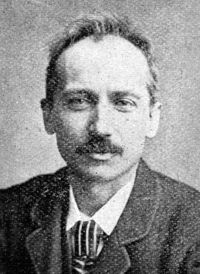
Portrait of John Uri Lloyd John Uri Lloyd Etidorhpa; or, The End of Earth

All evidences of mortal life are only as the phantasms of hallucination. As a moment in dreamland may span a life of time, the dreamer altogether unconscious that it is a dream, so may life itself be a shadow, the vision of a distempered fancy, the illusion of a floating thought."
"Are pain, pleasure, and living, imaginary creations?" I asked facetiously.
"Is there a madman who does not imagine, as facts, what others agree upon as hallucinations peculiar to himself?
Source: Gutenberg

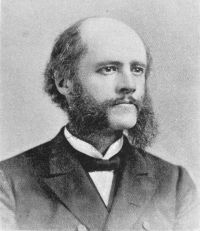
Portrait of William Clark Russell William Clark Russell An Ocean Tragedy

Then I told her of Wilfrid’s melancholy perturbation, on which her face grew grave and her air thoughtful.
‘He did not tell you the nature of the warning?’ she inquired.
‘No. It evidently had reference to his baby. I wished to [89] ascertain whether it was a voice or a vision—though I really don’t know why; for an hallucination is an hallucination all the world over, and it signifies little whether it be a sheeted essence to affect the eye or a string of airy syllables to affright the ear.’
‘I am sorry, I am sorry,’ she exclaimed anxiously; ‘it is a bad symptom, I fear.
Source: Gutenberg

Portrait of Hudson Tuttle Hudson Tuttle Studies in the Out-Lying Fields of Psychic Science

Hallucinations.—The received definition of an hallucination is a false perception without any material basis, being formed entirely in the mind. An individual who sees pictures on a blank wall, or who hears voices when no sound reaches his ear, is hallucinated. “The reason for this being that the erroneous perception constituting the hallucination is found in that part of the brain which ordinarily requires the excitation of sensorial impressions [71] for its functions.” In this view, hallucination is evidence of mental derangement and incipient insanity.
Source: Gutenberg

Get perspective with Kwize: daily news enlightened by great literature