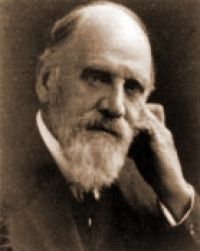
Francis Galton

Definition and stakes

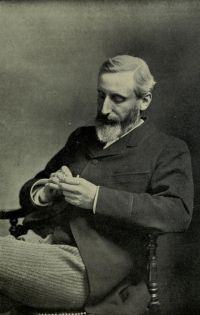
Portrait of Sir Francis Darwin Sir Francis Darwin Rustic Sounds, and Other Studies in Literature and Natural History

I should like to express my appreciation of the honour done me in asking me to give the first Galton lecture. In many ways I am a bad choice, since I have had no share in his science of eugenics, neither has my research-work been directly connected with evolution. I can only hope that in consideration of my delight in the fibre and flavour of Galton’s mind, with its youth, its charm of humour, and its ever-springing originality and acuteness,—I say that I hope these considerations may excuse me for having undertaken an office for which I am in so many ways unfitted.
Source: Gutenberg

1911 Encyclopædia Britannica, Volume 11… (1911)

Galton was the author of memoirs on various anthropometric subjects; he originated the process of composite portraiture, and paid much attention to finger-prints and their employment for the identification of criminals, his publications on this subject including Finger Prints (1892) , Decipherment of Blurred Finger Prints (1893) and Finger Print Directories (1895) . From the Royal Society, of which he was elected a fellow in 1860, he received a royal medal in 1886 and the Darwin medal in 1902, and honorary degrees were bestowed on him by Oxford (1894) and Cambridge (1895) .
Source: Wikisource

Popular Science Monthly (1909)

Galton—the Sir Francis does not come naturally—gives rather full details, as is becoming, of his parentage and early life. On both sides he was of quaker stock. He traces to inheritance his taste for science, for poetry and for statistics, and his endurance of physical fatigue.
Source: Wikisource

Get perspective with Kwize: daily news enlightened by great literature