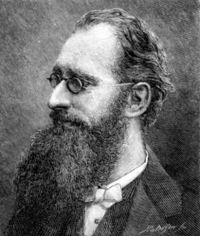
Abstraction is the conceptual process of deriving general principles and ideas from specific instances, filtering out particular details to uncover universal characteristics. This intellectual operation, central to philosophy and science, has been examined by thinkers like Hegel, who stressed the importance of moving beyond abstract notions to reveal deeper connections, and Hume, who doubted whether abstract ideas could be separated from sensory experience.
Newton and Kepler demonstrated abstraction's role in science by formulating universal laws from empirical observations. Whitehead associated abstraction with logical development, while Atkinson emphasized its value in identifying common attributes. These diverse perspectives highlight abstraction's dual function as both a mental tool and a cornerstone of knowledge, linking concrete experience with theoretical structures.
 Georg Wilhelm Friedrich Hegel,
Hegel's Philosophy of Mind
Georg Wilhelm Friedrich Hegel,
Hegel's Philosophy of Mind