Summary

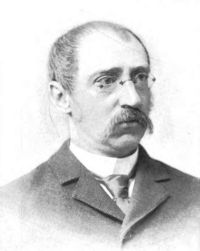
Portrait of Henry A. Beers Henry A. Beers A History of English Romanticism in the Nineteenth Century

To him the Middle Ages meant, not the ages of faith, or of chivalry, or of bold and free adventure, but of popular art—of "The Lesser Arts"; when every artisan was an artist of the beautiful and took pleasure in the thing which his hand shaped; when not only the cathedral and the castle, but the townsman's dwelling-house and the labourer's cottage was a thing of beauty. He believed that in those times there was, as there should be again, an art by the people and for the people. It was the democratic and not the aristocratic elements of mediaeval life that he praised.
Source: Gutenberg

Portrait of Henry A. Beers Henry A. Beers A History of English Romanticism in the Nineteenth Century

There is no other collection of English poems so saturated with Pre-Raphaelitism. The flowers are all orchids, strange in shape, violent in colouring. Rapunzel, e.g., is like one of Maeterlinck's spellbound princesses. She stands at the top of her tower, letting down her hair to the ground, and her lover climbs up to her by it as by a golden stair. Here is again the singular Pre-Raphaelite and symbolistic scenery, with its images from art and not from nature. Tall damozels in white and scarlet walk in garths of lily and sunflower, or under apple boughs, and feed the swans in the moat.
Source: Gutenberg

Portrait of Henry A. Beers Henry A. Beers A History of English Romanticism in the Nineteenth Century

The picturesque in art answers to the romantic in poetry; both stand opposed to the classic or formal school—both may be defined as the triumph of nature over art, luxuriating in the decay, not of her elemental and ever-lasting beauty, but of the bonds by which she had been enthralled by man. It is only in ruin that a building of pure architecture, whether Greek or Gothic, becomes picturesque.
Source: Gutenberg

Get perspective with Kwize: daily news enlightened by great literature