Friedrich von Schlegel

Definition and stakes

The German Classics of the Nineteenth and Twentieth Centuries…

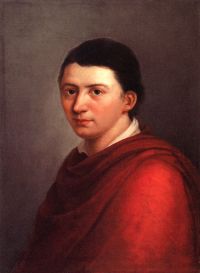
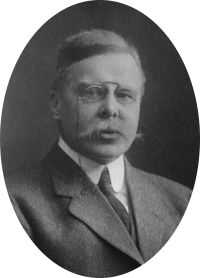
Friedrich von Schlegel (1772-1829) , the younger of the two, is counted to be the keener and more original mind. He had a restless and unsettled youth, mostly spent in studies; after various disappointments, he determined to make classical antiquity his life-work; while mastering the body of ancient literature, he was assimilating, with much the same sort of eagerness, the philosophical systems of Kant and Fichte. His first notable publication was an esthetic-philosophic essay, in the ample style of Schiller's later discourses, Concerning the Study of Greek Poetry.
Source: Gutenberg

Portrait of Friedrich von Schlegel Friedrich von Schlegel The philosophy of life, and philosophy of language…

Still, on the whole, a purely abstract mode of thinking, totally estranged and separate from actual life, is almost universally held to be the only right road to a profound philosophy. This so-called pure and abstract thinking takes nothing for granted, and allows of no postulate or axiom; it acknowledges none besides, and generally has no foundation save itself; it starts from itself alone, and in so far has, strictly speaking, no proper beginning. Consequently, without proper end or aim, it goes on continually revolving around itself as a center, and within its own charmed circle.
Source: Gutenberg

Portrait of Friedrich von Schlegel Friedrich von Schlegel The philosophy of life, and philosophy of language…

For in this beautiful word, according to its original acceptation, science is not regarded as already finished and mature, but is rather set forth as an object of search—of a noble curiosity and of a pure enthusiasm for great and sublime truths, while at the same time it implies the wise use of such knowledge. Merely, however, to check and to hinder the aberrations of a false philosophy, is not by itself sufficient. It is only by laying down and leveling the right road of a philosophy of life, that a thorough remedy for the evil is to be found.
Source: Gutenberg

Get perspective with Kwize: daily news enlightened by great literature