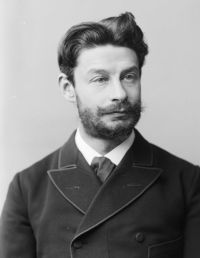
Georg Brandes

Biographical details

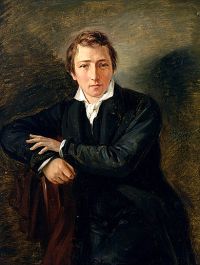
Portrait of Georg Brandes Georg Brandes,  William Shakespeare: A Critical Study

“ And it is now that Shakespeare, on the farther limit of early youth, and immediately after writing A Midsummer Night's Dream, for the second time takes the most potent of youthful emotions as his theme, and treats it no longer as a thing of fantasy, but as a matter of the deadliest moment, as a glowing, entrancing, and annihilating passion, the source of bliss and agony, of life and death. It is now that he writes his first independent tragedy, Romeo and Juliet, that unique, imperishable love-poem, which remains to this day one of the loftiest summits of the world's literature. ”
Source: Gutenberg

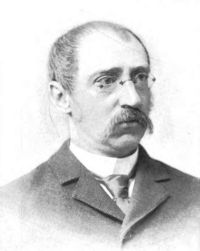
Portrait of Georg Brandes Georg Brandes,  Main Currents in Nineteenth Century Literature - 1…

“ In the novel and the drama of to-day, we have no one but the woman of thirty, who will be forty to-morrow. She alone can love, she alone can suffer. She is so much more dramatic, because she cannot afford to wait. What can we make out of a little girl who can do nothing but weep, love, sigh, smile, hope, tremble? The woman of thirty does not weep, she sobs; she does not sigh, she utters anguished cries; she does not love, she is consumed with passion; she does not smile, she shrieks; she does not dream, she acts! This is drama, this is romance, this is life. ”
Source: Gutenberg

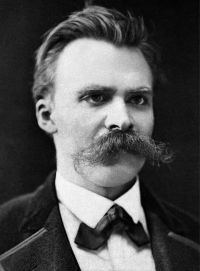
Portrait of Georg Brandes Georg Brandes,  Main Currents in Nineteenth Century Literature - 5…

“ What George Sand offers us in hers is, principally, such a masterly revelation of the inner life of a young woman, with its modesty and its enthusiasm, its impulse to self-devotion and its susceptibility to passion, as no woman had ever given to the world before; but in the deepest recesses of her soul there is a purpose; she has a wrong to avenge, wrath to satisfy; she does not see the sufferings of the female sex from the standpoint of an outsider; she does not try to conceal that her heart has bled. Mérimée, on the other hand, has no cause, no theory, no political or social bias whatever. ”
Source: Gutenberg

Get perspective with Kwize: daily news enlightened by great literature