“ But as your writer has ventured into the perilous grounds of literary criticism I ask you to allow me, in fairness not merely to myself but to all men to whom literature is a fine art, to say a few words about his critical method. ”
Literary criticism
Definition and stakes
Literary criticism, the examination, assessment, and interpretation of literature, has developed from classical origins to modern theoretical approaches. Aristotle’s Poetics introduced key ideas such as mimesis, while Renaissance scholars like Castelvetro refined neoclassical principles. Oscar Wilde focused on the method of critique, F.
V. N. Painter underscored its function in judging artistic merit, and George Saintsbury analyzed the conflict between artistic and scientific perspectives. Current practices combine historical analysis with theoretical exploration, illustrating a dynamic relationship between form, context, and shifting reader expectations.
Quotes about “literary criticism”
F. V. N. Painter, Elementary Guide to Literary Criticism
“ All literature is, in some sense, material for criticism. It may be examined, tested by critical laws, and its worth estimated in the class to which it belongs. But as a rule literary criticism is confined to literature in the narrower sense; that is to say, to literature that aims at artistic excellence. This includes the various forms of poetry and the principal kinds of prose,—history, oratory, essays, and fiction. These various kinds of literature, in their higher forms, aim at presenting their subject-matter in such a way as to minister to the pleasure of the reader. ”
F. V. N. Painter, Elementary Guide to Literary Criticism
“ It brings literary productions into comparison with recognized principles and ideal standards; it investigates them in their matter, form, and spirit; and, as a result of this process, it determines their merits and their defects. The end of literary criticism is not fault-finding but truth. The critic should be more than a censor or caviler. He should discover and make known whatever is commendable or excellent. At its best, criticism is not a mere record of general impressions but the statement of an intelligent judgment. ”
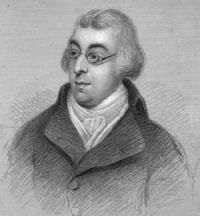 Isaac Disraeli,
Calamities and Quarrels of Authors
Isaac Disraeli,
Calamities and Quarrels of Authors
“ All that boiling rancour which sputters against the thoughts, the style, the taste, the moral character of an author, is often nothing more than practising what, to give it a name, we may call Political Criticism in Literature; where an author’s literary character is attacked solely from the accidental circumstance of his differing in opinion from his critics on subjects unconnected with the topics he treats of. ”
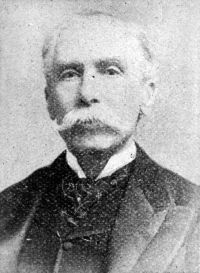 Alfred Austin,
The Bridling of Pegasus: Prose Papers on Poetry
Alfred Austin,
The Bridling of Pegasus: Prose Papers on Poetry
“ The great stumbling-block of literary criticism, alike for the professional critic and the unprofessional reader, is the tacit assumption that the opinions, preferences, and estimates of to-day are not merely passing opinions, preferences, and estimates, but will be permanent ones ”
 George Saintsbury,
A history of criticism and literary taste in Europe…
(1902)
George Saintsbury,
A history of criticism and literary taste in Europe…
(1902)
“ But he directly extols the cultivation of style—of that quality which will make any decent judge identify a poet when he has heard three lines of his poem. And he practises what he preaches. Even what the grave and precise (quite truly one must confess) call his moral degradation saves him from confusing the moral with the literary quality of literature—the noble error of most ancient criticism. ”
Alfred Austin,
The Bridling of Pegasus: Prose Papers on Poetry
“ I should think you must have observed, in the course of your reading, that even in the most accredited organs of opinion, principles of literary criticism, either explicitly stated or tacitly assumed, are often utterly ignored, in the notice of some work or other in the self-same number. The result can only be to create confusion in the public mind. ”
Charles Edwyn Vaughan, English literary criticism
“ It leaves out of sight all that criticism—the criticism of literature and art—has done to throw light upon the dark places of human thought and history, upon the growth and subtle transformations of spiritual belief, upon the power of reason and imagination to mould the shape of outward institutions. ”
Donald G. French, Highways of Canadian Literature
“ But because it is self-conscious, self-reliant, and ardent, its praise tends to be too high and its condemnation too severe. In the final stage literary criticism becomes less self-conscious, less ardent, and more detached and philosophical towards native literature. ”
George Saintsbury,
A history of criticism and literary taste in Europe…
(1902)
“ Proceeding in this way, criticism attempts—and fails—to be scientific; it renounces its right to be artistic, and effects the renunciation. The individual ethos of the poet, the more solid but not less individual ethos of the proseman, flies off and melts away, when each is merely regarded as an example of “todetes” or “tallotes” as a lecturer’s cabinet, in which you put your hand to draw out an illustration of Anadiplosis or Palillogia. ”
George Saintsbury,
A Short History of French Literature
“ It is, perhaps, an arguable point of literary criticism, whether the persevering analysis of individual, and more or less unusual, character does not lead novelists away from the best path—as it certainly leads in the long run to monstrosities of the modern French and English 'realist' type. ”
Henry James, Views and Reviews
“ Are not those literary pleasures after all the most intense which are the most perverse and whimsical, and even indefensible? There is a logic in them somewhere, but it often lies below the plummet of criticism. ”
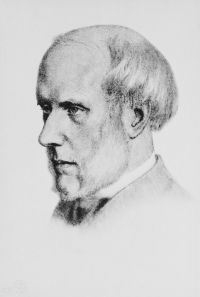 Thomas Gordon Hake,
Memoirs of Eighty Years
Thomas Gordon Hake,
Memoirs of Eighty Years
“ Then, in literary criticism, it is noticeable how much deeper the writers penetrate into the arcana, perceiving what is rendered, and what is left wanting, in a poetic composition, and that with a psychological acuteness much more general than was met with a generation or two ago. This is the more valuable, since criticism is the profoundest of studies; it demands an adequate knowledge of every science and art, as well as a competent observation of nature. ”
F. V. N. Painter, Elementary Guide to Literary Criticism
“ This diversity of literary criticism, which at first sight tempts us to question the value of the art, is easily traced to its causes. These are found not in the nature of the art but in the manner of its application. Many reviewers nowadays do not take the pains to read the works they pass judgment upon. ”
George Saintsbury,
A history of criticism and literary taste in Europe from the earliest texts to the present day…
(1902)
“ It is unfortunate, further, because it tends to prevent the enjoyment of the full advantages which the modern literatures are gradually giving to the critic in the very departments—the prose romance, the essay, and others—where ancient criticism suffered most from the absence of material. ”
 I. A. Richards,
Principles of literary criticism
(1928)
I. A. Richards,
Principles of literary criticism
(1928)
“ But too much inferior poetry has been poured out as criticism, too much sack and too little bread; confusion between the two activities, on the part of writers and readers alike, is what is primarily responsible for the backwardness of critical studies. What other stultifications of human endeavour it is also responsible for we need not linger here to point out. ”
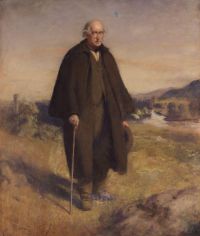 William Poel,
Shakespeare in the Theatre
William Poel,
Shakespeare in the Theatre
“ Have not the shackles put upon musicians, poets, painters, and sculptors by their patrons, instead of checking their genius, elicited the most exquisite products of their imagination? The conscientious inquirer, therefore, who wades through a mass of literary criticism in the hope of obtaining some elucidation of the question, seems only doomed to experience disappointment. ”
George Saintsbury,
A history of criticism and literary taste in Europe…
(1902)
“ As has been |The Moralia at first sight promising.| said above, if we do not find literary criticism, and good literary criticism, in such a collection of a man’s work, it must be either because he has no taste for it, or because he has the taste without the faculty. ”
George Saintsbury,
A history of criticism and literary taste in Europe…
(1902)
“ This, though no uncommon mood, is the worst possible for the critic. It leads him, in the same way, to praise a book or an author, not because he really likes them, but because they are naughty—the reverse of the other fallacy and its punishment. ”
George Saintsbury,
A history of criticism and literary taste in Europe…
(1902)
“ The Criticism which will be dealt with here is that function of the judgment which busies itself with the goodness or badness, the success or ill-success, of literature from the purely literary point of view. Other offices of the critic, real or so-called, will occupy us slightly or not at all. We shall meddle little with the more transcendental Æsthetic, with those ambitious theories of Beauty, and of artistic Pleasure in general, which, fascinating and noble as they appear, have too often proved cloud-Junos. ”
George Saintsbury,
A history of criticism and literary taste in Europe…
(1902)
“ But there is perhaps no writer—at least no writer of anything approaching his greatness—who, abstaining from deliberate and expressed critical work, has left us such acute and unmistakable critical byplay, such escapes of the critical spirit. ”
F. V. N. Painter, Elementary Guide to Literary Criticism
“ Differences of taste and character naturally produce some diversity of view, but in general the painstaking and impartial application of critical principles to a literary work will yield pretty uniform results. The merits and defects of the work will be brought to light, and conscientious and broad-minded critics will be found in the main to agree in their praise or their censure. ”
George Saintsbury,
A history of criticism and literary taste in Europe…
(1902)
“ And we constantly find—to our grief—that the better writers (of whom, at least in some cases, something survives to us) are apt to stray, in one or other of these directions, from the proper path of that criticism which, though it does not neglect either Rhetorical method or verbal minuteness, yet busies itself mainly with far other questions, asking, “Is this writer or this work, on the whole, good or bad as work or writer?” “What variety of the poetical or prosaic pleasure does he or it give?” “What are the sources, so far as they are traceable, of this pleasure?” ”
George Saintsbury,
A history of criticism and literary taste in Europe…
(1902)
“ But always, I think,—certainly in the vast majority of cases,—the critic abstains, with a rigidity which can only come from deliberate purpose (and this is unlikely) , or from unconsciousness that the thing is likely to be required of him, from any comments on the beauty or appropriateness of the verse, on the idiosyncrasy of the phrase or its agreement with others, on the Sophoclean characteristics of the poetry, or even (except from the pure stage point of view) on the evolution of the characters. ”
George Saintsbury,
A history of criticism and literary taste in Europe…
(1902)
“ And so they deprive themselves, from the critical point of view, of the very advantage with which they start—they lose their chance of finding out the real forms of literature, transcending those of any particular tongue, by assimilating the forms of their own as exactly as possible to another’s. ”
I. A. Richards,
Principles of literary criticism
(1928)
“ Between the general inquiry into the nature of the good and the appreciation of particular works of art, there may seem to be a wide gap, and the discussion upon which we are about to embark may appear a roundabout way of approaching our subject. Morals have often been treated, especially in recent times, as a side-issue for criticism, from which the special concern of the critic must be carefully separated. ”
 Washington Irving,
Wolfert's Roost, and Miscellanies
Washington Irving,
Wolfert's Roost, and Miscellanies
“ Let us, for a moment, consider the nature of this thing called criticism, which exerts such a sway over the literary world. The pronoun we, used by critics, has a most imposing and delusive sound. The reader pictures to himself a conclave of learned men, deliberating gravely and scrupulously on the merits of the book in question ”
I. A. Richards,
Principles of literary criticism
(1928)
“ None the less enough is known for an analysis of the mental events which make up the reading of a poem to be attempted. And such an analysis is a primary necessity for criticism. The psychological distinctions which have hitherto served the critic are too few and his use of them in most cases too unsystematic, too vague, and too uncertain, for his insight to yield its full advantages. ”
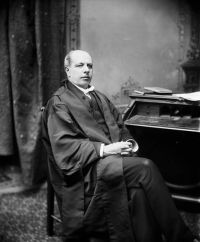 John George Bourinot,
Our Intellectual Strength and Weakness
John George Bourinot,
Our Intellectual Strength and Weakness
“ Truth tempered by consideration for literary genius is the essence of sound criticism.We all know that the literary temperament is naturally sensitive to anything like indifference and is too apt, perhaps, to exaggerate the importance of its calling in the prosaic world in which it is exercised. ”
Ethel D. Puffer, Psychology of Beauty
“ There are stories nowadays, but few novels, and plenty of spectacles, but no plays; and how should we know the difference, never having heard what a novel ought to be? But let the aesthetic critic give us a firm foundation for criticism, a real understanding of the conditions of literary art ”
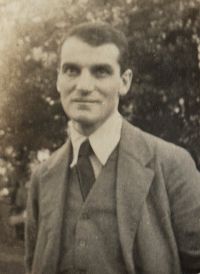 John Middleton Murry,
Aspects of Literature
John Middleton Murry,
Aspects of Literature
“ There are, he says, three kinds of criticism—the historical, the philosophic, and the purely literary. 'Every form of genuine criticism is directed towards creation. The historical or philosophic critic of poetry is criticising poetry in order to create a history or a philosophy ”
 William Dean Howells,
Literature and Life (Complete)
William Dean Howells,
Literature and Life (Complete)
“ Even then, it is not too much to say that literature as an art could get on perfectly well without it. Just as many good novels, poems, plays, essays, sketches, would be written if there were no such thing as criticism in the literary world, and no more bad ones. ”
I. A. Richards,
Principles of literary criticism
(1928)
“ The central question, What is the value of the arts, why are they worth the devotion of the keenest hours of the best minds, and what is their place in the system of human endeavours? is left almost untouched, although without some clear view it would seem that even the most judicious critic must often lose his sense of position. ”
F. V. N. Painter, Elementary Guide to Literary Criticism
“ He should be a man of broad sympathies and wide culture; nothing that is human should be foreign to him. He should be able to enter into the feelings of every class and to appreciate the principles of every school. He should have a strong imagination to enable him to realize the conditions of other ages or of other social arrangements. Without these natural gifts of a sound judgment, broad sympathy, and vigorous imagination, the critic is apt to be limited, narrow, or unjust in his criticism. The history of literature reveals numberless critical blunders ”
 Woodrow Wilson,
Mere literature, and other essays
Woodrow Wilson,
Mere literature, and other essays
“ He has an eye always on his world’s best manners, whether native or imported, and is at continual pains to be master of the conventions of society; he will mortify the natural man as much as need be in order to be in good form. What learned criticism essays to do is to create a similar literary worldliness, to establish fashions and conventions in letters. ”
Charles Edwyn Vaughan, English literary criticism
“ And, if it be asked where lies the precise difference between such a view and that which satisfied the critics of an earlier day, the answer must be, that we are no longer contented to rest upon the outward form of a work of art, still less upon its conventional morality. ”
A. R. Orage, Readers and Writers (1917-1921… (1922)
“ To be a critic or judge of poetry, or of any art, requires, in the first instance, an intense sympathetic power; but, in the second instance, a powerful self-restraint in expression, manifested in poetical criticism, I should say, by a prose style free from the smallest suggestion of poetry. ”
Henry James, The Letters of Henry James (Vol…
“ I hold that when a book has the high beauty of that one there's a poor indelicacy in what simple folk call criticism. The work lives by so absolute a law that it's grotesque to prattle about what might have been! ”
Various, Graham's Magazine Vol XXXIII No…
“ So general is the mental malady to which we have alluded, that it affects the judgments of criticism, and if a collection of lines, going under the name of a poem, contains fine passages, or felicitous flashes of thought, it commonly passes muster as satisfying the requirements of the critical code. Careless writers, therefore, are sustained by indulgent critics, and between both good literature is apt to be strangled in its birth. ”
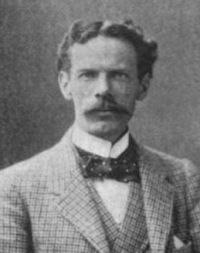 T. G. Tucker,
Platform Monologues
T. G. Tucker,
Platform Monologues
“ Cannot profundity of thought, ardour of emotion, power and charm of expression, be actually demonstrated as present or absent in a poet, when the critic is addressing himself to his natural readers, to wit, persons in whom are pre-supposed a certain amount of brains and heart, and cultivation of both? If they cannot, has criticism any real existence?To begin with, each reader is bound to recognise how far he is himself at any time capable of appreciating particular kinds of poetry. ”
Henry Albert Phillips, The photodrama (1914)
“ All new and unfamiliar forms of art, therefore, are subject to superficial criticism, if not ridicule, on the part of the uninitiated, who either fail, or refuse, to see the underlying truth interpreted by a work of art. ”
Various, Graham's Magazine, Vol. XLI, No…
“ But we are willing to admit, that criticism may advance a step beyond this, and after conceding the power and genuineness of a work of art, can still question the excellence of the spirit by which it is animated; can, in short, doubt the validity, denounce the character, and attempt to weaken the influence, of the kind of genius its analysis lays open. ”
Lord Henry Home Kames, Elements of Criticism, Volume I
“ With respect to the present undertaking, it is not the author’s intention to give a regular treatise upon each of the fine arts in particular; but only, in general, to apply to them some remarks and observations drawn from human nature, the true source of criticism. The fine arts are calculated for our entertainment, or for making agreeable impressions ”
Related terms
Authors who wrote about “literary criticism”
George Saintsbury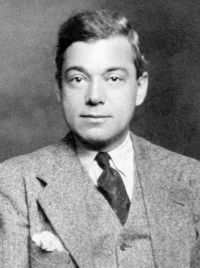 George Jean Nathan
 Oscar WildeF. V. N. PainterAlfred AustinI. A. RichardsJohn Middleton Murry
 Francis William Lauderdale Adams
 Arthur Bingham WalkleyCharles Edwyn VaughanEthel D. PufferA. R. OrageDavid Nichol Smith
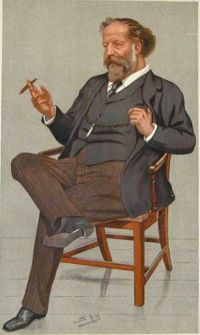 J. Comyns Carr
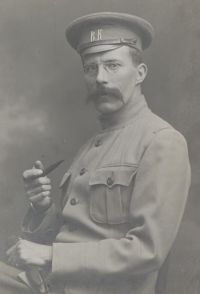 Arthur RansomeIsaac Disraeli
 Clive Bell
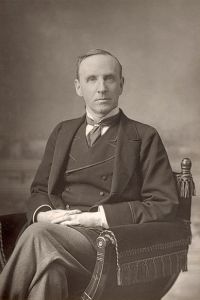 John Morley
 James Russell Lowell
 Samuel Johnson