Summary

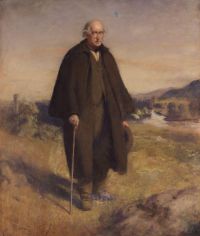
Portrait of William Poel William Poel Shakespeare in the Theatre

Now, I sympathize with a National Theatre as a memorial to Shakespeare, because I think the highest honour that can be rendered to our poet-dramatist is to provide English actors—and Shakespeare was himself an actor—with a permanent home where dramatic art as an art can be recognized and encouraged; and a National Theatre can give dignity to the dramatic profession and inspire emulation among its members by conferring upon them honours and rewards, provided always that the actors are the servants of the institution and not of a salaried official in that institution.
Source: Gutenberg

Portrait of William Poel William Poel Shakespeare in the Theatre

Whether it is that I am not capable of understanding Shakespeare and cannot distinguish his beauties, I do not know. There is no effort in Shakespeare’s works; he takes so little pains that what is interesting or noble or sublime or finely exhibiting the features of the mind, seems to drop from his pen by chance. One cannot help thinking that every play is executed with slovenly neglect, that he has done himself injustice and that if he pleased he might have given to the world works which would throw into the shade all that he has actually written.
Source: Gutenberg

Portrait of William Poel William Poel Shakespeare in the Theatre

In a country house remote from the world, among people who are well bred if not well read, who give more time to sport and cards than to books, and who have little power to express themselves except in unfinished sentences, is unfolded a domestic tragedy of wonderful power and sadness. And in this lies the weirdness and fascination of the play—that no word of the story is related by the characters, and only from fragments of conversation, apparently trivial and unimportant, does the spectator gradually bit by bit piece together and arrange for himself the puzzle of these people’s existence.
Source: Gutenberg

Get perspective with Kwize: daily news enlightened by great literature