Capulet

Definition and stakes

Charles Lamb and Mary Lamb,  Tales from Shakspeare — Romeo and Juliet (1831)

“ And the prince, turning to these old lords, Mountague and Capulet, rebuked them for their brutal and irrational enmities, and showed them what a scourge heaven had laid upon such offences, that it had found means even through the love of their children to punish their unnatural hate. And these old rivals, no longer enemies, agreed to bury their long strife in their children's graves; and lord Capulet requested lord Mountague to give him his hand, calling him by the name of brother, as if in acknowledgment of the union of their families by the marriage of the young Capulet and Mountague ”
Source: Wikisource

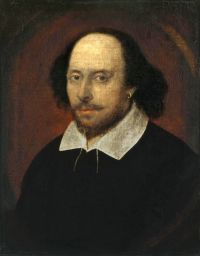
Portrait of William Shakespeare William Shakespeare,  Romeo and Juliet

“ JULIET.
It is an honour that I dream not of.
NURSE.
An honour! Were not I thine only nurse,
I would say thou hadst suck’d wisdom from thy teat.
LADY CAPULET.
Well, think of marriage now: younger than you,
Here in Verona, ladies of esteem,
Are made already mothers. By my count
I was your mother much upon these years
That you are now a maid. Thus, then, in brief;
The valiant Paris seeks you for his love.
NURSE.
A man, young lady! Lady, such a man
As all the world—why he’s a man of wax.
LADY CAPULET.
Verona’s summer hath not such a flower.
”
Source: Gutenberg

Portrait of William Shakespeare William Shakespeare,  Romeo and Juliet

“ For I ne’er saw true beauty till this night.
TYBALT.
This by his voice, should be a Montague.
Fetch me my rapier, boy. What, dares the slave
Come hither, cover’d with an antic face,
To fleer and scorn at our solemnity?
Now by the stock and honour of my kin,
To strike him dead I hold it not a sin.
CAPULET.
Why how now, kinsman!
Wherefore storm you so?
TYBALT.
Uncle, this is a Montague, our foe;
A villain that is hither come in spite,
To scorn at our solemnity this night.
CAPULET.
Young Romeo, is it?
TYBALT.
’Tis he, that villain Romeo.
”
Source: Gutenberg

Get perspective with Kwize: daily news enlightened by great literature