Romeo

Definition and stakes

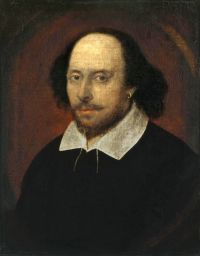
Portrait of William Shakespeare William Shakespeare,  Romeo and Juliet

“ See how she leans her cheek upon her hand!
O that I were a glove upon that hand,
That I might touch that cheek!
Jul. Ah me!
Rom. She speaks.
O, speak again, bright angel! for thou art
As glorious to this night, being o'er my head,
As is a winged messenger of heaven
Unto the white-upturned wond'ring eyes
Of mortals that fall back to gaze on him
When he bestrides the lazy-pacing clouds
And sails upon the bosom of the air.
Jul. O Romeo, Romeo! wherefore art thou Romeo?
Deny thy father and refuse thy name!
Or, if thou wilt not, be but sworn my love,
And I'll no longer be a Capulet.
”
Source: Gutenberg

Portrait of William Shakespeare William Shakespeare,  Romeo and Juliet

“ MERCUTIO.
If love be blind, love cannot hit the mark.
Now will he sit under a medlar tree,
And wish his mistress were that kind of fruit
As maids call medlars when they laugh alone.
O Romeo, that she were, O that she were
An open-arse and thou a poperin pear!
Romeo, good night. I’ll to my truckle-bed.
This field-bed is too cold for me to sleep.
Come, shall we go?
BENVOLIO.
Go then; for ’tis in vain
To seek him here that means not to be found.
[Exeunt.]
SCENE II. Capulet’s Garden. Enter Romeo.
ROMEO.
He jests at scars that never felt a wound.
”
Source: Gutenberg

Charles Lamb and Mary Lamb,  Tales from Shakspeare — Romeo and Juliet (1831)

“ And they fell to dancing, and Romeo was suddenly struck with the exceeding beauty of a lady who danced there, who seemed to him to teach the torches to burn bright, and her beauty to show by night like a rich jewel worn by a blackamoor: beauty too rich for use, too dear for earth! like a snowy dove trooping with crows (he said) , so richly did her beauty and perfections shine above the ladies her companions. While he uttered these praises, he was overheard by Tybalt, a nephew of lord Capulet, who knew him by his voice to be Romeo. ”
Source: Wikisource

Get perspective with Kwize: daily news enlightened by great literature