“ The great bulk of his fraternity went through their studious, conscientious, hard-working, and not infrequently heroic lives under the contented conviction of having to deal with two principal facts—disease and medicine—both accessible through study. To them the imponderable factor of the patient represented such or such an aggregation of material—muscle, nerve, blood, brawn, bone, and tissue—which might be counted upon to respond to such and such a treatment in such and such a manner, with very slight variation. The Doctor envied them their simplicity of faith. ”
Quotes about “medlar”
Oliver Wendell Holmes, Medical Essays, 1842-1882
“ Your patient has no more right to all the truth you know than he has to all the medicine in your saddlebags, if you carry that kind of cartridge-box for the ammunition that slays disease. He should get only just so much as is good for him. I have seen a physician examining a patient's chest stop all at once, as he brought out a particular sound with a tap on the collarbone, in the attitude of a pointer who has just come on the scent or sight of a woodcock. ”
Senator Cassiodorus, The Letters of Cassiodorus
“ Do you rather incline the patient to ask you about his own malady, showing him that you know more about it than he does. The patient's pulse, the patient's water, tell to a skilled physician the whole story of his disease. ”
 Molière,
The Imaginary Invalid
Molière,
The Imaginary Invalid
“ All the Doctors and Apothecaries dance to the sound of instruments and voices, the clapping of hands, and the beating of Apothecaries’ mortars.SurgeonMay he just see his learned stipulations and fill the offices of surgeons and apothecaries.ChorusLive a long life, live a long life, live a long life, live a long life, a hundred times let the new doctor who speaks so well live a long life! For a thousand, thousand years let him eat and drink, and cure and kill.ApothecaryMay all his years be good and favorable for him and may he never grapple with plagues or epidemics that are evil beasts. ”
Christopher Merret, A Short View of the Frauds and Abuses Committed by Apothecaries
“ Hence also will arise an emulation amongst Physicians, who shall exceed each other in noble remedies, and from thence a full and happy improvement of whatsoever God hath created for the recovery of mans health impaired; for from the Physician alone the advancement of Physic is to be expected. How many simples of unknown properties have been brought into use, to the great comfort of the sick? ”
Henry Dunant, The Origin of the Red Cross: "Un souvenir de Solferino"
“ A young army doctor holds the arms of the patient, while the nurse seizes the healthy leg and draws the invalid to the edge of the table. At this the frightened man shrieks: "Do not let me fall!" and he seizes convulsively in his arms the young physician, ready to support him and who pale from emotion is himself almost equally distressed. ”
Thomas S. Sozinskey, Medical symbolism in connection with historical studies in the arts of healing and hygiene (1891)
“ One might take the serpent to be a symbol of the god and the staff as symbolic of the moving of the physician from house to house in the exercise of his profession. Regarding the knots as expressive of difficulties in the art and practice of medicine is very fanciful, but not infrequently done. It is proper to observe, however, that the physician’s staff in modern times is smooth, as will be pointed out later. ”
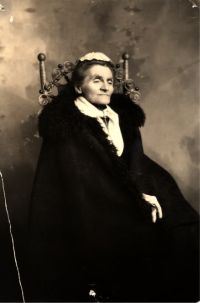 Charlotte Selina Bompas,
Owindia : a true tale of the MacKenzie River Indians…
Charlotte Selina Bompas,
Owindia : a true tale of the MacKenzie River Indians…
“ You will hear of one man 'making medicine' to ascertain what time the Company's boats may be expected, or when certain sledges of meat may come to the Fort. Another man is sick and the medicine-man is summoned, and a drum is beaten during the night with solemn monotonous 'tum, tum, tum', and certain confidential communications take place between the Doctor and his patient, during which the sick man is supposed to divulge every secret he may possess, and on the perfect sincerity of his revelation must depend his recovery. ”
A. J. Hill, Collections of the Minnesota Historical Society for the Year 1867
“ He then drops on his knees, at the patient’s side, and applying his mouth to the part of the body immediately over what is supposed to be the seat of the disease, he sucks with frenzy, at the same time rattling the shell with the utmost violence. In this manner, the god which is in the doctor, draws the disease from the sufferer. ”
Edmund Flagg, Flagg's The Far West, 1836-1837…
“ The doctor or conjurer neither feels the pulse nor looks at the tongue, but with a solemn countenance commences to sing some mournful strain, whilst those present accompany him with their voices and beat time with the sticks. During the singing the doctor operates on the patient, he kneels before him, and placing his closed fists on the stomach, leans on him with all his might. Excessive pain makes the patient roar, but his roarings are lost in the noise, for the doctor and the bystanders raise their voices higher in proportion as the sick man gives utterance to his sufferings. ”
Frank Frankfort Moore, A Journalist's Note-Book
“ But Sir Gregory, the English surgeon, had probably some experience of cases like this. He put his hand through the arm of the German, and then giving a laugh that in an emergency might obviate the use of a lancet, he said loudly enough to be heard over a considerable area,— “Come along, my dear friend; there is no visiting an hospital for the insane without coming across a lunatic,—a medical practitioner without discretion is worse.” ”
Various, The Strand Magazine, Vol. 01, Issue 02…
“ From the first ward we seek to enter we are admonished by our own senses to turn back. We have barely looked in when the faint, sweet odour of chloroform hanging in the air, the hiss of the antiseptic-spray machine, and the screens placed round a cot inform us that one of the surgeons is conducting an operation. The ward is all hushed in silence, for the children are quick to learn that, when the big, kind-eyed doctor is putting a little comrade to sleep in order to do some clever thing to him to make him well, all must be as quiet as mice. ”
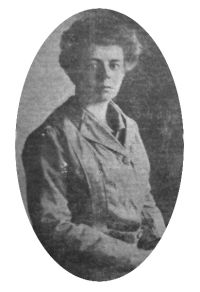 Natalie Sumner Lincoln,
The moving finger
(1918)
Natalie Sumner Lincoln,
The moving finger
(1918)
“ The nurse’s eyes, pupils dilated, shifted from his white face to the glass in her outstretched hand, and the familiar sight of the medicine and her starched uniform drove away her temporary loss of composure.“Here is your medicine,” she announced, and at the sound of her low, traînante voice the patient clutched the bedclothes spasmodically. [2] He made no effort to take the glass. ”
 Giacomo Casanova,
The Memoirs of Jacques Casanova de Seingalt…
Giacomo Casanova,
The Memoirs of Jacques Casanova de Seingalt…
“ You must pretend to be taken ill, but your illness must be of such a kind that your doctor will be obliged to take your word for the symptoms. Luckily, I know a doctor whose sole idea is to order country air for all complaints. This physician, who is about as clever as his brethren, and kills or cures as well as any of them, will come and feel my pulse one of these days. You must take his advice, and for a couple of louis he will write you a prescription with country air as the chief item. He will then inform everybody that your case is serious, but that he will answer for your cure. ”
 Émile Zola,
The Three Cities Trilogy: Lourdes…
Émile Zola,
The Three Cities Trilogy: Lourdes…
“ I will admit that I came across some instances of real cure. Many cases of nervous disorders have undoubtedly been cured, and there have also been other cures which may, perhaps be attributed to errors of diagnosis on the part of doctors who attended the patients so cured. Often a patient is described by his doctor as suffering from consumption. He goes to Lourdes, and is cured. However, the probability is that the doctor made a mistake. In my own case I was at one time suffering from a violent pain in my chest, which presented all the symptoms of /angina pectoris/, a mortal malady. ”
 Philip Schaff,
Nicene and Post-Nicene Fathers…
(1885)
Philip Schaff,
Nicene and Post-Nicene Fathers…
(1885)
“ Let us then give our attention and observe Him as He performs the cure. For if in the case of physicians when they use the knife or cautery or operate in any other way upon a maimed and crippled patient, and cut off a limb, many persons crowd round the invalid and the physician who is doing these things, much more ought we to act thus in this case, in proportion as the physician is greater and the malady more severe, being one which cannot be corrected by human art, but only by divine grace. ”
Anonymous, Notes of hospital life from November…
“ The surgeon’s report was favorable; the change in him was quite unexpected, and recovery was possible, though by no means probable.I left him alone, purposely, for some hours; but the moment I re-entered the ward he exclaimed, “Now you will tell me.”Judging it better to quiet his mind, I sat down and spoke to him quietly and gently of his home. Home! the talisman which charms away all pain and soothes all sorrow. Should any one ask how to reach the men? how gain an influence over them? ”
 Wilkie Collins,
The Moonstone
(1874)
Wilkie Collins,
The Moonstone
(1874)
“ Any open assertion of the infinitely superior importance of such a ministry as mine, compared with the ministry of the medical man, would only have provoked the doctor to practice on the human weakness of his patient, and to threaten to throw up the case. ”
Christopher Merret, A Short View of the Frauds and Abuses Committed by Apothecaries (1670)
“ Eighthly, Another trick is when the Patient is cured, and the Physician therefore hath given over his Visits, then comes the Apothecary and insinuates by his words and passions, either some danger of relapse, or some other present distemper, and repairs to the Physician for a Bill to cure the imaginary disease. ”
Harry Roberts, The Book of Old-Fashioned Flowers
“ But few are so badly placed but they may grow the Lilacs, Laburnums, Hawthorns, Guelder Roses, Spiræas, Dogwoods, Weeping Birches, Weeping Willows, and Flowering Currants. As decorative as most, however, and more useful than any, of the shrubs and trees worth growing in a garden, are the apples and pears, medlars and quinces, plums and cherries whose flowers and fruits have always impressed the traveller as a beautiful feature of English landscape. ”
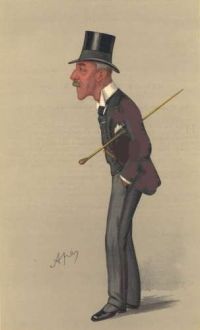 William Bartlett Dalby,
Popular Science Monthly
(1880)
William Bartlett Dalby,
Popular Science Monthly
(1880)
“ He knows what will cure something or other, and so prescribes it. So well is what I am saying beginning to be understood that the very expression "cure," unless applied with a special meaning, as to an aneurism, a hernia, or the like, has become almost offensive, and will ere long be used only by the ignorant and pretentious. The physician does not pretend to cure his patients; he places them in the conditions most favorable to recovery, and is thus often the means of averting death and conducting them to health. ”
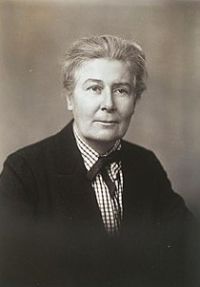 Ellen N. La Motte,
The Backwash of War
Ellen N. La Motte,
The Backwash of War
“ Later, in the medical wards, the Major made his rounds, to inspect more carefully the men upon whom he had made snap diagnoses, to correct the diagnosis, if need be, and to order treatment. The chief treatment they needed was a bath, a clean bed, and a week of sleep, but the doctor, being fairly conscientious, thought to hurry things- 134 - a little, to hasten the return of these old, tired men to the trenches, so that they might come back to the hospital again as grands blessés. ”
Samuel Finley Breese Morse, Samuel F. B. Morse, His Letters and Journals
“ But He who knows the heart knows its disease, and, as the Good Physician, if we give ourselves unreservedly into his hands to be cured, He will give that medicine which his perfect knowledge of our case prescribes. ”
 John Dryden,
The Works of John Dryden, now first collected in eighteen volumes…
John Dryden,
The Works of John Dryden, now first collected in eighteen volumes…
“ The physician having one day met him, going hither and thither as his charity called him, in the middle of his fit, after having felt his pulse, plainly told him, that in all the hospital, there was not one man in more danger than himself, and prayed him that he would take some small repose, and but give himself a breathing time until his fever were on the declension. ”
John Cordy Jeaffreson, A Book About Doctors
“ One morning I opened my eyes and saw the doctor standing between me and No. 22, talking to the nurse. A fit of clearness passed over my understanding, such as people suffering under fever often experience for a few seconds, and I heard the physician say softly to the nurses, 'We must be careful and do our best, sister, and leave the rest to God. They are both very ill; this is now the fourth day since either of them recognized me. They must have more wine and brandy to help them through. ”
James Young Simpson, Archæological Essays, Vol. 2
“ Still, let me repeat, neither in Celsus nor in Paulus Ægineta, nor, indeed, in any other ancient medical work, have we, as far as I know, any allusion to the circumstance of surgeons or physicians 209being regularly appointed as army medical officers in the Roman army, for the purpose of superintending the treatment of the wounded, or—what is of still greater importance—in order to take professional care of the soldiers disabled by sickness and disease, and whose number in warfare is generally very much greater than the number of those that are disabled in fight. ”
Various, Astounding Stories of Super-Science July 1930
“ I followed in a daze as a white-capped and gowned nurse led us along the corridor and into a ward where there were dozens of high, white beds. Some of the patients were swathed in bandages; some sat up in their beds, reading or just staring; others lay inert and pale. The reek of iodoform pervaded the large room.We stopped at the bedside of one of the staring patients, a young woman who looked unseeingly at our party. Great heavens, it was Marie! ”
Donald Monro, An Account of the Diseases which were most frequent in the British military hospitals in Germany
“ The Apothecary ought to take Care of the Medicines; to go round the Hospitals in the Morning before the Time of the Physician’s visiting; to see that the Wards are in proper Order; that the Nurses and other Servants have done their Duty; to examine into the State of the Sick, and to see that the Provisions [400] are good; and make a faithful Report of all these Things to the Physician when he arrives.—To take Care that the Mates prepare in the Morning the Medicines that are commonly wanted for the Day; and that they afterwards make up faithfully the Prescriptions of the Physician ”
 Marion Harland,
The Secret of a Happy Home (1896…
Marion Harland,
The Secret of a Happy Home (1896…
“ All children should be trained to take medicine, and to submit to any prescribed dietary without resistance.To keep up your patient's courage be, or at all events seem, cheerful. Wise old Solomon, in his day, knew that a merry heart did good like a medicine, and the morsel of wisdom is no less true now than then. Such being the case, bring into the presence of the sufferer a bright face and undisturbed demeanor.Much may be said on the other side of the question, i.e., from the nurse's standpoint. There are patients and patients, and some of them are impatients. ”
Richard M. Pearce, Popular Science Monthly (1912)
“ They do, however, contain references to the use of the knife in surgery, the healing of fractures and the internal administration of herbs, but all essential therapy is obscured by mysticism, ritual observances and magical formula. From the point of view of diagnosis, it is of interest that these records refer to the inspection of the urine and blood and to the collection of a series of observations upon disease, what we would now call the "clinical history" or record of a patient. ”
“ A certain physician was so fond of administering medicine, that, seeing all the phials and pill-boxes of his patient completely emptied, and ranged in order on the table, he said, "Ah, sir, it gives me pleasure to attend you,—you deserve to be ill." ”
Various, The Century Illustrated Monthly Magazine…
“ Stumbling out into the shadowy hall to greet the new day and the new beginning, the Senior Surgeon almost tripped and fell over the White Linen Nurse, sitting all huddled up and drowsy-eyed in a gray little heap on his outer threshold. The sensation of stepping upon a human body is not a pleasant one. It smote the Senior Surgeon nauseously through the nerves of his stomach. ”
Molière,
The Imaginary Invalid
(1673)
“ TOI. Let me feel your pulse. Come, come, beat properly, please. Ah! I will soon make you beat as you should. This pulse is trifling with me; I see that it does not know me yet. Who is your doctor? ARG. Mr. Purgon. TOI. That man is not noted in my books among the great doctors. What does he say you are ill of? ARG. He says it is the liver, and others say it is the spleen. TOI. They are a pack of ignorant blockheads; you are suffering from the lungs. ”
Anonymous, Modest Remarks upon the Bishop of London's Letter Concerning the Late Earthquakes
“ How amazing is it, that a Physician should pretend to cure a complicated Malady, without once touching at the Source of the Disorder, by slightly tickling the outwards Parts, and leaving the Vitals to perish under a mortal Gangrene. ”
