“ At no time of life should a man give up the thoughts of enjoying the society of women. "In youth," says Lord Bacon, "women are our mistresses, at a riper age our companions, in old age our nurses, and in all ages our friends."A gentleman being asked what difference there was between a clock and a woman, instantly replied, "A clock serves to point out the hours, and a woman to make us forget them." ”
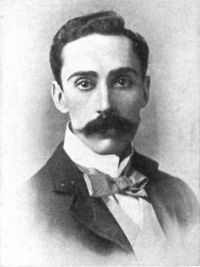
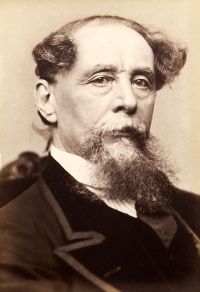
Mark Lemon
Biographical details
Mark Lemon, a 19th-century English writer celebrated for his wit and social commentary, is best known for The Jest Book, a compilation of satirical anecdotes, and Once a Week, a periodical merging storytelling with analysis. His writing examines human folly, class structures, and the peculiarities of everyday existence, frequently employing incisive dialogue and irony.
Quotes from The Jest Book illustrate his flair for paradoxical humor, while excerpts from Once a Week showcase his narrative skill in portraying personal connections and social customs. Lemon’s body of work combines satire with nuanced critique, providing lasting reflections on Victorian society.
Quotes by Mark Lemon
“ I have met with a provocation too great for man to bear. You know the only wine I drink is Cyprus wine, as it agrees with me the best of any; and this villain Grimaldi (his foreign servant) has drunk up the whole I had on board. But I will be revenged of him. I have ordered him to be tied hand and foot, and to be carried to the man-of-war that sails with us. The rascal should have taken care how he used me, for I never forgive."—"Then I hope, sir," said John Wesley, looking calmly at him, "you never sin." ”
“ A gentleman once bought a horse of a country-dealer. The bargain concluded, and the money paid, the gentleman said, "Now, my friend, I have bought your horse, what are his faults?"—"I know of no faults that he has, except two," replied the man; "and one is, that he is hard to catch."—"Oh! never mind that," said the buyer, "I will contrive to catch him at any time, I will engage; but what is the other?"—"Ah, sir! that is the worst," answered the fellow; "he is good for nothing when you have caught him." ”
Mark Lemon, Once a Week, Series 1, Volume III… (1860)
“ As though they’d found an angel’s grasp To draw them up to heaven. Once more the brown hand and the white Are linked. So cold! so fast!— As though true loving hearts unite More closely at the last. ”
Mark Lemon, Once a Week, Series 1, Volume VIII…
“ Everyone still smiled upon them, and cheered with lusty shouts, until Buskin could not help remarking, ‘I had no idea that we could have been so recognised. These people must have come frequently to the theatre, regardless of the distance.’ ‘And we really must have made a strong impression upon their rude minds,’ replied Miss Bugles; ‘the fact promises well for the next season.’ On, on! still on! as the novelists say, and still the same pleasant greeting everywhere, and never did a happier couple pull up at the Red Lion to change horses than Harry Buskin and Adeline Bugles. ”
“ At one of the annual dinners of the members of the Chapel Royal, a gentleman had been plaguing Edward Cannon with a somewhat dry disquisition on the noble art of fencing. Cannon for some time endured it with patience; but at length, on the man remarking that Sir George D—— was a great fencer, Cannon, who disliked him, replied, "I don't know, sir, whether Sir George is a great fencer, but Sir George is a great fool!" A little startled, the other rejoined, "Possibly he is; but then, you know, a man may be both."—"So I see, sir," said Cannon, turning away. ”
Mark Lemon, Once a Week, Series 1, Volume VIII…
“ He had the making of a good actor, but was painfully sensitive—he cared too much for his audience. I remember one night he was playing Hamlet for his benefit. I was the Ghost—being a benefit night I played anything. Buskin had his own conception of the Royal Dane, and one of his points was this. When the Ghost had beckoned him to ‘more removed ground,’ Hamlet began a sort of telegraphic communication with ‘his father’s spirit,’ now leaning on his sword, now waving his hand to the paternal shade, and then wiping the sweat drops from his brow. ”
Mark Lemon, Once a Week, Series 1, Volume VIII…
“ I always made it a rule to have a screen placed before my sideboard as soon as dessert was put upon the table; for in the times to which I allude it was the fashion to clear the cloth, and place the decanters, finger-glasses, d’oyleys, and wines (glasses) on the well-polished mahogany. By having my screen, I could arrange my relays of glasses and decanters, my tooth-picks, my snuff-box, and many other matters too numerous to mention, besides being always at my post to keep up the festivity of the evening, and preserve our family character for hospitality. ”
“ The builder is merely the bricklayer or the carpenter: the builder, in fact, is the machine,—the architect the power that puts the machine together, and sets it going!"—"O, very well, Mr. Architect, that will do! And now, after your very ingenious distinction without a difference, perhaps you can inform the court who was the architect for the Tower of Babel!"—"There was no architect, sir, and hence the confusion!" ”
Mark Lemon, Once a Week, Series 1, Volume VIII…
“ At the corner of the street his gallant pony was in waiting, and as his pursuers reached the street, Robinson was mounted and away. It was about two o’clock in the morning when this daring robbery was committed, 120 miles away from Robinson’s house, and as the clock struck six in the evening Robinson rode into his homestead, where his father and Job Cox were anxiously expecting him. “I have done the trick,” he said, “but not so cleverly as I intended. The hell-keepers saw me and have followed, no doubt. The only thing, however, they could swear to, would be the pony.” ”
“ Sheridan was one day much annoyed by a fellow-member of the House of Commons, who kept crying out every few minutes, "Hear! hear!" During the debate he took occasion to describe a political contemporary that wished to play rogue, but had only sense enough to act fool. "Where," exclaimed he, with great emphasis—"where shall we find a more foolish knave or a more knavish fool than he?"—"Hear! hear!" was shouted by the troublesome member. Sheridan turned round, and, thanking him for the prompt information, sat down amid a general roar of laughter. ”
Mark Lemon, Once a Week, Series 1, Volume VIII…
“ With the grace of a Charles Kemble, Buskin handed Bugles into the Red Lion, and having partaken of a little refreshment, re-conducted her to the post-chaise. ‘Horror on horror’s head accumulate!’ What did they see! With a glance their Aladdin’s palace vanished.” (I think he said Aladdin’s palace.) “The secret of their great popularity was disclosed! The ‘property man’ of the theatre had tied behind their post-chaise, with its four legs sticking out, the wicker-work elephant used in the comic pantomime of Blue Beard!” ”
“ Sir Walter Scott once happening to hear his daughter Anne say of something, that it was vulgar, gave the young lady the following temperate rebuke: "My love, you speak like a very young lady; do you know, after all, the meaning of this word vulgar? 'Tis only common; nothing that is common, except wickedness, can deserve to be spoken of in a tone of contempt; and when you have lived to my years, you will be disposed to agree with me in thanking God that nothing really worth having or caring about in this world is uncommon." ”
“ The unsophisticated lady was taken in, when she actually saw the maids of honor make their appearance in the shape of cheesecakes; she convulsed the whole party by turning to the waiter, and desiring him, in a sweet but decided tone, to bring her a gentleman usher of the black rod, if they had one in the house quite cold! ”
“ A bon-vivant, brought to his death-bed by an immoderate use of wine, after having been told that he could not in all human probability survive many hours, and would die by eight o clock next morning, exerted the small remains of his strength to call the doctor back, and said, with the true spirit of a gambler, "doctor, I'll bet you a bottle I live till nine!" ”
“ Though upon great occasions Burke was one of the most eloquent of men that ever sat in the British senate, he had in ordinary matters as much as any man the faculty of tiring his auditors. During the latter years of his life the failing gained so much upon him, that he more than once dispersed the house, a circumstance which procured him the nickname of the Dinner-bell. A gentleman was one day going into the House, when he was surprised to meet a great number of people coming out in a body. ”
“ The Duchess of Newcastle, who was likewise notorious for her vagrant speculations, said to him, "Doctor, where am I to bait at in the upward journey?"—"My lady," replied the doctor, "of all the people in the world, I never expected that question from you; who have built so many castles in the air that you might lie every night at one of your own." ”
“ Roger Long, the celebrated astronomer, was walking, one dark evening, with a gentleman in Cambridge, when the latter came to a short post fixed in the pavement, but which, in the earnestness of conversation, taking to be a boy standing in the path, he said hastily, "Get out of the way, boy."—"That boy," said the doctor, very seriously, "is a post-boy, who never turns out of the way for anybody." ”
“ A very dull man, after dinner, had been boring the company with a long discourse, in the course of which he had given utterance to ethical views as old as the hills, as though he had just discovered them. When he had done repeating his truisms, Charles Lamb gravely said: "Then, sir, you are actually prepared to maintain that a thief is not altogether a moral man." ”
“ CLXIII.—HIGH AND LOW."I expect six clergymen to dine with me on such a day," said a gentleman to his butler. "Very good, sir," said the butler. "Are they High Church or Low Church, sir?"—"What on earth can that signify to you?" asked the astonished master. "Every thing, sir," was the reply. "If they are High Church, they'll drink; if they are Low Church, they'll eat!"CLXIV.—CITY LOVE. In making love let poor men sigh, But love that's ready-made is better For men of business;—so I, If madam will be cruel, let her. ”
“ In the famous trial of the Dean of Asaph, Mr. Erskine put a question to the jury, relative to the meaning of their verdict. Mr. Justice Buller objected to its propriety. The counsel reiterated his question, and demanded an answer. The judge again interposed his authority in these emphatic words: "Sit down, Mr. Erskine; know your duty, or I shall be obliged to make you know it." Mr. Erskine with equal warmth replied, "I know my duty as well as your lordship knows your duty. I stand here as the advocate of a fellow citizen, and I will not sit down." ”
“ Coleridge once dined in company with a grave-looking person, an admirable listener, who said nothing, but smiled and nodded, and thus impressed the poet with an idea of his intelligence. "That man is a philosopher," thought Coleridge. At length, towards the end of the dinner, some apple-dumplings were placed on the table, and the listener no sooner saw them than, almost jumping from his chair, he exclaimed, "Them's the jockeys for me!" ”
“ Dr. Abernethy, the celebrated physician, was never more displeased than by hearing a patient detail a long account of troubles. A woman, knowing Abernethy's love of the laconic, having burned her hand, called at his house. Showing him her hand, she said, "A burn."—"A poultice," quietly answered the learned doctor. The next day she returned, and said, "Better."—"Continue the poultice," replied Dr. A. In a week she made her last call and her speech was lengthened to three words, "Well,—your fee?"—"Nothing," said the physician; "you are the most sensible woman I ever saw." ”
“ One evening, at a private party at Oxford, at which Dr. Johnson was present, a recently published essay on the future life of brutes was referred to, and a gentleman, disposed to support the author's opinion that the lower animals have an "immortal part," familiarly remarked to the doctor, "Really, sir, when we see a very sensible dog, we don't know what to think of him." Johnson, turning quickly round, replied, "True, sir; and when we see a very foolish fellow, we don't know what to think of him." ”
“ A painter of very middling abilities turned doctor: on being questioned respecting this change, he answered, "In painting, all faults are exposed to view; but in medicine, they are buried with the patient." ”
“ Johnson censured Gwyn, the architect, for taking down a church, which might have stood for many years, and building a new one in a more convenient place, for no other reason but that there might be a direct road to a new bridge. "You are taking," said the doctor, "a church out of the way, that the people may go in a straight line to the bridge."—"No, sir," replied Gwyn: "I am putting the church in the way, that the people may not go out of the way." ”
“ A jolly good fellow had an office next to a doctor's. One day an elderly gentleman of the foggy school blundered into the wrong shop: "Dr. X—— in?"—"Don't live here," says P——, who was in full scribble over some important papers, without looking up. "Oh, I thought this was his office."—"Next door."—"Pray, sir, can you tell me, has the doctor many patients?"—"Not living!" The old gentleman was never more heard of in the vicinity. ”
“ A few years ago, when Billy Burton, the American actor, was in his "trouble," a young lawyer was examining him as to how he had spent his money. There was about three thousand pounds unaccounted for, when the attorney put on a severe scrutinizing face, and exclaimed, with much self-complacency,—"Now, sir, I want you to tell this court and jury how you used those three thousand pounds." Burton put on one of his serio-comic faces, winked at the audience, and exclaimed, "The lawyers got that!" The judge and audience were convulsed with laughter. The counsellor was glad to let the comedian go. ”
“ A judge, joking a young barrister, said, "If you and I were turned into a horse and an ass, which would you prefer to be?"—"The ass, to be sure," replied the barrister. "I've heard of an ass being made a judge, but a horse never." ”
“ A gentleman afflicted with rheumatism consulted a physician, who immediately wrote him a prescription. As the patient was going away the doctor called him back. "By the way, sir, should my prescription happen to afford you any relief, please to let me know, as I am myself suffering from a similar affection, and have tried in vain to cure it." ”
“ Bishop Andrews, who was master and a great benefactor of Pembroke Hall, was one day at court with Waller the poet, and others. While King James was at dinner, attended by Andrews, Bishop of Winchester, and Neale, Bishop of Durham, his Majesty said to the prelates: "My lords, cannot I take my subjects' money when I want it, without all this formality in Parliament?" Bishop Neale quickly replied, "God forbid, sir, but you should: you are the breath of our nostrils." ”
“ A beggar asking alms under the name of a poor scholar, a gentleman to whom he applied himself, asked him a question in, Latin. The fellow, shaking his head, said he did not understand him. "Why," said the gentleman, "did you not say you were a poor scholar?"—"Yes," replied the other, "a poor one indeed, sir, for I do not understand one word of Latin." ”
“ It requires (says Sydney Smith) a surgical operation to get a joke well into a Scotch understanding. Their only idea of wit, or rather that inferior variety of the electric talent which prevails occasionally in the North, and which, under the name of Wut, is so infinitely distressing to people of good taste, is laughing immoderately at stated intervals. They are so imbued with metaphysics that they even make love metaphysically. ”
“ A well-dressed fellow walked into a room where they were talking politics, and, stretching himself up to his full height, exclaimed, in a loud voice, "Where is a radical? Show me a radical, gentlemen, and I'll show you a liar!" In an instant a man exclaimed, "I am a radical, sir!"—"You are?"—"Yes, sir, I am!"—"Well, just you step round the corner with me, and I'll show you a fellow who said I couldn't find a radical in the ward. ”