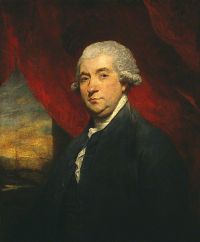
James Boswell

Definition and stakes

Gerald Stanley Lee The Lost Art of Reading

The most important fact—perhaps the only important fact—about James Boswell—the country boy of literature—is that, whatever may have been his limitations, he had the most important gift that life can give to a man—the gift of forgetting himself in it. In the Fleet Street of letters, smiling at him and jeering by him, who does not always see James Boswell, completely lost to the street, gaping at the soul of Samuel Johnson as if it were the show window of the world, as if to be allowed to look at a soul like this were almost to have a soul one’s self?
Source: Gutenberg

W. Keith Leask James Boswell

I vow to thee an eternal attachment. It shall be my study to do what I can to render your life happy: and if you die before me, I shall endeavour to do honour to your memory and, elevated by the remembrance of you, persist in noble piety. May God, the father of all beings, ever bless you! and may you continue to love your most affectionate friend, and devoted servant,—James Boswell.'
So early had Boswell made his resolve to be the biographer of Johnson.
Source: Gutenberg

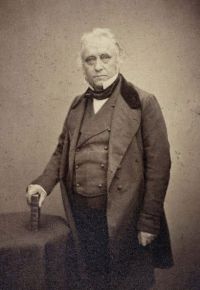
Portrait of Thomas Babington Macaulay Thomas Babington Macaulay Encyclopædia Britannica, Ninth Edition (1881)

This was James Boswell, a young Scotch lawyer, heir to an honourable name and a fair estate. That he was a coxcomb and a bore, weak, vain, pushing, curious, garrulous, was obvious to all who were acquainted with him. That he could not reason, that he had no wit, no humour, no eloquence, is apparent from his writings. And yet his writings are read beyond the Mississippi, and under the Southern Cross, and are likely to be read as long as the English exists either as a living or as a dead language. Nature had made him a slave and an idolater.
Source: Wikisource

Get perspective with Kwize: daily news enlightened by great literature