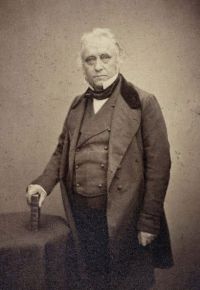
Thomas Babington Macaulay

Biographical details

Portrait of Thomas Babington Macaulay Thomas Babington Macaulay,  The History of England from the Accession of James II…

“ He listened to his brother Jacobites; and his courage rose. He listened to the agents of the government; and his heart sank within him. In an evening when he had dined and drunk his claret, he feared nothing. He would die like a man, rather than save his neck by an act of baseness. But his temper was very different when he woke the next morning, when the courage which he had drawn from wine and company had evaporated, when he was alone with the iron grates and stone walls, and when the thought of the block, the axe and the sawdust rose in his mind. ”
Source: Wikisource

Portrait of Thomas Babington Macaulay Thomas Babington Macaulay,  The History of England from the Accession of James II…

“ Happily for England, James was, as usual, his own worst enemy. No word indicating that he took blame to himself on account of the past, or that he intended to govern constitutionally for the future, could be extracted from him. Every letter, every rumour, that found its way from Saint Germains to England made men of sense fear that, if, in his present temper, he should be restored to power, the second tyranny would be worse than the first. Thus the Tories, as a body, were forced to admit, very unwillingly, that there was, at that moment, no choice but between William and public ruin. ”
Source: Wikisource

Portrait of Thomas Babington Macaulay Thomas Babington Macaulay,  Encyclopædia Britannica, Ninth Edition (1881)

“ The old philosopher is still among us in the brown coat with the metal buttons and the shirt which ought to be at wash, blinking, puffing, rolling his head, drumming with his fingers, tearing his meat like a tiger, and swallowing his tea in oceans. No human being who has been more than seventy years in the grave is so well known to us. And it is but just to say that our intimate acquaintance with what he would, himself have called the anfractuosities of his intellect and of his temper serves only to strengthen our conviction that he was both a great and a good man. ”
Source: Wikisource

Get perspective with Kwize: daily news enlightened by great literature