Summary

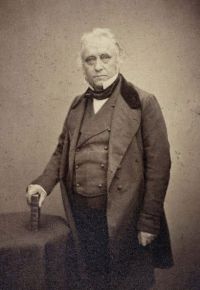
Portrait of Thomas Babington Macaulay Thomas Babington Macaulay The History of England from the Accession of James II…

The pavilion of James was pitched on the eminence of Donore. The flags of the House of Stuart and of the House of Bourbon waved together in defiance on the walls of Drogheda. All the southern bank of the river was lined by the camp and batteries of the hostile army. Thousands of armed men were moving about among the tents; and every one, horse soldier or foot soldier, French or Irish, had a white badge in his hat.
Source: Wikisource

Portrait of Thomas Babington Macaulay Thomas Babington Macaulay The History of England from the Accession of James II…

Still William continued to push forward, and still the Irish receded before him, till, on the morning of Monday the thirtieth of June, his army, marching in three columns, reached the summit of a rising ground near the southern frontier of the county of Louth. Beneath lay a valley, now so rich and so cheerful that the Englishman who gazes on it may imagine himself to be in one of the most highly favoured parts of his own highly favoured country. Fields of wheat, woodlands, meadows bright with daisies and clover, slope gently down to the edge of the Boyne.
Source: Wikisource

Portrait of Thomas Babington Macaulay Thomas Babington Macaulay The History of England from the Accession of James II…

But the King answered that he had not come to Ireland to let the grass grow under his feet. The event seems to prove that he judged rightly as a general. That he judged rightly as a statesman cannot be doubted. He knew that the English nation was discontented with the way in which the war had hitherto been conducted; that nothing but rapid and splendid success could revive the enthusiasm of his friends and quell the spirit of his enemies; and that a defeat could scarcely be more injurious to his fame and to his interests than a languid and indecisive campaign.
Source: Wikisource

Get perspective with Kwize: daily news enlightened by great literature