Summary

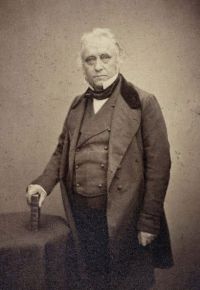
Portrait of Thomas Babington Macaulay Thomas Babington Macaulay The History of England from the Accession of James II…

But the chief service which Wharton rendered to the Whig party was that of bringing in recruits from the young aristocracy. He was quite as dexterous a canvasser among the embroidered coats at the Saint James's Coffeehouse as among the leathern aprons at Wycombe and Aylesbury. He had his eye on every boy of quality who came of age; and it was not easy for such a boy to resist the arts of a noble, eloquent and wealthy flatterer, who united juvenile vivacity to profound art and long experience of the gay world.
Source: Wikisource

Portrait of Thomas Babington Macaulay Thomas Babington Macaulay The History of England from the Accession of James II…

Wharton, Russell and Littleton maintained that the House ought to be satisfied with what the King had said. "Do you wish," said Littleton, "to make sport for your enemies? There is no want of them. They besiege our very doors. We read, as we come through the lobby, in the face and gestures of every nonjuror whom we pass, delight at the momentary coolness which has arisen between us and the King. That should be enough for us. We may be sure that we are voting rightly when we give a vote which tends to confound the hopes of traitors."
Source: Wikisource

Portrait of Thomas Babington Macaulay Thomas Babington Macaulay The History of England from the Accession of James II…

James seems to have thought that the strongest proof of kindness which he could give to heretics who had resigned wealth, country, family, for his sake, was to suffer them to be beset, on their dying beds, by his priests. If some sick man, helpless in body and in mind, and deafened by the din of bad logic and bad rhetoric, suffered a wafer to be thrust into his mouth, a great work of grace was triumphantly announced to the Court; and the neophyte was buried with all the pomp of religion.
Source: Wikisource

Get perspective with Kwize: daily news enlightened by great literature