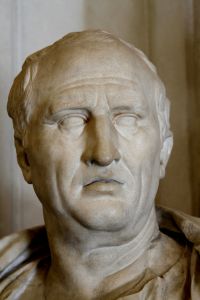
Scipio Africanus, the Roman general and statesman (236/235–183 BC), is celebrated as a military genius who secured Rome’s victory over Carthage in the Second Punic War, earning the epithet Africanus for his conquest of Africa. His strategic brilliance, exemplified by the decisive Battle of Zama, contrasts with his political challenges, including a public trial and exile.
Authors like Livy highlight his almost divine reputation, while Charlotte M. Yonge underscores his generosity and moral character. Voltaire criticizes his dependence on divine imagery, yet his legacy persists as a symbol of Roman virtue and tactical expertise, reflecting both his achievements and the intricacies of his time.
 Philip Schaff,
Nicene and Post-Nicene Fathers…
(1885)
Philip Schaff,
Nicene and Post-Nicene Fathers…
(1885)