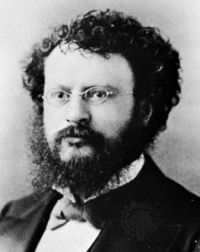
| editor

Biographical details

| editor,  The Modern Review, Volume 9, Number 2… (1911)

“ Kalidas has demonstrated that relation by means of the elements of Beauty. The Beauty that he adores is lit up by grace, modesty, and goodness; in its intensity it is true to one for ever; in its range it embraces the whole universe. It is fulfilled by renunciation, gratified by sorrow, and rendered eternal by religion. In the midst of this Beauty, the impetuous unruly love of man and woman has restrained itself and attained to a profound peace, like a wild torrent merged in the ocean of Goodness. Therefore is such Love higher and more wonderful than wild and unrestrained Passion. ”
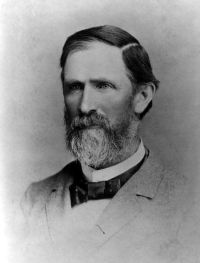
Source: Wikisource

| editor,  The Modern Review, Volume 21, Number 6… (1917)

“ Half a century has been enough for you to master this machine; and there are men among you, whose fondness for it exceeds their love for the living ideals which were born with the birth of your nation and nursed in your centuries. It is like a child, who, in the excitement of his play, imagines he likes his playthings better than his mother.
Where man is at his greatest, he is unconscious. Your civilisation, whose main-spring is the bond of human relationship, has been nourished in the depth of a healthy life beyond reach of prying self-analysis.
”
Source: Wikisource

| editor,  The Modern Review, Volume 12, Number 6… (1912)

“ It is hard to say whether man at such a time thinks any clearly defined thought. Only his heart rushes in a particular direction,—it sends forth an effusion of odour like the woodland, it utters a cricket-hum like the Night. What Rajib was thinking of I know not; but it seemed to him that that night all the old laws had been set aside; that day the rainy season's Night had drawn aside her veil of clouds, and this Night looked silent, beautiful and grave like the Mahamaya of those early days. All the currents of his being flowed impetuously together towards that Mahamaya. ”
Source: Wikisource

Get perspective with Kwize: daily news enlightened by great literature