Reflection, in mathematics, refers to a transformation that maps a Euclidean space onto itself through an isometry, using a hyperplane as its fixed set, resulting in mirror images of figures. However, beyond geometry, reflection extends into literature and philosophy, signifying a process of contemplation and self-examination. Woodrow Wilson described it as an atmospheric interplay of mental associations, while Ralph Waldo Emerson connected it to the discovery of beauty through self-awareness.
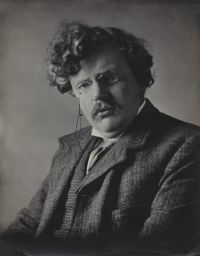
Friedrich Schiller highlighted its function in balancing desire and reason, and Gilbert Keith Chesterton illustrated its dual character as both reality and illusion. These diverse viewpoints reveal reflection as a link between spatial symmetry and the human search for meaning, merging objective precision with subjective introspection.
 Woodrow Wilson,
Mere literature, and other essays
Woodrow Wilson,
Mere literature, and other essays