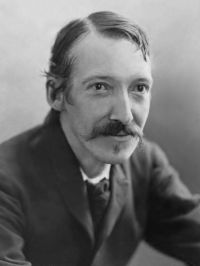
 Robert Louis Stevenson,
The Pocket R.L.S.: Being Favourite Passages from the Works of Stevenson
Robert Louis Stevenson,
The Pocket R.L.S.: Being Favourite Passages from the Works of Stevenson
“ It’s deadly commonplace, but, after all, the commonplaces are the great poetic truths. ”
The concept of "commonplace" refers to widely shared ideas, norms, or expressions that reflect collective human experience rather than individual originality. Authors such as Robert Louis Stevenson recognized its poetic resonance, stating that commonplaces convey universal truths, while Ferdinand Lassalle analyzed how societal structures are influenced by dominant class ideologies.
Sarah Stickney Ellis critiqued the performative elements of social conventions, emphasizing the tension between idealized community and material excess. These diverse viewpoints highlight the theme’s duality: as both a foundation for cultural unity and a means of examining societal complacency. The relationship between individuality and collective identity continues to be central to its lasting significance.
Robert Louis Stevenson,
The Pocket R.L.S.: Being Favourite Passages from the Works of Stevenson
“ It’s deadly commonplace, but, after all, the commonplaces are the great poetic truths. ”
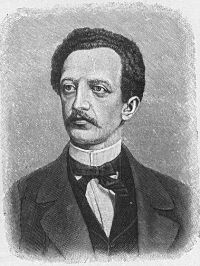 Ferdinand Lassalle,
The Working Man's Programme
(1884)
Ferdinand Lassalle,
The Working Man's Programme
(1884)
“ We have now seen, gentlemen, two periods of the world, each of which is dominated by the ruling idea of a particular class of the community which impresses its own principle on all the social arrangements of its time. ”
James Baldwin Brown, Misread Passages of Scriptures
“ Tell citizens that they need to become citizens of this kingdom, that the commonwealth on earth may be the image and the vestibule of the commonwealth of the skies. Tell classes that they need the instructions of this Master, that society may be less a den of selfish contentions, and more a field of gracious ministries and ennobling toils. Tell commerce that she needs the inspiration of this duty, that the dull, the common, the base may be transfigured and wear the forms of beauty, nobleness, and truth. ”
 John Henry Newman,
The Idea of a University Defined and Illustrated
John Henry Newman,
The Idea of a University Defined and Illustrated
“ I call then this commonwealth pre-eminently and emphatically Human Society, and its intellect the Human Mind, and its decisions the sense of mankind, and its disciplined and cultivated state Civilization in the abstract, and the territory on which it lies the orbis terrarum, or the World. ”
 John Stuart Mill,
On Liberty
(1869)
John Stuart Mill,
On Liberty
(1869)
“ WHAT, then, is the rightful limit to the sovereignty of the individual over himself? Where does the authority of society begin? How much of human life should be assigned to individuality, and how much to society? ”
 Sarah Stickney Ellis,
The Daughters of England
(1842)
Sarah Stickney Ellis,
The Daughters of England
(1842)
“ How much is left undone, for the sake of society! But let us pause a moment, and ask what society is. Is it a community of tried and trusted friends, united together by the ties of perfect love? Listen to the remarks of those, even of your own family, who return from the evening party, or the morning call. Is it a community of beings with whom mind is all in all, and intellectual improvement the purpose for which they meet? Observe the preparations that are made—the dress, the furniture, the food, the expense that is lavished upon these. ”
John R. Dos Passos, The Anglo-Saxon Century and the Unification of the English-Speaking People
“ As it is, in the modern sense, its raison d'etre is the harmonious blending of all classes of society; the preservation of the essential interests, wisely understood, of the people; the preservation of an open field for the exercise of every virtue and every talent, and, subject to these, the performance of every duty enjoined by good neighbourhood, and the encouragement of every tendency and impulse which points to the amelioration of mankind, at home or abroad. Such is the idea of a commonwealth, constructed on true, liberal principles, and sanctified by Christianity. ”
A. S. Draper, Report of the Committee of Fifteen
“ Man has two selves, they say, the individual self, and the collective self of the organized state or nation. The study of history is, then, the study of this larger, corporate, social and civil self. The importance of this idea is thus brought out more clearly in its educational significance. For to learn this civil self is to learn the substantial condition which makes possible the existence of civilized man in all his other social combinations—the family, the Church, and the manifold associated activities of civil society. ”
 Philip Schaff,
Nicene and Post-Nicene Fathers…
(1885)
Philip Schaff,
Nicene and Post-Nicene Fathers…
(1885)
“ Observe this whole world arranged in the same human commonwealth, with what administrations, with what orderly degrees of authority, with what conditions of citizenship, with what laws, manners, arts! ”
 Carl Schurz,
Speeches, correspondence and political papers of Carl Schurz
(1913)
Carl Schurz,
Speeches, correspondence and political papers of Carl Schurz
(1913)
“ We hear, indeed, some wild talk about the establishment of a social order, or disorder, without government and without laws and courts of justice, in which everybody can do what he or she pleases, and that when everybody can do what he or she pleases, everybody will do right, and have enough of the good things of the world, and be happy. ”
 Wilhelm Roscher,
Principles of Political Economy…
Wilhelm Roscher,
Principles of Political Economy…
“ As, in the structure of the world, the apparently opposing tendencies of the centrifugal and centripetal forces produce the harmony of the spheres, so, in the social life of man, self-interest and conscience produce in him the feeling for the common good.108 This sentiment of the common interest is the foundation on which rise in successive gradation, the life of the family, of the community, of the nation and of humanity, the last of which should be coincident with the life of the Church. ”
William Hazlitt, The Collected Works of William Hazlitt…
“ Can any one doubt that such a state of society in which the greatest knowledge of its interests was thus combined with the greatest sympathy with its wants, would realize the idea of a perfect Commonwealth? ”
Emma Bennett, The Restless Compendium (2016)
“ Individualist doctrines celebrate the ‘I’, collective movements the ‘we’. Devoid of the fullness of self-assertion or the positive connotations of friendship, community and political solidarity, ‘you’ can tend to get overlooked. ”
 Herbert Spencer,
Popular Science Monthly
(1881)
Herbert Spencer,
Popular Science Monthly
(1881)
“ And this is the form of a society characterized by status—a society, the members of which stand one toward another in successive grades of subordination. From the despot down to the slave, all are masters of those below and subjects of those above. The relation of the child to the father, of the father to some superior, and so on up to the absolute head, is one in which the individual of lower status is at the mercy of one of higher status. ”
 Franklin Henry Giddings,
Popular Science Monthly
(1909)
Franklin Henry Giddings,
Popular Science Monthly
(1909)
“ Here a word must be said about the subjective aspect of society, which, in its objective aspect, as we have seen, is merely the struggle and process of adjustment. What is the relation of adjustment to sympathy and to understanding, to communication and to concerted purpose, to the evolution of a social constraint through which the community controls and shapes the individual, to cooperation and to social organization? ”
 Theodore Parker,
The Collected Works of Theodore Parker
(1863)
Theodore Parker,
The Collected Works of Theodore Parker
(1863)
“ Shall the people all be comfortable, engaged in honest work, which enriches while it elevates; or shall a part be the poorest of the world that a few may be idle and rich? It is a question of political morality. Shall the government be a commonwealth where all are citizens, or an aristocracy where man owns his brother man? ”
 Castello Newton Holford,
Aristopia
(1895)
Castello Newton Holford,
Aristopia
(1895)
“ In this new nation was realized the dream of the social philosophers and philanthropists of all ages: a government of the people, by the people, and for the people, resting on the deep and solid foundations of Liberty, Equality, and Fraternity. ”
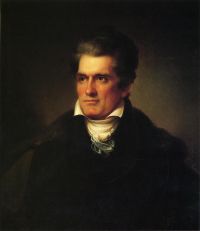 John C. Calhoun,
Works of John C. Calhoun
(1854)
John C. Calhoun,
Works of John C. Calhoun
(1854)
“ But, although society and government are thus intimately connected with and dependent on each other,—of the two society is the greater. It is the first in the order of things, and in the dignity of its object; that of society being primary,—to preserve and perfect our race; and that of government secondary and subordinate, to preserve and perfect society. Both are, however, necessary to the existence and well-being of our race, and equally of Divine ordination. ”
John E. Young, Yale Law Journal (1917)
“ In other words, as I use the term community, one of the autonomic groups into which the race is divided is intended; and as I use the term state, the governing entity of such a group is intended. By individual ideals, as I shall use that term, the opinions an individual forms as to what he should do or omit to promote his own welfare and that of the human race is intended; and by community ideals, the opinions a community forms as to what it should do to promote its welfare and that of the individuals of whom it is composed. ”
 Thomas Hill Green,
Lectures on the Principles of Political Obligation
Thomas Hill Green,
Lectures on the Principles of Political Obligation
“ They depend for their existence, indeed, on society, a society of men who recognise each other as ἴσοι καὶ ὅμοιοι, as capable of a common well-being, but not on society's having assumed the form of a state. ”
T. W. Allies, The Formation of Christendom, Volume II
“ There remained the earthly city, the human commonwealth. And when, passing beyond the bounds of any particular nation, and man's civil position therein, philosophy grasped [pg 471] the moral life as the relation between man as man,459 and conceived human society itself as one universal kingdom of gods and men, it made a real progress and reached its highest point. ”
Various, The Monist, Vol. 1, 1890-1891
“ We have here postulated a community of persons, and a good which realised by the will of one is made public. In "this unity of individuals as respects the end of action, this existence of a practical common good," we have what is called "the moral order of the world." ”
John Morrison, New Ideas in India During the Nineteenth Century
“ New ideas in the social sphere first claim our attention. The individual and the community, each have rights, says a writer on the philosophy of history, and it is hurtful when the balance is not preserved. ”
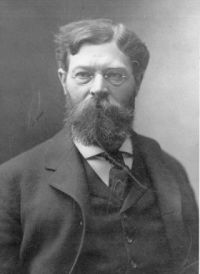 William De Witt Hyde,
Practical Ethics
William De Witt Hyde,
Practical Ethics
“ Here the recognition of a common good, a commonwealth in which each person has an equal worth with every other, is the only satisfactory solution. "Be a person, and [3] respect the personality of others," is the duty in this sphere. ”
 Jean-Jacques Rousseau,
The Social Contract
(1762)
Jean-Jacques Rousseau,
The Social Contract
(1762)
“ It is solely on the basis of this common interest that every society should be governed. ”
Tyrone Power, Impressions of America During the Years 1833…
“ I seek to describe its people as I saw them,—clear-headed, energetic, frank, and hospitable; a community suited to, and labouring for, their country's advancement, rather than for their own present comfort. ”
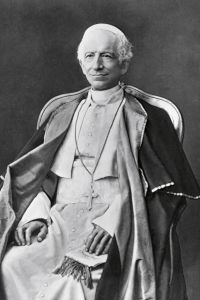 Leo XIII,
The Great Encyclical Letters of Pope Leo XIII
(1903)
Leo XIII,
The Great Encyclical Letters of Pope Leo XIII
(1903)
“ It is this natural impulse which binds men together in civil society; and it is likewise this which leads them to join together in associations of citizen with citizen; associations which, it is true, cannot be called societies in the full sense of the word, but which, notwithstanding, are societies. ”
 Harriet Beecher Stowe,
A Key to Uncle Tom's Cabin
(1853)
Harriet Beecher Stowe,
A Key to Uncle Tom's Cabin
(1853)
“ With a little more common sense, and much less of the uncommon sort, we should better understand Scripture, the institutions under which we live, the several rights of our fellow-citizens in all sections of the country, and the good, sound, practical, social relations, which ought to contribute infinitely more than they do to the happiness of mankind. ”
Calvin Olin Davis, A Guide to Methods and Observation in History
“ It gives habits of analyzing the aims and motives of men, and the means they employ to attain their ends, i.e., it gives insight into character and hence makes social adjustment easier. (b) It develops tolerance for the opinions, convictions, and ideals of others, and tends to prevent hard, dogmatic, and uncompromising judgments and attitudes. (c) It gives appreciation of the civic and political institutions of to-day—their origin, development, and purposes—and hence teaches the rights and obligations that are inherent in citizenship. ”
Cecil B. Hartley, The Gentlemen's Book of Etiquette and Manual of Politeness
“ This society, composed, as it is, of many varying natures and elements, where each individual must submit to merge his own identity into the universal whole, which makes the word and state, is divided and subdivided into various cliques, and has a pastime for every disposition, grave or gay; and with each division rises up a new set of forms and ceremonies to be observed{4} if you wish to glide down the current of polite life, smoothly and pleasantly. ”
Louis A. Boettiger, Armenian Legends and Festivals
“ The social history of this sturdy people offers us a very clear-cut example of what really makes a society or a nation. Not mountains, not dynasties, not blood, but common interests, common traditions, common beliefs; in short, mental community. ”
Elizabeth Cooper, The Harim and the Purdah: Studies of Oriental Women
“ Here is a self-centered commonwealth, with little dependence for its welfare upon the outer world, and the people have remained the same as their fathers and their father’s fathers, impervious to new innovations and ideas. ”
Thomas Hill Green,
Lectures on the Principles of Political Obligation
“ That common source is the rational recognition by certain human beings—it may be merely by children of the same parent—of a common well-being which is their well-being, and which they conceive as their well-being whether at any moment any one of them is inclined to it or no, and the embodiment of that recognition in rules by which the inclinations of the individuals are restrained, and a corresponding freedom of action for the attainment of well-being on the whole is secured. ”
 James Anthony Froude,
The English in the West Indies…
James Anthony Froude,
The English in the West Indies…
“ Communities, however, have existed where people have thought more of their obligations than of their 'rights,' more of the welfare of their [Pg 323] country, or of the success of a cause to which they have devoted themselves, than of their personal pleasure or interest—have preferred the wise leading of superior men to their own wills and wishes. ”
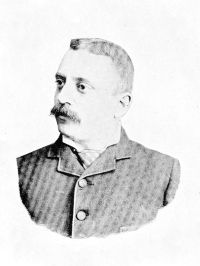 Henry M. Hunt,
The Crime of the Century; Or, The Assassination of Dr…
Henry M. Hunt,
The Crime of the Century; Or, The Assassination of Dr…
“ In the presence of a society whose object is the maintenance of the right of the individual to think, to speak and to act as his conscience directs, regardless of any adverse powers. Impressed by the spirit of such a meeting, I can not refrain from giving expression to the sentiments I feel. ”
Various, The Catholic World, Vol. 14, October 1871-March 1872
“ We shall make our division on the principle of proceeding from the most general, or those which relate to society in its most extensive sense, to those which are less general, relating to society in its more specific and determinate sense, and finally to those which are the most particular, relating to separate portions and members of society, to the family and to the individual. ”
 Julia Ward Howe,
Is Polite Society Polite? and Other Essays
Julia Ward Howe,
Is Polite Society Polite? and Other Essays
“ But all of us have a share, too, in the good and glory of human destiny. The free course of intelligence and sympathy in our own commonwealth establishes here a social unity which is hard to find elsewhere. ”
 Woodrow Wilson,
The social center a means of common understanding
(1894)
Woodrow Wilson,
The social center a means of common understanding
(1894)
“ It is necessary that such portions of the community should be linked with the other portions; it is necessary that simple means should be found by which by an interchange of points of view we may get together, for the whole process of modern life, the whole process of modern politics, is a process by which we must exclude misunderstandings, exclude hostilities, exclude deadly rivalries, make men understand other men’s interests, bring all men into common counsel, and so discover what is the common interest. ”
Joel Tiffany, The Astral World—Higher Occult Powers
“ Now, inasmuch as the love will belong either to the sphere of self-love, charity, or divine love, you will find that society will always be expressive of one of these three loves, never the third, though. We say of society, when we look to the principles that govern it in its administration, it is but the embodiment of the character and will of those constituting the government [Pg 31] —it is but an expression of the individuals composing it. Therefore there are three spheres of government corresponding to the three spheres of the individual. ”
Howard H. Quint, Profile in black and white (1958)
“ From history and philosophy and custom, we pass, therefore, to the force which in our day and generation is becoming the greatest of them all, the power of social justice which finds its outlet and expression in the method of sociology.... ”
 William Graham Sumner,
Folkways
William Graham Sumner,
Folkways
“ All notions of propriety, decency, chastity, politeness, order, duty, right, rights, discipline, respect, reverence, coöperation, and fellowship, especially all things in regard to which good and ill depend entirely on the point at which the line is drawn, are in the mores. The mores can make things seem right and good to one group or one age which to another seem antagonistic to every instinct of human nature. ”
Herbert Spencer,
Popular Science Monthly
(1876)
“ This structure, which adapts a society for combined action against other societies, is associated with the belief that its members exist for the benefit of the whole, and not the whole for the benefit of its members. ”
J. W. Sullivan, Direct Legislation by the Citizenship through the Initiative and Referendum
“ And thus the stages are before us in the course of which the coming just society may gradually be established—that society in which the individual shall attain his highest liberty and development, and consequently his greatest happiness. ”
Samuel R. Wells, How to Behave: A Pocket Manual of Republican Etiquette…
“ Both grow out of the necessities of our existence and relations. We have individual rights based on the fact of our individual being; and we have social duties resulting from our connection, in the bonds of society, with other individuals who have similar rights. ”
T. W. Allies, The Formation of Christendom, Volume II
“ The common law which ruled this human commonwealth was to live according to the dictation of reason, that is, according to nature, in which therefore virtue consists,464 being one and the same in God and in man, and in them alone.465 Such virtue branches into four parts, the prudence which discerns and practises the truth; the justice which assigns his own to each; the courage which prevails over all difficulties ”
