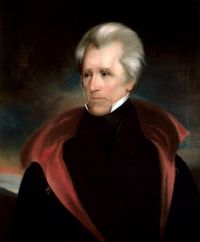
John C. Calhoun

Biographical details

Portrait of John C. Calhoun John C. Calhoun Works of John C. Calhoun (1854)

Indeed, I might go further, and assert, that it is, of itself, all sufficient to convert it into a national, consolidated government — and thus to consummate, what many of the most prominent members of the convention so long, and so perseveringly contended for. Admit the right of Congress to regard the courts of the States as inferior to those of the United States, and every other act of assumption is made easy. It is the great enforcing power to compel a State to submit to all acts, however unconstitutional, oppressive or outrageous — or to oppose them at its peril.
Source: Wikisource

Portrait of John C. Calhoun John C. Calhoun Against the Force Bill

You cannot keep the States united in their constitutional and federal bonds by force. Force may, indeed, hold the parts together, but such union would be the bond between master and slave - a union of exaction on one side and of unqualified obedience on the other. That obedience which, we are told by the Senator from Pennsylvania, is the Union! Yes, exaction on the side of the master; for this very bill is intended to collect what can be no longer called taxes - the voluntary contribution of a free people - but tribute - tribute to be collected under the mouths of the cannon!
Source: Wikisource

Portrait of John C. Calhoun John C. Calhoun Remarks of Mr. Calhoun of South Carolina on the bill to prevent the interference of certain federal officers in elections…

The terms union, federal, united, all imply a combination of sovereignties, a confederation of States. They never apply to an association of individuals. Who ever heard of the United State of New York, of Massachusetts, or of Virginia? Who ever heard the term federal or union applied to the aggregation of individuals into one community? Nor is the other point less clear—that the sovereignty is in the several States, and that our system is a union of twenty-four sovereign powers, under a constitutional compact, and not of a divided sovereignty between the States severally and the United States?
Source: Gutenberg

Get perspective with Kwize: daily news enlightened by great literature