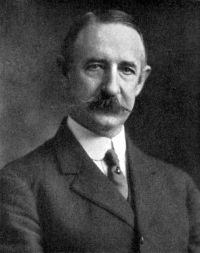
An assertion is a statement that affirms a proposition as true, functioning both as a logical element in programming and as a philosophical expression of belief. In programming, it checks conditions during execution, while philosophers such as G.E. Moore viewed it as a way of conveying belief or knowledge, and John Henry Newman differentiated it from argument.
Josiah Royce connected assertions to empirical experience, highlighting their dependence on observable evidence. These viewpoints illustrate assertions as instruments for both technical verification and epistemic engagement, linking logic with human judgment.
 G. E. Moore,
Ethics — Chapter III
(1912)
G. E. Moore,
Ethics — Chapter III
(1912)