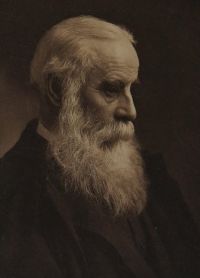
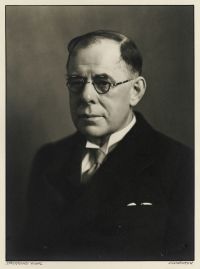
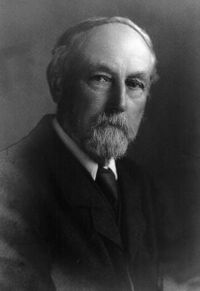
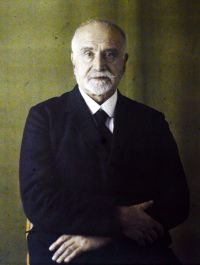
A criterion is a distinguishing feature used to select or classify entities, serving as a standard for judgment. Philosophers have long debated its nature and application: Herbert Allen Giles contrasts intuitive standards with reliance on the senses, while William James frames evolution as an objective ethical benchmark.
John Cook Wilson cautions against deriving general principles from specialized sciences, and Boyd Henry Bode explores the interaction between fixed and changing values. These perspectives highlight how criteria connect subjective experience with objective analysis, influencing areas from ethics to the theory of knowledge. The variety of approaches underscores the criterion’s role as both a practical instrument and a philosophical pivot.
 Herbert Allen Giles,
Gems of Chinese Literature
(1922)
Herbert Allen Giles,
Gems of Chinese Literature
(1922)