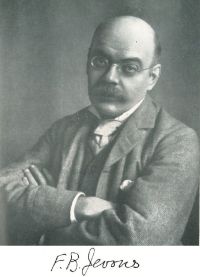
“ We have already remarked that paradoxical though it sounds to say that the ideal is real, the seeming paradox does express a fact—the fact at once of our consciousness of the difference between what is and what ought to be, and of our conviction that what ought to be is no mere illusion. ”
Paradox
Definition and stakes
Paradox, a concept grounded in contradiction and apparent inconsistency, has long fascinated thinkers across disciplines. From De Morgan’s A Budget of Paradoxes to Wilde’s assertion that "Life imitates art," writers have wrestled with its implications, whether in logic, theology, or literature.
Jevons viewed paradox as an expression of the tension between ideal and reality, while Chesterton connected it to religious depth, contrasting shallow humor with profound truth. Royce emphasized its challenges to realism, and Perlman observed its role in historical bewilderment. These diverse examinations highlight paradox as both a mental tool and a means of uncovering deeper dimensions of existence.
Quotes about “paradox”
 Josiah Royce,
The World and the Individual, First Series
(1899)
Josiah Royce,
The World and the Individual, First Series
(1899)
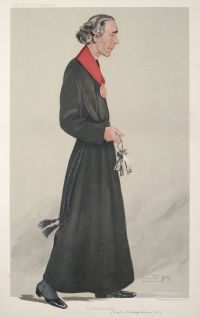
“ Paradox has faced the realist, therefore, whenever he has attempted, during the history of thought, seriously to apply that idea of the fundamental definition of Being which lies at the basis of his whole doctrine, to the development of a positive conception of a world that shall contain either One Being or Many Realities. ”
 Joseph Armitage Robinson,
1911 Encyclopædia Britannica
(1911)
Joseph Armitage Robinson,
1911 Encyclopædia Britannica
(1911)
“ There is the same use of parables from nature, the same incisiveness of speech and employment of paradox, the same demand to sacrifice all to Him and for His cause, the same importunate claim made by Him on the human soul. ”
 Alfred H. Lloyd,
The will to doubt
Alfred H. Lloyd,
The will to doubt
“ Alike in ordinary life and in science, even in science where such a result was perhaps hardly to be expected, we found what at least seemed like illusion and what certainly was paradox, and almost against our will we had to conclude that a spirit of contradiction and duplicity and vacillation dwelt at the very centre and the very heart of our human experience. ”
Fredy Perlman, Manual for Revolutionary Leaders (1974)
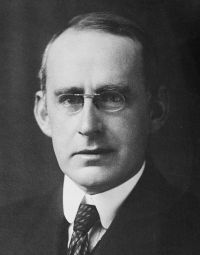
“ Paradox and confusion have been created by the historical treatment of one event as if it were the other, and by the treatment of the necessary conditions for one event as if they were necessary conditions for the other. ”
 Sir Arthur Stanley Eddington,
The nature of the physical world
(1928)
Sir Arthur Stanley Eddington,
The nature of the physical world
(1928)
“ The key to the paradox is that we ourselves, our conventions, the kind of thing that attracts our interest, are much more concerned than we realise in any account we give of how the objects of the physical world are behaving. And so an object which, viewed through our frame of conventions, may seem to be behaving in a very special and remarkable way may, viewed according to another set of conventions, be doing nothing to excite particular comment. ”
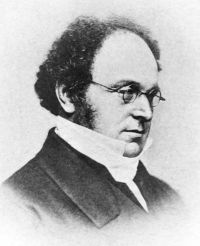 Augustus De Morgan,
A Budget of Paradoxes — 1864
(1872)
Augustus De Morgan,
A Budget of Paradoxes — 1864
(1872)
“ DECLARATION OF BELIEF 1864-65.—It often happens that persons combine to maintain and enforce an opinion; but it is, in our state of society, a paradox to unite for the sole purpose of blaming the opposite side. To invite educated men to do this, and above all, men of learning or science, is the next paradoxical thing of all. ”
 Oscar Wilde,
Intentions
(1891)
Oscar Wilde,
Intentions
(1891)
“ Paradox though it may seem—and paradoxes are always dangerous things—it is none the less true that Life imitates art far more than Art imitates life. ”
 G. K. Chesterton,
The Ball and the Cross
G. K. Chesterton,
The Ball and the Cross
“ The monk pointed downward at Ludgate Hill. “I am going,” he said, “to climb up into a star.” Those who look at the matter most superficially regard paradox as something which belongs to jesting and light journalism. Paradox of this kind is to be found in the saying of the dandy, in the decadent comedy, “Life is much too important to be taken seriously.” Those who look at the matter a little more deeply or delicately see that paradox is a thing which especially belongs to all religions. ”
James Anson Farrer, Crimes and Punishments
“ This truth, which seems a paradox to ordinary minds, more struck as they are by a little present inconvenience than by the pernicious but remote consequences which flow from a false principle enrooted among a people, seems to me to be demonstrated. Our knowledge and all our ideas are reciprocally connected together ”
Augustus De Morgan,
A Budget of Paradoxes, Volume II
“ The paradox being the proposition of something which runs counter to what would generally be thought likely, may present itself in many ways. There is a fly-leaf paradox, which puzzled me for many years, until I found a probable solution. I frequently saw, in the blank leaves of old books, learned books, Bibles of a time when a Bible was very costly, etc., the name of an owner who, by the handwriting and spelling, must have been an illiterate person or a child, followed by the date of the book itself. ”
Augustus De Morgan,
A Budget of Paradoxes, Volume I
“ A great many individuals, ever since the rise of the mathematical method, have, each for himself, attacked its direct and indirect consequences. I shall not here stop to point out how the very accuracy of exact science gives better aim than the preceding state of things could give. I shall call each of these persons a paradoxer, and his system a paradox. I use the word in the old sense: a paradox is something which is apart from general opinion, either in subject-matter, method, or conclusion.Many of the things brought forward would now be called crotchets, which is the nearest word we have to old paradox. ”
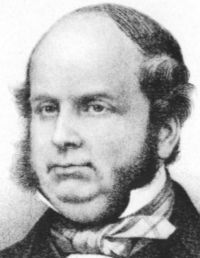 Henry Thomas Buckle,
History of Civilization in England…
Henry Thomas Buckle,
History of Civilization in England…
“ It was a bold and beautiful paradox, which required courage as well as insight to broach, and the reception of which marks an epoch in the human mind, because it was an immense step towards idealizing matter into force. Some, indeed, have spoken of invisible matter ”
James Anson Farrer, Crimes and Punishments
“ But the seeming paradox will vanish, if one considers, that, as objects become confused when too near the eyes, so the too great propinquity of moral ideas easily causes the numerous simple ideas which compose them to become blended together, to the confusion of those clear lines of demarcation demanded by the geometrical spirit, which would fain measure exactly the phenomena of human sensibility. ”
 Aristotle,
Organon
(1853)
Aristotle,
Organon
(1853)
“ Methods of forcing the opponent to assert some falsehood or paradox. To interrogate nothing definitely laid down. To ask many questions. Recent prevention of these. To assert the question is made for the sake of learning. To induce the opponent to the arguer's strong points. To ascertain what the philosophers of the opponent's order—assert paradoxical. ”
Augustus De Morgan,
A Budget of Paradoxes — 1864
(1872)
“ CAMBRIDGE POETS. Sometimes a person who has a point to carry will assert a singular fact or prediction for the sake of his point; and this paradox has almost obtained the sole use of the name. Persons who have reputation to care for should beware how they adopt this plan, which now and then eventuates a spanker, as the American editor said. Lord Byron, in "English Bards, etc." ”
 Johann Gottlieb Fichte,
Sun-Clear Statement — Sixth Conversation
(1868)
Johann Gottlieb Fichte,
Sun-Clear Statement — Sixth Conversation
(1868)
“ From this radical difference of our minds arise all the diverse phenomena which are witnessed every day. Thus when I say something which to me appears very easy, natural and self-evident, you consider it to be a terrible paradox which you cannot possibly make clear to yourselves ”
 Alfred North Whitehead,
Science and the modern world
(1925)
Alfred North Whitehead,
Science and the modern world
(1925)
“ 47The paradox is now fully established that the utmost abstractions are the true weapons with which to control our thought of concrete fact. ”
 Three Initiates,
The Kybalion
(1908)
Three Initiates,
The Kybalion
(1908)
“ And their warnings are particularly directed to the problems of the Absolute and the Relative, which perplex all students of philosophy, and which cause so many to think and act contrary to what is generally known as "common sense." And we caution all students to be sure to grasp the Divine Paradox of the Absolute and Relative, lest they become entangled in the mire of the Half-Truth. ”
Oscar Wilde,
The Picture of Dorian Gray
(1890)
“ Well, the way of paradoxes is the way of truth. To test reality we must see it on the tight rope. When the verities become acrobats, we can judge them." ”
 Plutarch,
Selected Essays of Plutarch, Vol…
Plutarch,
Selected Essays of Plutarch, Vol…
“ But philosophers must not be listened to, if they choose to meet paradoxes with paradoxes, and, when contending against strange views, to invent views which are more strange and wonderful still. |924| Here are these Stoics with their “tendency towards the middle”! Is there any paradox which is not implicit there? That our earth, with all those depths and heights and inequalities, is a Sphere? That there are people at our antipodes who live like timber-worms or lizards, their lower limbs turned upper-most as they plant them on earth? ”
Augustus De Morgan,
A Budget of Paradoxes — 1850-1856
(1872)
“ But if, which I suspect, they are intended to judge as they are, they will be in a rare difficulty. All the paradoxers are of like pretensions: they cannot, as a class, be right, for each one contradicts a great many of the rest. ”
Howard Phillips Lovecraftand E. Hoffmann Price, Through the Gates of the Silver Key… (1934)
“ It is full of those paradoxes, contradictions and anomalies which have no place in waking life, but which fill our more fantastic dreams and are taken as matters of course till we return to our narrow, rigid, objective world of limited causation and tri-dimensional logic. ”
Augustus De Morgan,
A Budget of Paradoxes, Volume II
“ And shine in the Budget of Paradoxes!When a paradoxer parades capital letters and diagrams which are as good as Newton's to all who know nothing about it, some persons wonder why science does not rise and triturate the whole thing. This is why: all who are fit to read the refutation are satisfied already, and can, if they please, detect the paradoxer for themselves. ”
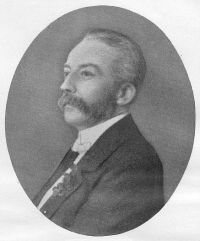 Richard Claverhouse Jebb,
Essays and Addresses
(1907)
Richard Claverhouse Jebb,
Essays and Addresses
(1907)
“ The paradoxes of one age are said to be the truisms of the next, but the violent contrast suggested by the epigram is hardly the important point to seize if we desire to trace the growth of opinion. There was a moment when the so-called paradoxes were neither paradoxes nor as yet truisms, but only rather new and intelligent opinions, seen to be such against the foil of notions which were decaying, but had not quite gone out. ”
Three Initiates,
The Kybalion
(1908)
“ It explains the old paradoxes, that have perplexed so many, which have been stated as follows: "Thesis and antithesis are identical in nature, but different in degree"; "opposites are the same, differing only in degree"; "the pairs of opposites may be reconciled"; "extremes meet"; "everything is and isn't, at the same time"; "all truths are but half-truths"; "every truth is half-false" ”
Augustus De Morgan,
A Budget of Paradoxes, Volume I
“ The manner in which a paradoxer will show himself, as to sense or nonsense, will not depend upon what he maintains, but upon whether he has or has not made a sufficient knowledge of what has been done by others, especially as to the mode of doing it, a preliminary to inventing knowledge for himself. ”
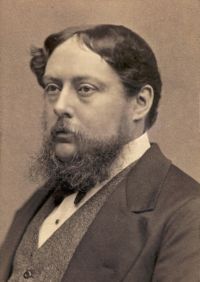 Richard A. Proctor,
Myths and Marvels of Astronomy
Richard A. Proctor,
Myths and Marvels of Astronomy
“ A half-understood explanation, or a carelessly worded account of some natural phenomenon, leads the paradoxist, whose nature is compounded of conceit and simplicity, to originate a theory of his own on the subject. ”
Augustus De Morgan,
A Budget of Paradoxes, Volume I
“ There is a line to be drawn which is constantly put aside in the arguments held by paradoxers in favor of their right to instruct the world. Most persons must, or at least will, like the lady in Cadogan Place, [5] form and express an immense variety of opinions on an immense variety of subjects; and all persons must be their own guides in many things. ”
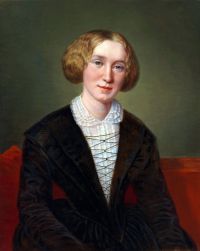 George Eliot,
Daniel Deronda
(1876)
George Eliot,
Daniel Deronda
(1876)
“ But human experience is usually paradoxical, if that means incongruous with the phrases of current talk or even current philosophy. ”
 George Berkeley,
A Treatise Concerning the Principles of Human Knowledge
George Berkeley,
A Treatise Concerning the Principles of Human Knowledge
“ EIGHTH OBJECTION.--TWOFOLD ANSWER.--In the eighth place, the universal concurrent assent of mankind may be thought by some an invincible argument in behalf of Matter, or the existence of external things. Must we suppose the whole world to be mistaken? And if so, what cause can be assigned of so widespread and predominant an error? I answer, FIRST, that, upon a narrow inquiry, it will not perhaps be found so many as is imagined do really believe the existence of Matter or things without the mind. ”
 F. H. Bradley,
Ethical Studies — Essay IV.
(1876)
F. H. Bradley,
Ethical Studies — Essay IV.
(1876)
“ But I do not suppose I shall find much contradiction if I say that the predominant character of existence in space and time is, in one word, its particularness, what is ordinarily called its concreteness, the infinitude of its relations. An existing thing and the mere thought of a thing are not the same, if that be taken to mean that there is no difference between them; and, especially in morals, the distance between theory and fact is as immeasurable as the distance between what is thought and what is willed, between a definition and the thing defined. ”
Ethan Allen, Reason, the Only Oracle of Man…
“ Could blind chance constitute order and decorum, and consequently a providence? That wisdom, order, and design should be the production of nonentity, or of chaos, confusion, and old night, is too absurd to deserve a serious confutation, for it supposeth that there may be effects without a cause, viz.: produced by nonentity, or that chaos and confusion could produce the effects of power, wisdom, and goodness. Such absurdities as these we must assent to, or subscribe to the doctrine of a self-existent and providential being. ”
Gouverneur Morris, An Inaugural Discourse, Delivered before the New York Historical Society… (1816)
“ Philosophy, indeed, at a later day, may bring her balance of probability, put the evidence of opposed facts in different scales, and deduce fair-seeming conclusions from an assumed principle that man is a rational creature. But is that assumption just? or, rather, does not History show, and experience prove, that he is swayed from the course which reason indicates, by passion, by indolence, and even by caprice? When the foundation is false, the superstructure must fall. ”
Josiah Royce,
The World and the Individual, First Series
(1899)
“ And, as we have already seen, and in the present lecture shall further illustrate, the relation of partial and total meaning is, at the same time, the relation of any finite will to the expression of the complete intent of that same will. Without contradiction, therefore, you are unable to assert the real Being of any world, unless you conceive that world as the expressed will whose partial momentary embodiment you even now observe, whenever you get any rational idea before your mind. ”
Josiah Royce,
The World and the Individual, First Series
(1899)
“ These social presuppositions have a great deal to do with the development of the whole realistic world, — a world where an abstract reduction of the reality to a mysterious unity, such as the Eleatic One, has alternated with a tendency to create numerous gaps and separations. In this world, thought, as you see, first declares certain barriers absolute; and then proceeds, by immediate assurance, or by elaborate devices of reasoning, to transcend in knowledge these barriers, and to join in insight what Being is first said to have put forever asunder. ”
 James Frederick Ferrier,
Philosophical Works of the Late James Frederick Ferrier
(1875)
James Frederick Ferrier,
Philosophical Works of the Late James Frederick Ferrier
(1875)
“ Should any one allege that the workings of human thought, as manifested in these contradictory propositions about space and time, indicate certain essential laws of human thinking, and that such laws, being essential, must be transferred, if any are to be transferred, to all thinking, I answer that these laws are not essential to human thinking, unless their opposites are shown to be nonsensical and contradictory by an appeal to the principle of contradiction. ”
John Gerard, The Old Riddle and the Newest Answer
“ All minds [he tells us] [43] with any instincts of science in their composition have grown to distrust, on merely antecedent grounds, any explanation which embodies a miraculous element. Such minds have grown to regard{30} all these explanations as mere expressions of our own ignorance of natural causation; or, in other words, they have come to regard it as an à priori truth that nature is always uniform in respect of method or causation; that the reign of law is universal; the principle of continuity ubiquitous. ”
Josiah Royce,
The World and the Individual, First Series
(1899)
“ Meanwhile, there remain many ways in which we can define Being either more in terms of Immediacy or else more in terms of Ideas. But Fact and Idea, Immediacy and Thought, these are the factors whose contrast and whose conflict must determine what notion we can form of what it is to be. Some conceived union of elements furnished by these two factors that enter into our finite conflict constitutes, for any theory, the notion of reality. ”
Alfred H. Lloyd,
The will to doubt
“ With regard to the real substance of things, or to their unity, or to the nature of space and time and causation, with regard to the worth of knowledge, with regard to our human conduct, to its freedom and responsibility, or finally with regard to the place of law in nature and in the life of man, our ordinary consciousness is manifestly inconsistent and vacillating—nay, is grossly contradictory ”
Jaime Luciano Balmes, Fundamental Philosophy, Vol. 2…
“ The principle of contradiction, indispensable condition of all certainty, of all truth, and without which the external world, and intelligence itself, would become a chaos, offers us a good example of the intrinsic value of purely intellectual conceptions independent of sensible intuition. ”
