“ In the presence of these latter we seem and act directly the opposite of ourselves, or rather below our intellectual and affectional plane, and the warm heart and generous nature appears cold and distrustful. ”
Opposite
Definition and stakes
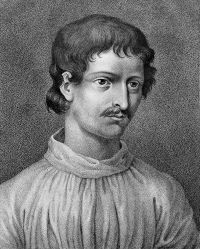
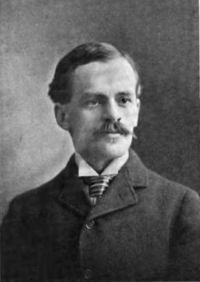
The concept of "opposite" refers to an entity exhibiting characteristics that inversely contrast with another while retaining shared features. Philosophers and writers have long examined this duality: Giordano Bruno associated vice with opposition, Rousseau promoted divergent methods toward tradition, and Alfred H.
Lloyd viewed contradictions as fundamental to existential change. Plato pondered whether all opposites give rise to one another, while Gerald Stanley Lee emphasized their existence within human nature. These viewpoints together demonstrate opposition not merely as negation, but as a dynamic force shaping the complexity of reality.
Quotes about “opposite”
 Jean-Jacques Rousseau,
Emile
(1911)
Jean-Jacques Rousseau,
Emile
(1911)
“ ‘Take the opposite course to that prescribed by custom,’ he wrote, ‘and you will almost always do right.’ We may doubt whether this blind approach is sound. ”
 Johann Gottlieb Fichte,
Characteristics of the Present Age
(1806)
Johann Gottlieb Fichte,
Characteristics of the Present Age
(1806)
“ Should any one then take up the opposite position he is of course in error,—which is absurd: and hereupon it shows, in striking examples, how entirely different the opposite view is from its own, and that in no single point can they coalesce ”
 Giordano Bruno,
The Heroic Enthusiasts (Gli Eroici Furori…
Giordano Bruno,
The Heroic Enthusiasts (Gli Eroici Furori…
“ On the contrary, I say they are one and the same virtue; because the vice is there where the opposite is; the opposite is chiefly there where the extreme is; the greatest opposite is the nearest to the extreme ”
 Alfred H. Lloyd,
The will to doubt
Alfred H. Lloyd,
The will to doubt
“ Where experience is contradictory, then, there is movement, whether for that which is known or for him that has the knowledge. In your character or mine, so like a lover's unselfish selfishness in its apparent inconsistencies, in our double views about reality or unity or law, in a subjective-objective science, in an agnostic philosophy, in all these the contradictions are only the marks of essential unrest, of necessary movement, that make the picture possible. For a world of opposites there can be no peace. ”
Gerald Stanley Lee, The Lost Art of Reading
“ Infinite opposites of knowledge, recluses and separates of knowledge are gathered and can be seen gathered every day in almost any man, in the glance of his eye, in the turn of his lip, or in the blow of his fist. ”
 Hamilton Wright Mabie,
Books and Culture
Hamilton Wright Mabie,
Books and Culture
“ The law of opposites under which men live is very strikingly brought out in the endeavour to secure a sound and intelligent adjustment to one's time,--a relation intimate and vital, and at the same time deliberately and judicially assumed. ”
Various, The Monist, Vol. 1, 1890-1891
“ And so I shall only hastily point to the fact, that the contrariety and oppositeness that permeates the world and all our thought about the world also comes sharply to light in the case of these two philosophers, not to their mutual destruction, but to the heightenment of the effect by the contrast. ”

Various, The Atlantic Monthly, Volume 04…
“ He saw nothing but the most innocent surprise and delight. All the slumbering poetry within her seemed to awaken at the presence of her beautiful neighbor,—as when one, for the first time, stands before the great revelations of Art. Mary's cheek glowed, her eyes seemed to grow deep with the enthusiasm of admiration, and, after a few moments, it seemed as if her delicate face and figure reflected the glowing loveliness of her visitor, just as the virgin snows of the Alps become incarnadine as they stand opposite the glorious radiance of a sunset sky. ”
 Bertrand Russell,
Why Men Fight
(1917)
Bertrand Russell,
Why Men Fight
(1917)
“ Although, morally and politically, the creative and possessive impulses are opposites, yet psychologically either passes easily into the other, according to the accidents of circumstance and opportunity. ”
 Arthur Hugh Clough,
The Poems and Prose Remains of Arthur Hugh Clough
(1869)
Arthur Hugh Clough,
The Poems and Prose Remains of Arthur Hugh Clough
(1869)
“ Five senses to detect things near, Is this the whole that we are here? Rules baffle instincts—instinct rules, Wise men are bad—and good are fools, Facts evil—wishes vain appear, We cannot go, why are we here? ”
William A. Ross, A Yacht Voyage to Norway, Denmark…
“ This world, too, is certainly a world of incongruities, and the more I see of it, the more I am biased in that way of reflection; and if any one will take the trouble to look at things as they are, abstractedly, and observe how good, bad and indifferent, black, white and blue, are jumbled together, he will not deny me his assent. ”
Frank Frankfort Moore, A Gray Eye or So. In Three Volumes…
“ For bad taste, for indelicacy, for vulgarity, for disregard of sound argument—that is, argument that sounds well—and for general obstinacy, there is nothing to compare with a conscience that remains in moderately good working order. ”
 Theodore Dreiser,
Hey Rub-a-dub-dub: A Book of the Mystery and Wonder and Terror of Life
(1920)
Theodore Dreiser,
Hey Rub-a-dub-dub: A Book of the Mystery and Wonder and Terror of Life
(1920)
“ He should question the things he sees—not some things, but everything—stand, as it were, in the center of this whirling storm of contradiction which we know as life, and ask of it its source and its import. ”
William Caldwell, The Philosophical Review (1892)
“ Is the world so made that only to superficial contemplation or unreflecting consciousness does it appear to be one and without contradiction, but to accurate, earnest thinking, contradictory and illusory? ”
Chapman Cohen, Determinism or Free-Will?
“ What interest, zest, or excitement can there be in achieving the right way, unless we are enabled to feel that the wrong way is also a possible and a natural way—nay, more, a menacing and an imminent way? ”

“ As a matter of fact, I was thinking just then what unaccountable creatures we men and women are! How we ponder, and debate, and fuss over trifles, and then plunge headlong past the big turning-points of life, without a thought of the consequences lurking round the corner. ”
 John Fiske,
Through Nature to God
John Fiske,
Through Nature to God
“ For the moment we exercise conscious choice between one course of action and another, we recognize the difference between better and worse, we foreshadow the whole grand contrast between good and bad. ”
 John Stuart Mill,
Autobiography (Mill) — Chapter II. 1813-1821
(1874)
John Stuart Mill,
Autobiography (Mill) — Chapter II. 1813-1821
(1874)
“ The same slovenliness of thought, and subjection of the reason to fears, wishes, and affections, which enable them to accept a theory involving a contradiction in terms, prevents them from perceiving the logical consequences of the theory. ”
 James Frederick Ferrier,
Blackwood's Magazine
(1838)
James Frederick Ferrier,
Blackwood's Magazine
(1838)
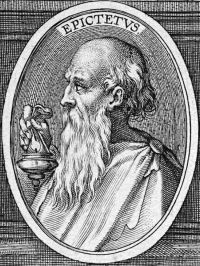
“ In order, therefore, to escape the latter of these alternatives, we will do our best to embrace and comply with the former of them. Such being our reasons, we now nail our colours to the mast, and prepare ourselves for a good deal of polemical discussion on the subject of "the human mind." ”
 Epictetus,
 the Discourses as reported by Arrian…
(1925)
Epictetus,
Epictetus, the Discourses as reported by Arrian…
(1925)
“ But am I to interest you in philosophy? 15How shall I set before you the contradiction in the ideas of the multitude, which leads them to disagree about things good and evil, advantageous and disadvantageous, when you do not know what contradiction itself is? ”
 Josiah Royce,
The World and the Individual, First Series
(1899)
Josiah Royce,
The World and the Individual, First Series
(1899)
“ Take your thinking merely as that which is to correspond to an external Other, and then, indeed, your universal judgments tell you only what this Other is not, and leave, as what it is, merely some of the possibilities still undestroyed. ”
Josiah Royce,
The Conception of God
(1897)
“ Here, what I want is known to me by virtue of its contrast with what another wants, and this contrast, rendering relatively clear my consciousness of my own intent, tends, by its very existence, and by reason of the blindness of my passion, to inflame the opposition. In a more benign, but also, as I judge, in even a more primitive form, appears the simple contrast of ego and non-ego in all my imitative, or explicitly plastic and socially submissive, states of consciousness. ”
 Mary Eleanor Wilkins Freeman,
'Doc.' Gordon
Mary Eleanor Wilkins Freeman,
'Doc.' Gordon
“ Did you ever think that the desire of distinction was one of the most, perhaps the most, intense purely spiritual emotion of the human soul? Look at the way these people live here, grubbing away at the soil like ants. ”
 Laurence Housman,
Ploughshare and Pruning-Hook: Ten Lectures on Social Subjects
Laurence Housman,
Ploughshare and Pruning-Hook: Ten Lectures on Social Subjects
“ Are we going to salve our consciences to-day by mere degrees of comparison, by saying: “We are not so bad as that now”? Perhaps we are not so bad; but the basis on which we continue to act has not altered. ”
Sir Joshua Reynolds, Sir Joshua Reynolds' Discourses
“ An affection to old habits and customs I take to be the predominant disposition of the mind, and novelty comes as an exception; where all is novelty, the attention, the exercise of the mind is too violent. Contrast, in the same manner, when it exceeds certain limits, is as disagreeable as a violent and perpetual opposition; it gives to the senses, in their progress, a more sudden change than they can bear with pleasure. ”
 Ralph Waldo Emerson,
Prudence
(1841)
Ralph Waldo Emerson,
Prudence
(1841)
“ Though your views are in straight antagonism to theirs, assume an identity of sentiment, assume that you are saying precisely that which all think, and in the flow of wit and love roll out your paradoxes in solid column, with not the infirmity of a doubt. So at least shall you get an adequate deliverance. The natural motions of the soul are so much better than the voluntary ones, that you will never do yourself justice in dispute. ”
William James, Talks To Teachers On Psychology…
“ We feel it to be some sort of a product (if such a product only could be calculated) of his inner virtue and his outer place,—neither singly taken, but both conjoined. If the outer differences had no meaning for life, why indeed should all this immense variety of them exist? They must be significant elements of the world as well. ”
 Jean Paul,
Flower, Fruit, and Thorn Pieces…
Jean Paul,
Flower, Fruit, and Thorn Pieces…
“ The fine, delicate, womanly sense of the fit, the proper, the becoming, seems to be torn and scratched by the touch of anything angular and unpolished; these souls, so firmly welded on to the every-day, commonplace, conventional relations of things, cannot understand souls which place themselves in antagonism to these relations. ”
 F. H. Bradley,
Appearance and Reality — Chapter II
(1893)
F. H. Bradley,
Appearance and Reality — Chapter II
(1893)
“ And we seem unable to clear ourselves from the old dilemma, If you predicate what is different, you ascribe to the subject what it is not; and if you predicate what is not different, you say nothing at all. ”
William James, The Will to Believe, and Other Essays in Popular Philosophy
“ Thus, the relations of an ego with its objects, of one time with another time, of one place with another place, of a cause with its effect, of a thing with its properties, and especially of parts with wholes, must be shown to involve contradiction. ”
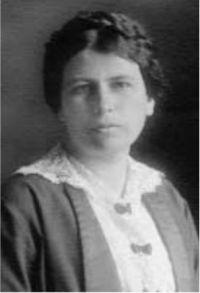 Frances Theresa Russell,
Satire in the Victorian novel
(1920)
Frances Theresa Russell,
Satire in the Victorian novel
(1920)
“ Equipped with this outfit of criteria he looks upon life and finds it complete or wanting, tests his fellow men and approves or condemns, examines all created things and calls them good or bad. But he is so constituted that his acquiescence is likely to be somewhat passive, and his protests active, his commendation grudging and qualified, his condemmation sweeping and thorough. ”
Bernard Henry Becker, Disturbed Ireland
“ Difference of manner may go for a great deal, but beyond and below the resentment caused by a prompt, decisive, and perhaps imperious tone, lies a deeply-rooted sense of wrong—logically or illogically arrived at. ”
James Frederick Ferrier,
Philosophical Works of the Late James Frederick Ferrier
(1875)
“ Our whole natural thinking, as shall be distinctly proved in the body of this work, consists of a series of judgments, each of which involves a mental contradiction,—in other words, controverts a necessary truth or law of reason. ”
Chapman Cohen, Determinism or Free-Will?
“ It would indeed be strange and lamentable if the divorce between feeling and conviction—to adopt a popular classification—was not simply incidental to change, but was also an inexpugnable part of fundamental aspects of human life. ”
Josiah Royce,
The World and the Individual, First Series
(1899)
“ This negative character of the universal judgments holds true of them, as we have said, just in so far as you sunder the external and the internal meanings, and just in so far as you view the Real as the Beyond, and as merely the Beyond. If you turn your attention once more to the realm of the ideas viewed as internal meanings, you see, indeed, that they are constantly becoming enriched, in their inner life, by all this process. ”
Alfred H. Lloyd,
The will to doubt
“ In our recent dismission of the value of the essential defects of experience, and particularly when we came to associate social character with the habit of contradiction, a contrast of the personal and the social was very plainly implied, and some special attention to this contrast, I feel sure, will help us to comprehend more fully what was said at the time, and will be of great advantage also to our general purpose. ”
 Anna Katharine Green,
One of My Sons
Anna Katharine Green,
One of My Sons
“ What are we to think of the man whose nature admits such contradictions! What are we to think of human nature itself! I declare I am sometimes baffled by its operations, and heartily wish that in this present instance I could ascribe them to an unsound mental condition. ”
William James, The Principles of Psychology, Volume 1…
“ Relation, then, to our topic or interest is constantly felt in the fringe, and particularly the relation of harmony and discord, of furtherance or hindrance of the topic. When the sense of furtherance is there, we are 'all right;' with the sense of hindrance we are dissatisfied and perplexed, and cast about us for other thoughts. ”
 Georg Wilhelm Friedrich Hegel,
The Logic of Hegel
Georg Wilhelm Friedrich Hegel,
The Logic of Hegel
“ It remains to note that such phrases as 'Being and Nothing are the same,' or 'The unity of Being and Nothing'—like all other such unities, that of subject and object, and others—give rise to reasonable objection. ”
 Friedrich Nietzsche,
Beyond Good and Evil
(1886)
Friedrich Nietzsche,
Beyond Good and Evil
(1886)
“ Imagine to yourselves a being like Nature, boundlessly extravagant, boundlessly indifferent, without purpose or consideration, without pity or justice, at once fruitful and barren and uncertain: imagine to yourselves INDIFFERENCE as a power—how COULD you live in accordance with such indifference? ”
Lives of Distinguished North Carolinians…
“ But in matters of right and wrong, whatever be the lures, the taunts, or the usages of the world, or whatever the supposed inconveniences of singularity, let judgment and conscience always rule with absolute sway. ”
 Pierre-Simon Laplace,
A Philosophical Essay on Probabilities
(1902)
Pierre-Simon Laplace,
A Philosophical Essay on Probabilities
(1902)
“ The contrary opinion is an illusion of the mind, which, losing sight of the evasive reasons of the choice of the will in indifferent things, believes that choice is determined of itself and without motives. ”
 G. E. Moore,
Ethics — Chapter III
(1912)
G. E. Moore,
Ethics — Chapter III
(1912)
“ So that, for this reason alone, and quite apart from differences of feeling between different men, we shall have to admit, according to our theory, that it is often now true of an action that it was right, although it was formerly true of the same action that it was wrong. ”
 David Hume,
Philosophical Works, v. 2 (of 4…
David Hume,
Philosophical Works, v. 2 (of 4…
“ Is not such an unequal conduct a plain proof of prejudice and passion?Our senses, you say, are fallacious; our understanding erroneous; our ideas, even of the most familiar objects, extension, duration, motion, full of absurdities and contradictions. ”
Alfred H. Lloyd,
The will to doubt
“ Thus, not only does experience, in ways now coming to our view, teem with contradictions, and is contradiction a cause of doubt, but also experience so conditioned is social as well as individual, a matter of personal relations between man and man as well as a matter of the single person's inner responsibility. ”
John Stuart Mill,
A System of Logic, Ratiocinative and Inductive
“ In order to judge how he will act under the variety of desires and aversions which are concurrently operating upon him, we must know how he would act under the exclusive influence of each one in particular. ”
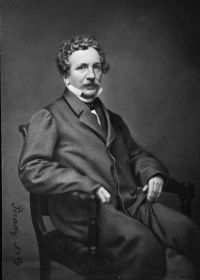 G. P. R. James,
Corse de Leon; or, The Brigand…
G. P. R. James,
Corse de Leon; or, The Brigand…
“ There are some—and perhaps you think me one of them—who are driven by circumstances, led by their passions, or their follies, or their vices, to a state of opposition with the rest of mankind, and who then, when cast out from society, find a thousand specious reasons for warring against it. ”
