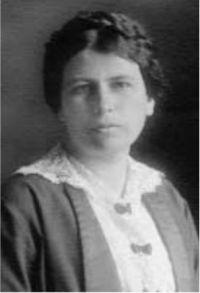
Frances Theresa Russell

Frances Theresa Russell

Summary

Portrait of Frances Theresa Russell Frances Theresa Russell Satire in the Victorian novel (1920)

Nor can all the cavorting fun of Dickens, all the pungent playfulness of Thackeray, all the sardonic gibes of Carlyle, all the grotesque gesturing of Browning, all the winged irony of George Eliot and Matthew Arnold, not even all the quips and cranks in Punch itself, avail to quash the indictment. The Victorian may be defended, appreciated, exonerated even; he may in time succeed in living it down. But to live it down is not quite the same as to have had nothing that had to be lived down.
The Novel has been called the Cinderella of Literature.
Source: Gutenberg

Portrait of Frances Theresa Russell Frances Theresa Russell Satire in the Victorian novel (1920)

The humor is Rabelaisian—or American—in its pure love of size; it floats in a gigantic, inflated balloon, to which a small basket of mental cargo is attached. In this, however, is wrapped up the very important secret that continuous laughter releases one from enchantment and restores one’s true form.
The romantic satirist must have, like any other compound, certain more or less inconsistent traits. There must be the inventive wit of romance plus the shrewd logic of satire. Yet this rare combination does not insure the best satiric results.
Source: Gutenberg

Portrait of Frances Theresa Russell Frances Theresa Russell Satire in the Victorian novel (1920)

In this particular fragment of life as represented in literature, we have the two in paradoxical combination. Personal satire has the effect sometimes of being an ugly little gargoyle made of marble, and sometimes, of a harmonious form done in muddy clay. The ideal union of matter and manner,—an Apollo in marble,—is not for such an impish sculptor as satire. Only to the true artist, poetry, is allotted the task of shaping beauty into rounded perfection.
Source: Gutenberg

Get perspective with Kwize: daily news enlightened by great literature