William Hazlitt

Definition and stakes

William Hazlitt,  The Spirit of the Age; Or, Contemporary Portraits

“ He is not the dupe of the prejudices of others, nor of his own. He is not wedded to any dogma, he is not long the sport of any whim; before he can settle in any fond or fantastic opinion, another starts up to match it, like beads on sparkling wine. A too restless display of talent, a too undisguised statement of all that can be said for and against a question, is perhaps the great fault that is to be attributed to him. Where there is so much power and prejudice to contend with in the opposite scale, it may be thought that the balance of truth can hardly be held with a slack or an even hand ”
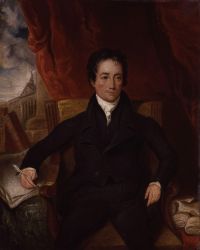
Source: Gutenberg

William Hazlitt,  Political Essays (1819)

“ The spirit of poetry is in itself favourable to humanity and liberty: but, we suspect, not in times like these—not in the present reign.
The spirit of poetry is not the spirit of mortification or of martyrdom. Poetry dwells in a perpetual Utopia of its own, and is, for that reason, very ill calculated to make a Paradise upon earth, by encountering the shocks and disappointments of the world. Poetry, like the law, is a fiction
”
Source: Wikisource

William Hazlitt,  Lectures on the English Poets; Delivered at the Surrey Institution

“ Poetry puts a spirit of life and motion into the universe. It describes the flowing, not the fixed. It does not define the limits of sense, or analyze the distinctions of the understanding, but signifies the excess of the imagination beyond the actual or ordinary impression of any object or feeling. The poetical impression of any object is that uneasy, exquisite sense of beauty or power that cannot be contained within itself; that is impatient of all limit; that (as flame bends to flame) strives to link itself to some other image of kindred beauty or grandeur ”
Source: Gutenberg

Get perspective with Kwize: daily news enlightened by great literature