Horace

Definition and stakes

Grant Showerman,  Horace and His Influence

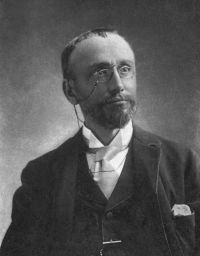
“ Horace the poet-philosopher contemplates Horace the man with the same quiet amusement with which he surveys the human family of which he is an inseparable yet detachable part. It is the universal aspect of Horace which is the object of his contemplation,—Horace playing a part together with the rest of mankind in the infinitely diverting comédie humaine. He uses himself, so to speak, for illustrative purposes,—to point the moral of the genuine; to demonstrate the indispensability of hard work as well as genius; to afford concrete proof of the possibility of happiness without wealth. ”
Source: Gutenberg

A. L. O. E.,  The robbers' cave (1899)

“ Remembering the directions of Raphael, Horace was about to track the upward course of the stream, when he was startled by a faint cry, as of a human voice, which mingled with the rushing noise of the cataract. Horace was not of a superstitious nature; but it is no marvel that, when his nerves were quivering from the tension required for a great effort—at that hour of night—in that desolate place—on the very spot where he believed that, but a few hours before, a miserable man had been swept into eternity— that cry should seem to curdle the blood in his veins. ”
Source: Gutenberg

Sir Theodore Martin,  Horace

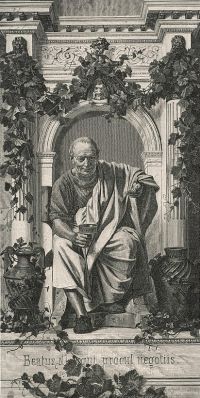
“ Horace is so associated with all the localities, that one would think it the most natural thing in the world to come upon him at any turning. His old familiar haunts rise up about us out of the dust of centuries. We see a short thick-set man come sauntering along, "more fat than bard beseems." As he passes, lost in reverie, many turn round and look at him. Some point him out to their companions, and by what they say, we learn that this is Horace, the favourite of Maecenas, the frequent visitor at the unpretending palace of Augustus, the self-made man and famous poet. ”
Source: Gutenberg

Get perspective with Kwize: daily news enlightened by great literature