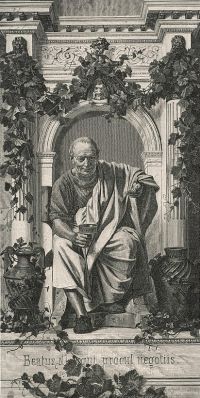
“ ODES OF HORACE. ODE I. TO MÆCENAS. Mæcenas, [1] descended from royal ancestors, O both my protection and my darling honor! There are those whom it delights to have collected Olympic dust in the chariot race; and [whom] the goal nicely avoided by the glowing wheels, and the noble palm, exalts, lords of the earth, to the gods. ”
Mæcenas
Definition and stakes
Mæcenas, a Roman statesman and influential patron of the arts during the Augustan era, represents the convergence of political power and literary sponsorship. His associations with poets such as Horace and Virgil illustrate his role in shaping Roman literature, as reflected in Horace’s odes, which convey both personal loyalty and intellectual fellowship.
Frank Justus Miller’s studies highlight Mæcenas’s refined support for talent, while George Haven Putnam points out his patronage as essential to the literary prosperity of the period. These viewpoints together emphasize Mæcenas’s legacy as a driving force behind lasting cultural accomplishments, linking political aspirations with artistic innovation.
Quotes about “Mæcenas”
Nathan Drake, Shakspeare and His Times [Vol. 1 of 2…
“ But if besotted with foolish vain glory, emulation and contempt, you fall to neglect one another, Quod Deus omen avertat, doubtless it will be as infamous a thing shortly to present any book whatsoever learned to any Mæcenas in England, as it is to be headsman in any free city in Germanie. ”
Quintus Horatius Flaccus, The Odes and Carmen Saeculare (1872)
“ That you, Mæcenas, first should die, My pillar of prosperity. Ah! should I lose one half my soul Untimely, can the other stay Behind it? Life that is not whole, Is that as sweet? The self-same day Shall crush us twain ”
“ Epodes of Horace. ODE I. TO MÆCENAS. Thou wilt go, [1] my friend Mæcenas, with Liburian [2] galleys among the towering forts of ships, ready at thine own [hazard] to undergo any of Cæsar’s dangers. What shall I do? To whom life may be agreeable, if you survive; but, if otherwise, burdensome. Whether shall I, at your command, pursue my ease, which can not be pleasing unless in your company? Or shall I endure this toil with such a courage, as becomes uneffeminate men to bear? ”
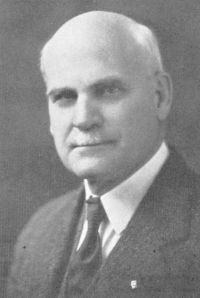 Frank Justus Miller,
Studies in the Poetry of Italy…
Frank Justus Miller,
Studies in the Poetry of Italy…
“ It makes no difference to me if another man is richer or more learned than I. Every man has his own place there. Bore. You don't really mean that? I can scarcely believe it. Horace. And yet such is the case. Bore. You only make me more eager to be admitted. Horace [with contemptuous sarcasm] . O, you have only to wish it: such is your excellence, you'll be sure to gain your point. To tell the truth, Mæcenas is a soft-hearted fellow, and for this very reason guards the first approach to his friendship more carefully. Bore [taking Horace's suggestion in earnest] . ”
Anne C. E. Allinson, Roads from Rome
“ Mæcenas reached for the silver ladle and slowly filled his cup once more from the mixing-bowl before replying. Then he said in a more serious tone than he had used hitherto:—"If you will allow me to say so, Flaccus, that is a cheap criticism to come from the keenest critic in Rome. Is it not possible that you are misled by your personal prejudices? You dislike the young man himself, I know, because he is moody and emotional and uncontrolled, and because he considers his own emotions fit subjects for discussion. A boy, self-centred, melancholy, and in love—what do you want of him?" ”
 George Haven Putnam,
Authors and their public in ancient times
(1893)
George Haven Putnam,
Authors and their public in ancient times
(1893)
“ He found at Rome a literary circle of growing importance. It was the beginning of the Augustan age, and literature was the fashion with the court circles of the new Empire, and therefore with the society leaders who took the court fashions for their model. Through the kindness of Virgil, the young poet was introduced to Mæcenas, the wealthy statesman whose princely patronage of literature has become proverbial. ”
Frank Justus Miller,
Studies in the Poetry of Italy…
“ We give quotations from this satire in the translation of Francis.The poet feels justified in addressing it to his patron, because, though Mæcenas is of noble birth himself, he does not hold in contempt the worthy of lowly descent. Horace says that it is all very well to deny a man political advancement on the score of low birth; but when it comes to denying social advancement upon this score to a man of worth, that is quite unbearable. Horace cannot rightly be envied or criticized for his friendship with Mæcenas, for this came to him purely on his merits and not by chance. ”
Frank Justus Miller,
Studies in the Poetry of Italy…
“ How do you and Mæcenas get on? He's a very exclusive and level-headed fellow, now, isn't he? No one has made a better use of his chances. You would have an excellent assistant in that quarter, one who could ably support you, if only you would introduce yours truly. Strike me dead, if you wouldn't show your heels to all competitors in no time. Horace. Why, we don't live there on any such basis as you seem to think. There is no circle in Rome more free from self-seeking on the part of its members, or more at variance with such a feeling. ”
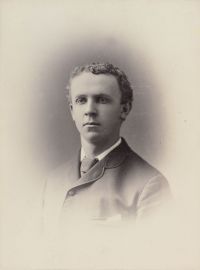 Harold North Fowler,
A History of Roman Literature
Harold North Fowler,
A History of Roman Literature
“ And yet the name of Mæcenas will always occupy an honored place in the history of literature, for it was he who made possible the poems of Virgil and Horace.The greatest of Roman poets is Virgil. Publius Vergilius Maro was born of humble parents, at Andes, a village in the territory of Mantua, October 15, 70 B. C. Mæcenas. His parents can not have been poor, for they gave him a good education, first at Cremona, then at Milan, and later at Rome. He was trained chiefly in rhetoric and philosophy, but the only teacher whose influence seems to have been lasting was the Epicurean philosopher Siro. ”
“ I (as it is difficult to contend with one’s master) follow him. “How stands it with Mæcenas and you?” Thus he begins his prate again. “He is one of few intimates, and of a very wise way of thinking. No man ever made use of opportunity with more cleverness. You should have a powerful assistant, who could play an underpart, if you were disposed to recommend this man; may I perish, if you should not supplant all the rest!” “We do not live there in the manner you imagine; there is not a house that is freer or more remote from evils of this nature. ”
R. W. Browne, A History of Roman Classical Literature
“ BIOGRAPHY OF MÆCENAS—HIS INTIMACY AND INFLUENCE WITH AUGUSTUS—HIS CHARACTER—VALGIUS RUFUS—VARIUS—CORNELIUS GALLUS—BIOGRAPHY OF TIBULLUS—HIS STYLE—CRITICISM OF MURETUS—PROPERTIUS—IMITATED THE ALEXANDRIAN POETS—ÆMILIUS MACER. C. Cilnius Mæcenas. In a literary history it is impossible to omit some account of one, who, although his attempts at poetry were very contemptible, exercised, by his good taste and munificence, a great influence upon literature, and to whom the literary men of Rome were much indebted for the use which he made of his confidential friendship with Augustus. ”
Various, Punch, or the London Charivari…
“ This amazing result they have achieved by foisting on the office typewriter—trés gamine—the poetical output of one of their own number, and exploiting her as a prodigy under the auspices of a patron of the arts—one Lord Glandeville. How this Mæcenas, this connoisseur in taste, was ever imposed upon by the masquerading of such incredible types, and how they could have amassed all that wealth by the publication of serious poetry, the most notorious of drugs on the market—these are among the "things" that we should all "like to know" in case our own professions should fail us. ”
Harold North Fowler,
A History of Roman Literature
“ The first ode of Book I serves as a dedication to Mæcenas, and in the odes immediately following nearly all the metres employed in the three books are used one after the other. Throughout the three books variety of [Pg 122] metre governs the arrangement. The second book opens with an ode addressed to Pollio, and at the beginning of the third book are six odes celebrating in various tones the Roman glory. ”
“ But if ever, facetious Mæcenas, you should have a desire for any such stuff again, I wish that your girl may oppose her hand to your kiss, and lie at the furthest part of the bed. ODE IV. TO MENAS. As great an enmity as is allotted by nature to wolves and lambs, [so great a one] have I to you, you that are galled at your back with Spanish cords, and on your legs with the hard fetter. Though, purse-proud with your riches, you strut along, yet fortune does not alter your birth. ”
Harold North Fowler,
A History of Roman Literature
“ In the seventh Epistle of the first book Horace refuses, at least for the present, an invitation of Mæcenas, on the ground that his health is poor and that he needs the repose of the country and the seashore. At the same time he explains the manner in which he wishes his relation to his patron to be understood. He is not a parasite, and openly says that he must retain his freedom, and can not be at the beck and call even of Mæcenas. In the first Epistle (lines 4 and 10) he refuses to write more odes, because he is no longer young and is turning toward philosophy. The second book of Epistles. ”
Great Men and Famous Women, Vol…
“ It is probable that Mæcenas, while recognizing the talent of the "Bucolics," saw likewise the unreality of their pictures of life, and gave him the subject of the "Georgics" as being in the same line as that the poet seemed to have chosen for himself, and yet as less liable to lead to imitations and pilferings from Greek originals. In fact there was no work that he could follow. In this work we find great improvement in both taste and versification, and the rather uninviting subject is treated and embellished in a way that makes his fame rest in great part on the poem. ”
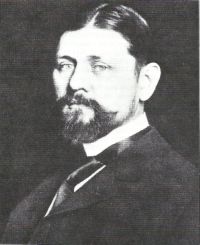 George Frederick Kunz,
Rings for the finger
(1917)
George Frederick Kunz,
Rings for the finger
(1917)
“ The famous literary patron of the Augustan Age, Mæcenas (d. 8 A.D.) , who was at the same time a very able statesman, chose the singular emblem of a frog. That the bloodthirsty Nero should select a design figuring a martyrdom seems very appropriate, and in the flaying of Marsyas by Apollo cut on his ring, he undoubtedly identified himself with the sun god and leader of the muses who took vengeance upon his would-be rival in the musical art. ”
Quintus Horatius Flaccus, The Odes and Carmen Saeculare (1872)
“ The rich man looks into the future, and makes contracts which he may never live to see executed (v. 17—Tu secanda marmora Locas sub ipsum funus") ; meantime Death, more punctual than any contractor, more greedy than any encroaching proprietor, has planned with his measuring line a mansion of a different kind, which will infallibly be ready when the day arrives. Book II, Ode 20. I, whom you call Your friend, Mæcenas. With Ritter I have rendered according to the interpretation which makes dilecte Mæcenas' address to Horace; but it is a choice of evils. ”
“ But, if you would have me live sound and in perfect health, the indulgence which you grant me, Mæcenas, when I am ill, you will grant me [also] when I am afraid of being ill: while [the time of] the first figs, and the [autumnal] heat graces the undertaker with his black attendants; while every father and mother turn pale with fear for their children; and while over-acted diligence, and attendance at the forum, bring on fevers and unseal wills. But, if the winter shall scatter snow upon the Alban fields, your poet will go down to the seaside, and be careful of himself, and read bundled up ”
 Sir Sidney Lee,
A Life of William Shakespeare
Sir Sidney Lee,
A Life of William Shakespeare
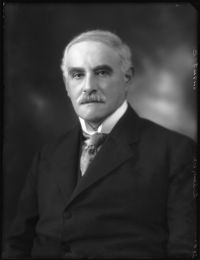
“ Although no specific reference is made outside the twenty ‘dedicatory’ sonnets to the youth as a literary patron, and the clues to his identity are elsewhere vaguer, there is good ground for the conclusion that the sonnets of disinterested love or friendship also have Southampton for their subject. The sincerity of the poet’s sentiment is often open to doubt in these poems, but they seem to illustrate a real intimacy subsisting between Shakespeare and a young Mæcenas. ”
 Alexander Pushkin,
The Prose Tales of Alexander Poushkin…
(1916)
Alexander Pushkin,
The Prose Tales of Alexander Poushkin…
(1916)
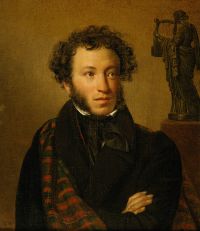
“ I am sure that the gentlemen of this place esteem it an honour to extend every possible protection to such an excellent poet," replied the Italian: "and that is why I have ventured to present myself to you. . . ." "You are mistaken, signor," interrupted Charsky. "The calling of poet does not exist among us. Our poets do not solicit the protection of gentlemen; our poets are gentlemen themselves, and if our Mæcenases (devil take them!) do not know that, so much the worse for them. Among us there are no ragged abbés, whom a musician would take out of the streets to compose a libretto. ”
 Johann Wolfgang von Goethe,
Iphigenia in Tauris
Johann Wolfgang von Goethe,
Iphigenia in Tauris
“ Do human voices never reach this shore? Far as their sound extends, they bear the fame Of deeds unparallel'd. And is the woe Which fills Mycene's halls with ceaseless sighs To thee a secret still?—And know'st thou not That Clytemnestra, with Ægisthus' aid, Her royal consort artfully ensnar'd, And murder'd on the day of his return?— The monarch's house thou honourest! I perceive Thy heaving bosom vainly doth contend With tidings fraught with such unlook'd-for woe Art thou the daughter of a friend? or born Within the circuit of Mycene's walls? ”
 Alice Meynell,
Essays
(1914)
Alice Meynell,
Essays
(1914)
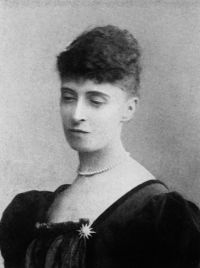
“ I shall not ask the commentators whether Blake used these two words in union or in antithesis. They assuredly have an inseverable union in the art of literature. The songs of Innocence and Experience are for each poet the songs of his own separate heart and life; but to take the cumulative experiences of other men, and to use these in place of the virginal fruit of thought—whereas one would hardly consent to take them for ordering even the most habitual of daily affairs—is to forgo Innocence and Experience at once and together. Obviously, Experience can be nothing except personal and separate ”
 Clement of Alexandria,
../../../
(1885)
Clement of Alexandria,
../../../
(1885)
“ And because He brought all things to bear on the discipline of the soul, He said, “Blessed are the meek: for they shall inherit the earth.” [46] And the meek are those who have quelled the battle of unbelief in the soul, the battle of wrath, and lust, and the other forms that are subject to them. And He praises those meek by choice, not by necessity. For there are with the Lord both rewards and “many mansions,” corresponding to men’s lives. “Whosoever shall receive,” says He, “a prophet in the name of a prophet, shall receive a prophet’s reward ”
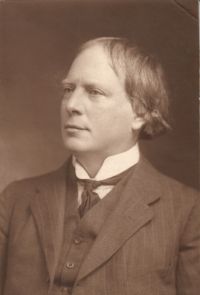
“ There is a very profound significance in all this, and you find a trace of the same instinct in the Greek Tragedies where the final scene, the peripeteia, is not shown on the stage, but described by a "messenger." The fact is that the true artist, so far from being the [203] imitator of life, endures some of his severest struggles in endeavouring to get away from life, and until he can do this he knows that his labour is all in vain. ”

“ Sir, your silkness Clearly mistakes Mecaenas and his house, To think there breathes a spirit beneath his roof, Subject unto those poor affections Of undermining envy and detraction, Moods only proper to base grovelling minds. That place is not in Rome, I dare affirm, More pure or free from such low common evils. There's no man griev'd, that this is thought more rich, Or this more learned; each man hath his place, And to his merit his reward of grace, Which, with a mutual love, they all embrace. ”
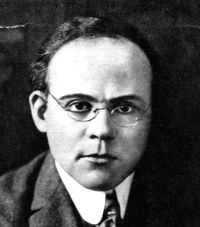 Edgar Lee Masters,
Domesday Book
Edgar Lee Masters,
Domesday Book
“ Which warred upon the flesh and fell in battle; Just as your Elenor Murray joined the church, And did not keep the faith, if truth be told. [Pg 243] Now look, here is a letter in this pamphlet La Menken writes a poet—for she hunts For seers and for poets, lofty souls. And who does that? A woman wholly bad? Why no, a woman to be given life Fit for her spirit in another realm By God who will take notice, I believe. ”
 Walter Lionel George,
A Novelist on Novels
Walter Lionel George,
A Novelist on Novels
“ My general impression of the Medicis is a highly select society, centring round a Platonic academy which radiated the only available culture of the day, the Latin and the Greek. War, intrigue, clerical ambition, passion, and murder, all these made of a century a coloured background against which stand out any flowers that knew how to bloom. ”
 H. L. Mencken,
A Book of Prefaces
H. L. Mencken,
A Book of Prefaces
“ It is not only brilliant on the surface, but mysterious and appealing in its depths. One swiftly forgets his intolerable writing, his mirthless, sedulous, repellent manner, in the face of the Athenian tragedy he instils into his seduced and soul-sick servant girls, his barbaric pirates of finances, his conquered and hamstrung supermen, his wives who sit and wait. ”
William F. Gekle, Arthur Machen: Weaver of Fantasy (1949)
“ He has said that most men, as well as writers, are men of one idea. And most writers create tales that are variations on one theme, that a common pattern, like the pattern of an Eastern carpet, runs through them all. And Machen’s pattern? You will see, when you read him, that literature ‘began with charms, incantations, spells, songs of mystery, chants of religious ecstasy, the Bacchic chorus, the Rune, the Mass.’ And Machen has taken as his symbol and pattern the devices and signs of ecstasy, of the removal from the common life. ”
