Summary

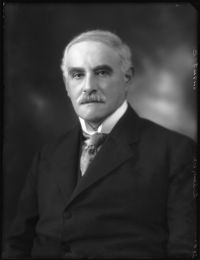
Portrait of Sir Sidney Lee Sir Sidney Lee A Life of William Shakespeare

So mighty a faculty sets at naught the common limitations of nationality, and in every quarter of the globe to which civilised life has penetrated Shakespeare’s power is recognised. All the world over, language is applied to his creations that ordinarily applies to beings of flesh and blood. Hamlet and Othello, Lear and Macbeth, Falstaff and Shylock, Brutus and Romeo, Ariel and Caliban are studied in almost every civilised tongue as if they were historic personalities, and the chief of the impressive phrases that fall from their lips are rooted in the speech of civilised humanity.
Source: Gutenberg

Portrait of Sir Sidney Lee Sir Sidney Lee A Life of William Shakespeare

Only in one scattered series of six sonnets, where he introduced a topic, unknown to other sonnetteers, of a lover’s supersession by his friend in a mistress’s graces, does he seem to show independence of his comrades and draw directly on an incident in his own life, but even there the emotion is wanting in seriousness. The sole biographical inference deducible from the sonnets is that at one time in his career Shakespeare disdained no weapon of flattery in an endeavour to monopolise the bountiful patronage of a young man of rank.
Source: Gutenberg

Portrait of Sir Sidney Lee Sir Sidney Lee A Life of William Shakespeare

This is as much as to say, ‘Let not my mistress in her unkindness kill any of her fair-spoken adorers. Rather let her think all who beseech her favours incorporate in one alone of her lovers—and that one the writer whose name of “Will” is a synonym for the passions that dominate her.’ The thought is wiredrawn to inanity, but the words make it perfectly clear that the poet was the only one of the lady’s lovers—to the definite exclusion of all others—whose name justified the quibbling pretence of identity with the ‘will’ which controls her being.
Source: Gutenberg

Get perspective with Kwize: daily news enlightened by great literature