“ There are people who go to Cornwall once for a holiday and return to it ever and again, when they get the chance, unable to find satisfaction anywhere else; the "atmosphere" of the country has entered into their blood. They think with an ache of the coast in all its cruelty and glory, they picture the bright blue of the rain-washed skies in a burst of sunshine, and they recall the great "hedges" with a foundation or core of stone, generations old, overlaid by an ample covering of turf and grass, a hot-bed for the stonecrop and hart's-tongue, fern, primrose, or foxglove. ”
Cornwall
Definition and stakes
Cornwall, a city in Eastern Ontario, Canada, takes its name from the English Duchy of Cornwall and lies across the St. Lawrence River. Authors such as G. E. Mitton celebrate its rugged coastal beauty and lasting "atmosphere," while Robert Stephen Hawker focuses on its secluded moorlands and ancient terrain. C. A.
Dawson Scott highlights Cornwall’s historical depth, from Neolithic caves to medieval artifacts, emphasizing its charm as a place of constant revelation. These diverse viewpoints unite in recognizing Cornwall’s unique combination of natural strength, cultural richness, and lasting attraction for those seeking both solitude and a connection to the land.
Quotes about “Cornwall”
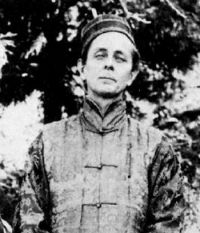 W. Y. Evans-Wentz,
The Fairy-Faith in Celtic Countries
W. Y. Evans-Wentz,
The Fairy-Faith in Celtic Countries
“ Strikingly like Brittany in physical aspects, Southern and Western Cornwall is a land of the sea, of rolling plains and moorlands rather than of high hills and mountains, a land of golden-yellow furze-bloom, where noisy crowds of black crows and white sea-gulls mingle together over the freshly-turned or new-sown fields, and where in the spring-time the call of the cuckoo is heard with the song of the skylark. Like the Isle of Man, from the earliest ages Cornwall has been a meeting-place and a battle-ground for contending races. ”
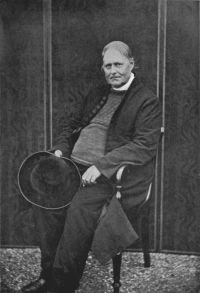 Robert Stephen Hawker,
Footprints of Former Men in Far Cornwall
Robert Stephen Hawker,
Footprints of Former Men in Far Cornwall
“ There is no part of our native country of England so little known, no region so seldom trodden by the feet of the tourist or the traveller, as the middle moorland of old Cornwall. A stretch of wild heath and stunted gorse, dotted with swelling hills, and interspersed with rugged rocks, either of native granite or rough-hewn pillar, the rude memorial of ancient art, spreads from the Severn Sea on the west to the tall ridge of Carradon on the east, and from Warbstow Barrow on the north to the southern civilisation of Bodmin and Liskeard. ”


Related terms
Authors who wrote about “Cornwall”
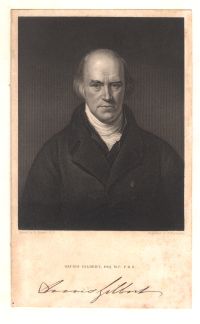 Davies Gilbert
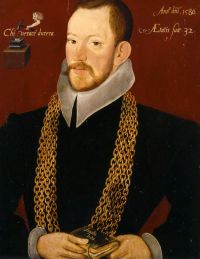 Richard CarewS. Baring-GouldG. E. MittonM. A. CourtneyArthur L. SalmonJ. Henry HarrisRobert Stephen HawkerC. A. Dawson ScottWalter H. TregellasFrederick Wilton Litchfield StockdaleH. R. CoulthardW. Howship DickinsonMary A. RoeJohn Anderton NaylorRobert Hunt
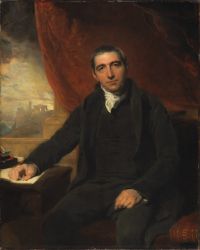 Thomas Taylor
 Arthur Quiller-Couch
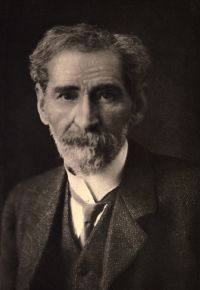 W. H. Hudson
 Wilkie Collins