Summary

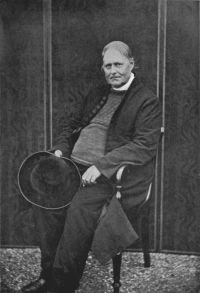
Portrait of Robert Stephen Hawker Robert Stephen Hawker Footprints of Former Men in Far Cornwall

There is no part of our native country of England so little known, no region so seldom trodden by the feet of the tourist or the traveller, as the middle moorland of old Cornwall. A stretch of wild heath and stunted gorse, dotted with swelling hills, and interspersed with rugged rocks, either of native granite or rough-hewn pillar, the rude memorial of ancient art, spreads from the Severn Sea on the west to the tall ridge of Carradon on the east, and from Warbstow Barrow on the north to the southern civilisation of Bodmin and Liskeard.
Source: Gutenberg

Portrait of Robert Stephen Hawker Robert Stephen Hawker Footprints of Former Men in Far Cornwall

The rugged scenery of his abode had its influence upon his work. He was a hewer of words, as Daniel Gumb was a hewer of stone, and his language has the strength of rough masonry wrought in a broad and homely manner out of solid granite. The sea, and the great spaces of lonely moorland that surrounded him, gave to his work a sense of breadth and freedom. He is always at his best in describing his own dearly loved Cornwall, and in particular the wild coast by which all his years were spent.
Source: Gutenberg

Portrait of Robert Stephen Hawker Robert Stephen Hawker Footprints of Former Men in Far Cornwall

Now, in the fashion of her stateliness and in the hue and texture of her garments, there was none among the maidens of old Cornwall like Alice of the Combe. Men sought her far and near, but she was to them all, like a form of graven stone, careless and cold. Her soul was set upon a Granville’s love, fair Sir Beville of Stowe—the flower of the Cornish chivalry—that noble gentleman!
Source: Gutenberg

Get perspective with Kwize: daily news enlightened by great literature