“ I need not further labour the point of the essential solidarity of folklore, whether of its component elements,—belief, custom, and story,—or of its two great phases, savage and civilized. But I think you will feel with me that it is an important point, because the way we regard the subject must affect our method of studying it. If we regard folklore not as a miscellaneous collection of items to be put together like a jig-saw puzzle, but as a whole to be examined and analysed, we shall approach it differently. ”
Folklore
Definition and stakes
Folklore encompasses the expressive culture of social groups, including oral traditions, material artifacts, and customs passed informally across generations. Authors like Alfred Nutt viewed it as surviving cultural elements in less advanced communities, while George Laurence Gomme underscored its significance in tracing humanity’s psychological and social history.
The Folk-Lore Society emphasized its dual role as both a scientific subject and a literary resource, reflecting its lasting importance. Folklore is not fixed; it changes, influencing and being influenced by the identities of communities, from rural traditions to contemporary subcultures, as its evolving transmission highlights its function in shaping collective memory and shared meaning.
Quotes about “folklore”
 William J. Long,
Outlines of English and American Literature
William J. Long,
Outlines of English and American Literature
“ Thus, almost everybody is interested in folklore, especially in the animal stories which are part of the tradition of every primitive tribe; but folklore, as commonly written, is not a branch of fiction but of science. Before it can enter the golden door of literature it must find or create some human character who interests us not by his stories but by his humanity ”
Marillis Bittinger, Tall tales of Cape Cod (1948)
“ An integral part of sectionalized history, American folklore holds its own as a meter by which we may judge and understand those hardy men and women who took the new world in their hands and molded its character for the generations to come. ”
James H. Fassett, The Beacon Second Reader
“ The choice of more than ninety per cent proved to be either folklore stories, pure and simple, or such tales as contained the folklore element. To be sure, children like other stories, but they respond at once with sparkling eyes and animated voices when the fairy tale is suggested. How unwise, therefore, it is to neglect this powerful stimulus which lies ready at our hands! ”
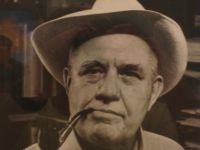 J. Frank Dobie,
Guide to Life and Literature of the Southwest…
J. Frank Dobie,
Guide to Life and Literature of the Southwest…
“ Considered scientifically, folklore belongs to science and not to the humanities. When folk and fun are not scienced out of it, it is song and story and in literature is mingled with other ingredients of life and art, as exampled by the folklore in Hamlet and A Midsummer Night's Dream. In "Indian Culture," "Spanish-Mexican Strains," "Backwoods Life and Humor," "Cowboy Songs," "The Bad Man Tradition," "Bears," "Coyotes," "Negro Folk Songs and Tales," and other chapters of this Guide numerous books charged with folklore have been listed. ”
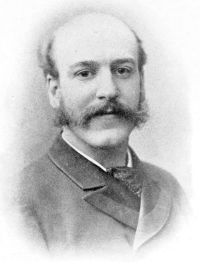 Alfred Nutt,
Folk-Lore
(1898)
Alfred Nutt,
Folk-Lore
(1898)
“ I must at the outset state that the sense which I attach to the term folklore in the present connection is that of elements of culture surviving among the less advanced sections of the community, but discarded by the more advanced. ”
Alfred Nutt,
Folk-Lore
(1898)
“ Whether the idea of survival necessarily belongs to the conception of folklore used in its widest significance is a question that need not be discussed here; in connection with a community like the British, the more advanced members of which have entirely or almost entirely outgrown the philosophical and artistic ideas embodied in folklore, survival must be regarded as the dominant and characteristic note of the latter. Folklore, then, I treat this evening as a survival of elements of culture. ”
 George Laurence Gomme,
Folklore as an Historical Science
George Laurence Gomme,
Folklore as an Historical Science
“ My profound belief in the value of folklore as perhaps the only means of discovering the earliest stages of the psychological, religious, social, and political history of modern man has also entered into my reason for the attempt. ”
Portal:The Folk-Lore Society, Folk-Lore (1899)
“ If such is a possible outcome of the folklorist's labours, directed though these may primarily be to other objects, may he not feel that he is working for mankind at large and for all time? In dwelling as I did upon the import of folklore for English literature in the past, in dwelling as I have just done upon its possible import for British literature in the future, I have no wish to unduly magnify the literary aspect of our studies as against others. ”
George Laurence Gomme,
Folklore as an Historical Science
“ The philosophy of folklore has taken up almost all the time of our scholars and students, and the contribution it makes to the history of the civilised races has not been made out by folklorists themselves. ”
Portal:The Folk-Lore Society, Folk-Lore (1910)
“ Added to these are his pamphlets in the series of Popular Studies in Mythology, Romance and Folk-lore, which are designed to make clear to the "man in the street" the significance of folklore as embodying, in far greater degree than that simple term implies, the serious beliefs of the past, and the rites and customs which are their outward and visible signs. ”
Portal:The Folk-Lore Society, Folk-Lore (1900)
“ Happily the quality of the materials thus brought together has also improved, though we still have only too much cause to harden our hearts, if not to roughen our tongues, against that impertinent person the writer of scraps, the man of scissors and paste, for whom any piece of gossip, or any apocryphal story tricked out with what he may be pleased to call graces of style or local colour, is folklore. ”
Samuel B. Allison, The Story in Primary Instruction…
“ What principles should govern in our choice? As already hinted there are degrees of value, for purposes of instruction, in the immense treasury of folklore, myth and fable. It will be readily conceded that what is known as folklore has qualities rendering it of greatest value, for the first years of school life. It is simple and direct. Its conception of the world is that of pure naturalism. The formal myth and fable belong to later stages of mental development. ”
Portal:The Folk-Lore Society, Folk-Lore (1900)
“ The term folklore, in fact, was confined to scraps of tradition; and anything like the conception of it we now hold was unknown. The Handbook of Folklore, issued by the Society in 1890, marks a long step in advance; and nine or ten years' subsequent experience has taken us beyond even that. Some people are said to prefer being in a minority. If there are such people, I am not one of them. ”
Portal:The Folk-Lore Society, The Folk-Lore Journal (1885)
“ But if the study of folklore has its starting-point in this age, the vestiges of which remain not only in the people but in all classes—just as vestiges of childhood remain during the whole life, both in the adult and in the old man — the study of folk-lore should include that of the people during the whole of its life as well in the actual exercise of its mental faculties, and in its practices and customs of to-day, as in the evidences which it preserves, by its customs and by oral tradition, of its anterior exercise of them, and of its past life. ”
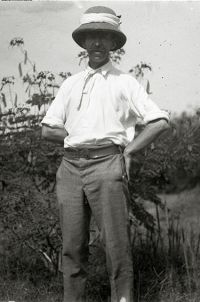 Northcote Whitridge Thomas,
1911 Encyclopædia Britannica, Volume 10…
(1911)
Northcote Whitridge Thomas,
1911 Encyclopædia Britannica, Volume 10…
(1911)
“ The term folklore is also used to designate the science which deals with folklore; the study of survivals involves the investigation of the similar customs, beliefs, &c., of races on lower planes of culture; consequently folklore, as interpreted by the English and American societies, concerns itself as much or more with savage races as with the popular superstitions of the white races. History.—The scientific study of folklore dates back to the first quarter of the 19th century, but folklore was collected long before that date. The organized study of folklore is a thing of recent growth. ”
George Laurence Gomme,
Folklore as an Historical Science
“ It is only here that we can discover the point where we may properly commence the work of comparative folklore. An item of folklore which stands isolated is practically of no use for scientific investigation. It may be, as we have seen, that the myth is in its primary stage as a sacred belief among primitive people, in its secondary or folk-tale stage as a sacred memory of what was once believed, in its final or legendary stage when it does duty in preserving the memory of a hero or a place of abiding interest. ”
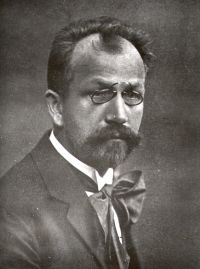 Vilém Mrštík,
Bohemia's claim for freedom
(1915)
Vilém Mrštík,
Bohemia's claim for freedom
(1915)
“ It is difficult not to learn from these great masters of prose, and it will come to it that our folklore, just as our national song, will form a starting-point for a real understanding of the inner substance of stylistic art. ”
Various, Popular Science Monthly (1896)
“ He also strongly recommends the study of folklore, inasmuch as "the stories, the superstitions, the beliefs, and customs which prevail among the unlettered, the isolated, and the young, are nothing else than survivals of the mythologies, the legal usages, and the sacred rites of earlier generations. ”
Portal:The Folk-Lore Society, Folk-Lore (1902)
“ The historical investigation of each custom, tale, superstition, or charm is the primary condition for the solution of some of the problems of folklore. We shall never solve the riddle of the human heart; and we dare not ignore (as is often done) all the intervening chains and links which bind nations and organizations together, nor content ourselves with finding sufficient ground for new elucidatory theories in a single casual parallel, or even in a number of parallels. ”
George Laurence Gomme,
Folklore as an Historical Science
“ The differing races which made up the peoples of Europe before the era of political history must have left their distinctive remains in folklore, if folklore is rightly considered as the traditional survivals of the prehistory period. To get at and classify these remains we must be clear as to the problems which surround inquiry into them. The solution of these problems will place us in possession of a mass of survivals in folklore which are naturally associated with each other, and which stand apart from other survivals also naturally associated with each other. ”
Portal:The Folk-Lore Society, Folk-Lore (1904)
“ It is tradition, the oral handing on of oral knowledge, that is the means by which the most of our folklore material has been, and is being, preserved. Tradition as a process deserves examination. We ought to know what are its conditions, its limits, its possibilities. ”
“ Thus the student of folklore soon finds that he must enlarge his field, and examine, not only popular European story and practice, but savage ways and ideas, and the myths and usages of the educated classes in civilised races. In this extended sense the term ‘folklore’ will frequently be used in the following essays. The idea of the writer is that mythology cannot fruitfully be studied apart from folklore, while some knowledge of anthropology is required in both sciences. ”
Alfred Nutt,
Folk-Lore
(1898)
“ The nature of folklore forbids as accurate a determination of the changes which it has suffered, but they can be noted with sufficient fulness to throw valuable light upon the development of folklore generally. ”
Harold Bayley, Archaic England
“ That our popular customs were the detrita of dramatised mythology, and that many of these customs evidence an astonishing beauty of imagination and depth of thought, will not be questioned except by those unfamiliar with English folklore. ”
“ Matthews remarks, would at least dispel any lingering belief in the old saying that there are only thirty-eight good stories in existence and that thirty-seven of these cannot be told before ladies; and the Retrospective Section would certainly be the constant resort of any true folklorist. For most of the good stories of our time are really folklore, myth survivals, echoes of the past. ”
 Swami Vivekananda,
The Complete Works of Swami Vivekananda…
Swami Vivekananda,
The Complete Works of Swami Vivekananda…
“ There are thousands of folklore, but in every case the sacrifice must have been kept up. ”
Portal:The Folk-Lore Society, Folk-Lore (1910)
“ In recommending the utilization of folklore for filling in the details of the historic culture record, the President not only recalls us to a too-much-forgotten part of our work, but points out the way to enlist the support of many local antiquarianminded people who have little taste for either pre-history or for savage anthropology. ”
 James George Frazer,
Psyche's task
(1913)
James George Frazer,
Psyche's task
(1913)
“ I now turn to folklore, that is, to the survivals of more primitive ideas and practices among peoples who in other respects have risen to a higher plane of culture. That such survivals may be discovered in every civilized nation will hardly now be disputed by anybody. ”
George Laurence Gomme,
Folklore as an Historical Science
“ The first point in the argument for ethnological data being discoverable in folklore is that a survey of the survivals of custom, belief, and rites in any given country shows one marked feature, which results in a dividing line being drawn as between two distinct classes. ”
Sir John Rhys, Celtic Folklore: Welsh and Manx…
“ Here the anthropologist or the student of comparative folklore comes to our aid; for it is an important part of his business to compare the superstitions of one people with those of another; and in the case of superstitions which have lost their meaning among us, for instance, he searches for a parallel among other nations, where that parallel forms part of living institutions. In this way he hopes to discover the key to his difficulties. In the present case he finds savages who habitually look at the name as part and parcel of the person44. ”
 Andrew Lang,
Custom and Myth
(1874)
Andrew Lang,
Custom and Myth
(1874)
“ In proverbs and riddles, and nursery tales and superstitions, we detect the relics of a stage of thought, which is dying out in Europe, but which still exists in many parts of the world. Now, just as the flint arrow-heads are scattered everywhere, in all the continents and isles, and everywhere are much alike, and bear no very definite marks of the special influence of race, so it is with the habits and legends investigated by the student of folklore. ”
George Laurence Gomme,
Folklore as an Historical Science
“ A new stage in comparative folklore must now be entered upon. It must be understood what the effective comparison of a [Pg 178] traditional peasant custom or belief with a savage custom or belief really amounts to. ”
Portal:The Folk-Lore Society, Folk-Lore (1902)
“ The general inclination seems to be to go to the very remote and necessarily obscure origins of all the manifestations of spiritual folklore, and to attempt thereby to solve the manifold problems which the study of the folk presents. ”
Portal:The Folk-Lore Society, Folk-Lore (1900)
“ If, however, we glance back for a moment at the past, we shall, I think, find nothing more remarkable in the history of the science of folklore than the change in the methods of record and study since the establishment of the Society twenty-two years ago. ”
“ The recrudescence of old customs in modern shapes, and the assumption of common forms by practices which have different origins, are matters of firstrate importance to the proper understanding and appreciation of folklore. ”
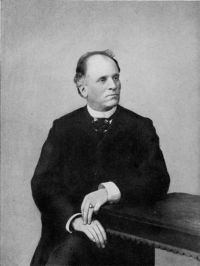 Adolph Francis Alphonse Bandelier,
The Gilded Man (El Dorado) and other pictures of the Spanish occupancy of America
Adolph Francis Alphonse Bandelier,
The Gilded Man (El Dorado) and other pictures of the Spanish occupancy of America
“ Many scholars have drawn upon various classes of folklore as illustrative of problems in mythology, but no attempt has been made until lately to formulate the principles and laws of folklore in general. ”
Alfred Nutt,
Folk-Lore
(1898)
“ Such are the reasons which seem to promise the analyst of British folklore a larger measure of success if he attack the imaginative rather than the practical side of folklore in the endeavour to isolate racial elements. ”
“ Here, in the folklore of the willow-tree, we have Belief and Practice, Myth, Song, and Saying, inextricably mingled,—and this is the point I want to put before you to-night, that Folklore is not an assemblage of miscellaneous items,—it is an essential unity. You cannot separate Belief, Custom, and Myth,— (Songs and Sayings are but concrete forms enshrining these) ,—as matters of study. The three are interdependent, homogeneous. They are in their several ways the expression of the psychology of uncultured man; in other words, they make up the Learning of the Folk,—Folklore. ”
George Laurence Gomme,
Folklore as an Historical Science
“ The great fact necessary to bear in mind is that the people of a modern culture area have an anthropological as well as a national or political history, and that it is only the anthropological history which can explain the meaning and existence of folklore. ”
Portal:The Folk-Lore Society, Folk-Lore (1900)
“ There, with the Catalogue in hand, we can study large divisions of the folklore of a people whose more barbarous traditions have been overlaid and transformed by modes of thought, European indeed, but of a relatively backward type. ”
Portal:The Folk-Lore Society, Folk-Lore (1918)
“ The motto of folklore as of fashion in dress is, Never say die! Does the transvaluation of culture, then, supply the formula we want? I suggest that it will be found adequate. For it certainly conforms to the two criteria already laid down. Firstly, it is dynamic, connoting a process to be examined. Secondly, it has not the unilinear sense of such a term as degeneration, or even, if taken strictly, the "blessed word" evolution, but indicates process without limiting it to a single direction. ”
Northcote Whitridge Thomas,
1911 Encyclopædia Britannica, Volume 10…
(1911)
“ Any classification, however, labours under the disadvantage of separating items which properly belong together. Thus, myths are obviously the form in which some superstitions are expressed. They may also be aetiological in their nature and form an elaborate record of a custom. Eschatological beliefs naturally take the form of myths. Traditional narratives can also be classified under art, and so on. Literature.—The literature of the subject falls into two sharply defined classes—synthetic works and collections of folklore—of which the latter are immensely more numerous. ”
Related terms
Authors who wrote about “folklore”
George Laurence GommeAlfred NuttSir John RhysPortal:The Folk-Lore SocietyVariousNorthcote Whitridge ThomasAndrew LangJames L. HarnerMarillis BittingerJ. Frank DobieJames H. FassettVilém MrštíkWilliam J. LongSamuel B. AllisonHarold BayleyJames George Frazer Oscar WildeSwami VivekanandaAdolph Francis Alphonse Bandelier
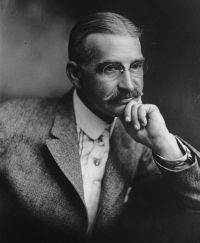 L. Frank Baum