“ For if you wish to understand folk-lore, you must learn to understand the folk. You must study the pearls in the oyster-beds, and not only after they have been gathered, and polished, and set—though it be in gold—for the public eye. You must know what the folk think, and how they act, on subjects such as folk-lore touches, and observe how their minds form the natural background to the superstitions they act on, the customs they practise, the tales they tell. ”
Folk
Definition and stakes
Folk music, a genre encompassing traditional and modern forms, reflects cultural identity through oral transmission, communal practices, and evolving adaptations. Originating in the 19th century, it spans global traditions, from rural ballads to 20th-century revival movements that blended it with rock and other styles. Scholars like Sir E. A.
Wallis Budge emphasized its role in capturing collective human experiences, while Homer Bezalee Hulbert highlighted its ability to illuminate daily life beyond historical accounts. Modern folk, as explored by authors such as Various, underscores the enduring interplay between heritage and innovation, framing folk music as both a repository of the past and a dynamic, living art form shaped by societal transformation.
Quotes about “folk”
Sir E. A. Wallis Budge, The Literature of the Ancient Egyptians
“ The gentle folk weep, the simple folk are glad, and the people of every town say, 'Come, let us blot out these who have power and possessions among us.' Men resemble the mud-birds, filth is everywhere, and every one is clad in dirty garments. ”
Homer Bezalee Hulbert, The passing of Korea (1906)
“ Written history stalks across the centuries in sevenleague boots, leaping from one great crisis to another, and giving but a bird's-eye view of what lies between ; but folk-lore takes you by the hand, leads you down into the valley, shows you the home, the family, the every-day life, and brings you close to the heart of the people. ”
Margaret Bertha Synge, A Short History of Social Life in England (1906)
“ A fierce, free, fearless folk were these ancestors of ours—broad-shouldered, large-limbed giants, with masses of long fair hair and confident grey-blue eyes—utterly reckless of life and limb, pitiless, merciless, and bloodthirsty. ”
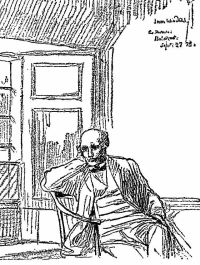 John Richard de Capel Wise,
The New Forest: its history and its scenery
(1863)
John Richard de Capel Wise,
The New Forest: its history and its scenery
(1863)
“ Still more important is a country's folk-lore, as showing the higher mental faculties of the race, in those legends and snatches of song, and fragments of popular poetry, which speak the popular feeling, and which not only contain its past history, but foreshadow the future literature of a country; in those proverbs, too, which tell the life and employment of a nation; and those superstitions which give us such an insight into its moral state. ”
“ For when it is asked, who are the Folk whose Lore we study, the answer must be that they are those who have borne and who bear the burden of the world’s work. Indeed, the Humanity in whose name we are called upon to exercise our highest strivings is nothing other than the Folk whose feelings and inmost thoughts find their sole expression in the utterance and usages which Folk-lore collects, classifies, and reverently examines. ”
Edmund Gosse and Hans Gadow, 1911 Encyclopædia Britannica (1911)
“ For even when they have suffered change or transformation in passing through a new environment the stamp of an individual or a period remains, whereas the folk-song of tradition is the work not of one age, but of many, not of the individual, but the collective mind. ”
Portal:The Folk-Lore Society, The Folk-Lore Journal (1883)
“ But, though these great collections give us an idea of the value of a folk-tale as one factor of social life, we shall perhaps gain a clearer view of the folk-tale as the natural expression of village opinion by analysing a single sample. ”
Jessie L. Weston, The Three Days' Tournament: A Study in Romance and Folk-Lore
“ Of the value of folk-lore and folk-tale as witnesses in the case of a group of stories based largely upon popular tradition, and in their earlier stages of evolution the property of popular story-tellers, we are only slowly becoming aware. ”
Louise Seymour Houghton, The Russian Grandmother's Wonder Tales
“ Folk-tales, of whatever character, speak the more directly home to the hearts of children, whatever their own intellectual environment, in proportion as their setting is most nearly that which naturally belongs to them. ”
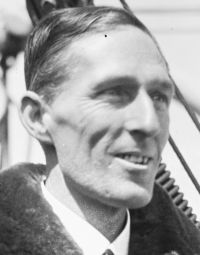 Philip Gibbs,
Adventures in Journalism
Philip Gibbs,
Adventures in Journalism
“ They are impatient of dirt, however picturesque, of ruin, however romantic, of hampering tradition, however ancient. They are, in the mass, common-sense, practical, and good-natured folk, who, in the business of life, cut formalities and get down to the job. ”
Portal:The Folk-Lore Society, The Folk-Lore Journal (1884)
“ Nutt. I strongly urge that Folk-lore is a science by itself, with distinct work of its own to accomplish, but I must protest against its being only another name for anthropology. The sanction at the back of folk-lore is tradition. Thus traditional custom, traditional belief, traditional stories—and no custom or belief originating now, whether in civilized or savage races—can be defined as folk-lore. There can be no modern folk-lore, whereas the psychological phenomena with which anthropology deals exist now, and new facts will present themselves as society progresses. ”
“ IT is only within the last few years that the importance of folk-lore, the popular legends, tales, drolls, and extravagances which have been handed down from generation to generation among the labourers, peasants and youth of a nation, has been frankly recognised. ”
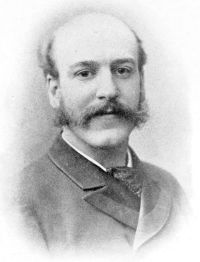 Alfred Trübner Nutt,
Studies on the Legend of the Holy Grail
Alfred Trübner Nutt,
Studies on the Legend of the Holy Grail
“ The folk-lorist has often cause to wonder at the spontaneous flower-like character of the object of his study; folk-tradition seems to obey fixed laws of growth and to be no product of man’s free thought and speech. ”
Henry K. Rowe, Society: Its Origin and Development
“ Social habits they may be called, or folk-ways, as some prefer to name them. These habits are quickly learned by the members of the group, and are passed on from generation to generation by imitation or the teaching of tradition. ”
 Walter Besant,
Mediæval London, Volume 2: Ecclesiastical
Walter Besant,
Mediæval London, Volume 2: Ecclesiastical
“ The wandering folk, the show folk, the ribauds, the people who cannot work, the men and women who can only earn their bread by making music and merriment, by telling stories, singing songs, performing tricks, dancing, turning somersaults, and pandering to the ever-present desire for pleasure,—these people cannot be suppressed ”
Transactions of the Second International Folk-Congress (1892)
“ In these studies of ours every one may help us; from the mother who observes the self-developed manners and the curious instincts of her children, to the clergyman who can record the superstitions of his flock, or the rural usages that survive from a dateless antiquity. Folk-lore, as we shall see, is very much like that study of man which the poet recommends to mankind; it is a study to which every one who keeps his eyes open can contribute. ”
Robert Huntington Fletcher, A History of English Literature
“ Society in all its various classes and occupations is very dramatically presented in the brief description of the 'field of folk,' with incisive passing satire of the sins and vices of each class. 'Gluttonous wasters' are there, lazy beggars, lying pilgrims, corrupt friars and pardoners, venal lawyers, and, with a lively touch of realistic humour, cooks and their 'knaves' crying, 'Hot pies!' But a sane balance is preserved—there are also worthy people, faithful laborers, honest merchants, and sincere priests and monks. Soon the allegory deepens. ”
T. F. Thiselton-Dyer, Domestic folk-lore
“ The study of Folk-lore is year by year receiving greater attention, its object being to collect, classify, and preserve survivals of popular belief, and to trace them as far as possible to their original source. ”
“ BEFORE plunging into the second instalment of my notes on what I call English Folk-Drama, I should like to say that, in addressing folk-lorists on such a subject, I lay claim to no particular knowledge, but fully recognise that amongst those present at this meeting there are probably some whose knowledge of these traditions is more extensive than mine, whose insight into their import is deeper and more widely reaching, whose skill in handling the instruments of the folk-lore laboratory is more expert. ”
Transactions of the Second International Folk-Congress (1892)
“ Further, we have learned that ideas, habits, myths, similar to those of the ancient world and of remote barbaric peoples unknown to the ancient world, endure still among the folk, the more stationary, the more uncultivated classes of modern Europe, among Lincolnshire hinds, Highland crofters, peasants of France, Italy, Germany, Russia. Now Folk-lore approaches the whole topic of these singular harmonies and coincidences from the side of the folk, of the unlearned rural classes in civilised Europe. ”
Mary Katrine Rice Sedgwick, Ácoma, the sky city (1926)
“ The ‘lore of the Folk.’ But the ‘folk’ are the backward people among ourselves, and from their unwritten sagas and stories, their customs and beliefs, we find an unmistakable record of the clash of opposing races, but of a time long antecedent to history.—Alfred Cort Haddon. ”
“ And finally, recognising this initiative among the Folk, and breaking down the distinction between the Folk of the past and of the present, we shall be able to study the lore of the present with happy results, I am sure, for our study of the lore of the past. Survivals are folk-lore, but folk-lore need not be all survivals. We ought to learn valuable hints as to the spread of folk-lore by studying the Folk of to-day. ”
Portal:The Folk-Lore Society, The Folk-Lore Journal (1885)
“ Folk-lore has, in my opinion, most certainly a sociological aspect; it falls, within certain limits, within the sphere of sociology, as will be readily understood if we consider that the term folk signifies people — the human race: that is, man in the aggregate—the collective man, but not man as an individual. ”
“ The spread of popular sayings, even the rise of new words, provided they be folk-words, should be regarded as a part of the study of folk-lore. It would be interesting in this connection to find out and put on record the whole folk-lore of a single person, so as to ascertain how far contradictory conceptions can coexist in the popular mind. ”
Various, Popular Science Monthly (1890)
“ Folk-lore has been defined as the collective sum of the knowledge, beliefs, stories, customs, manners, dialects, expressions, and usages of a community which arc peculiar to itself, and which, taken together, constitute its individuality when compared with other communities. ”
Portal:The Folk-Lore Society, The Folk-Lore Journal (1883)
“ And yet, if we think of it, nothing is more certain than that every folk-story was once alive in the sense that for the people who told it it had a real present meaning, and was told among them, not because it referred to the heavenly bodies, or had been handed down from ancient times, but because it reflected the daily life of the villagers, their ideas of right and wrong, their hopes and fears, the means to ward off harm from their cattle, and to make the crops bear rich fruit. ”
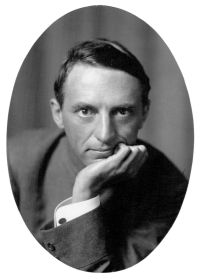 Kenneth Morris,
The Crest-Wave of Evolution
Kenneth Morris,
The Crest-Wave of Evolution
“ Some three hundred of their folk-ballads come down to us, which are as unlike the folk-ballads of Europe as may be. They do not touch on the supernatural; display no imagination; there are no ghosts or fairies; there is no glory or delight in war; there is no glory in anything;—but only an intense desirability in home,—in staying at home with your family, and doing your I work in the fields. ”
Portal:The Folk-Lore Society, The Folk-Lore Journal (1889)
“ The value of the materials with which our Society deals is becoming more and more obvious. That there is nothing "common or unclean," that the folktale crystallizes some thought or speculation of a remote past, and the folkwont some obscure custom, is our main task to show. Whether the story embodies man's serious reflections, or is the outcome of his idle, playful mood, it is this trivial or earnest purpose which we seek to reach. ”
Henry K. Rowe, Society: Its Origin and Development
“ Through such social processes as these—through unconscious suggestion, through communication and discussion that mould public opinion, through changes in environment and the influence of new leaders of thought and action—the evolution of folk life has carried whole races, sometimes to oblivion, but generally out of savagery and barbarism into a material and cultural civilization. ”
Alfred M. Williams, Studies in Folk-Song and Popular Poetry
“ This is not singular, for the folk-songs of almost every nation have this pervading element to a greater or less degree, characterized by shades of temperament and national and historical influences, and showing that the minds of primitive peoples were most deeply affected by the woes of life rather than its joys, and the disappointments rather than the successes of passion, which express themselves in poetry. ”
Portal:The Folk-Lore Society, The Folk-Lore Journal (1883)
“ III.—But out of this reciprocal aid grows a third consideration of the good which may be effected if the students of folk-lore, of psychology, and of education, will go together through the world, like the famous six in the märchen. In studying the origin of folk-tales we are very apt to look upon folk-lore as something quite dead and ancient, a relic to be preserved, and not a custom to be maintained. ”
“ In short, Folk-lore has now been extended to include the whole vast background of popular thought, feeling, and usage, out of which and in contrast to which have been developed all the individual products of human activity which go to make up what is called History. ”
“ I trust some member of the Society with more leisure than I can command will carefully analyse and compare all known versions of this folk-tale group, and will essay to determine whether the facts compel us to assume radiation from a particular centre within historic times, or allow us to regard the tale as common property of the various Aryan races. ”
W. H. Thomas, Some Current Folk-Songs of the Negro
“ I imagine that folk-lore appeals differently to different individuals according to what intellectual or cultural interest predominates their beings. I suppose that the first interest in folk-lore was that of the antiquarian. Then came the interest of the linguist and the literateur. But it seems to me that if the pursuit of folk-lore is to be thoroughly worth while to-day the interest must above all be psychological and sociological. ”
Laura Fry Kready, A Study of Fairy Tales (1916)
“ And because the folk-tale is so pervaded with this quest of the ages in search of truth, and because the child by nature is so deeply imitative, the folk-tale inherently possesses an educational value to stir and feed original impulses of investigation and experiment. ”
“ If I attempt to sum up in one sentence what, so far as I have been able to interpret it, is the chief lesson to be drawn from the past year's work of our Society, and of folk-lore studies generally, I should unhesitatingly affirm it to be the need for formulating the principles of the science of Folk-lore, Once more there is a move forward, and our Society, in this case as in previous departures in the methods of studying folk-lore, takes the lead. ”
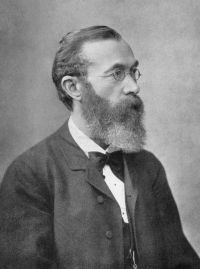 Wilhelm Max Wundt,
Elements of Folk Psychology
Wilhelm Max Wundt,
Elements of Folk Psychology
“ In an account of the total development of mental life, however—and this is the decisive consideration—the 'folk' is the most important collective concept and the one with which all others are associated. The 'folk' embraces families, classes, clans, and groups. These [Pg 5] various communities are not excluded from the concept 'folk,' but are included within it. The term 'folk psychology' singles out precisely the folk as the decisive factor underlying the fundamental creations of the community. ”
 John Greenleaf Whittier,
Personal Poems, Complete
John Greenleaf Whittier,
Personal Poems, Complete
“ From purest wells of English undefiled None deeper drank than he, the New World's child, Who in the language of their farm-fields spoke The wit and wisdom of New England folk, Shaming a monstrous wrong. ”
Portal:The Folk-Lore Society, The Folk-Lore Journal (1883)
“ And not only will the folk-tale classification give us a very good indication of the kind of tale that pleases most, and a series of model plots which we can adapt to our own uses, it will also give us valuable hints in the construction of our stones. Nothing is more remarkable in folk-tales than the dramatic skill with which the materials are handled. ”
Dorothy Scarborough, The Supernatural in Modern English Fiction
“ The Supernatural in Folk-Tales The folk-tale is one of the new fashions in fiction. True, folk-lore has long constituted an important element of literature, constantly recurring in poetry, particularly in the ballad, in the drama, the novel, and short story. ”
The International Folk-Lore Congress of the World's Columbian Exposition… (1898)
“ His views of the supernatural world, the historical legends of places and things, the study of human life, of birth, of death, and of marriage, of customs and ceremonies, of the habits of men of all trades and callings, are appropriately a part of Folk-lore. Folk-medicine, the comparative study of the literature of the people—the tale, the myth, the legend, the ballad, the song, even the nursery-rhyme, the proverb, the riddle, and the nickname, are to be carefully collected, analyzed, and studied. No scrap of information concerning the habits, thoughts, or customs of man, is to be neglected. ”
Related terms
Authors who wrote about “folk”
W. H. Thomas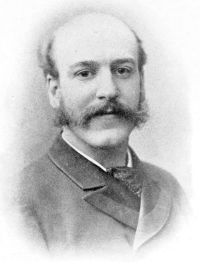 Alfred Nutt
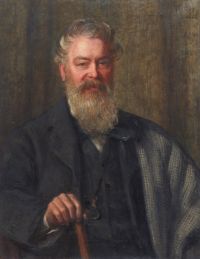 Edwin WaughAlfred M. WilliamsEdmund Gosse and Hans GadowT. F. Thiselton-DyerLaura Fry KreadyAlfred Trübner Nutt
 Elizabeth Cleghorn GaskellJessie L. WestonPortal:The Folk-Lore SocietyVariousHenry K. RoweJohn Greenleaf WhittierWilhelm Max WundtJohn Richard de Capel WiseLouise Seymour HoughtonMargaret Bertha SyngeSir E. A. Wallis BudgeWalter Besant
Alfred NuttEdwin WaughAlfred M. WilliamsEdmund Gosse and Hans GadowT. F. Thiselton-DyerLaura Fry KreadyAlfred Trübner NuttElizabeth Cleghorn GaskellJessie L. WestonPortal:The Folk-Lore SocietyVariousHenry K. RoweJohn Greenleaf WhittierWilhelm Max WundtJohn Richard de Capel WiseLouise Seymour HoughtonMargaret Bertha SyngeSir E. A. Wallis BudgeWalter Besant