“ There has been the hope that by going back to our nurse’s or our mother’s knee we may find the secret of human destinies. But above and beyond this folk-lore appeals to all that which goes to make romance: the myth, the saga, the legend, combine with the mysterious lore of the unseen which lies at the root of what we term superstition. ”
Lore
Definition and stakes
Lore refers to the traditional knowledge, beliefs, and customs passed down through generations, often encompassing myths, legends, and superstitions. Authors such as H. Rider Haggard explored its esoteric power, framing it as a forgotten system of natural mastery, while Lydia Huntley Sigourney linked it to the earth’s instructive presence. Benjamin M.
Palmer highlighted its reflection in historical narratives, and the Folk-Lore Society emphasized its enduring vitality, noting how it persists beneath societal surfaces. Edward B. Tylor connected lore to humanity’s primordial fascination with natural forces, illustrating its role as a bridge between ancient and modern thought. This thematic exploration reveals lore as a dynamic, evolving repository of cultural memory, shaped by both oral tradition and scholarly inquiry.
Quotes about “lore”
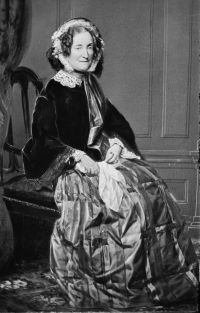 Lydia Huntley Sigourney,
Pocahontas and Other Poems
(1841)
Lydia Huntley Sigourney,
Pocahontas and Other Poems
(1841)
“ My mother Earth doth teach An easy lore. She likes to speak of man. Her levell'd mountains and her cultured vales, Town, tower, and temple, and triumphal arch, All speak of man, and moulder while they speak. ”
Benjamin M. Palmer, Mormonism: a lecture delivered before the Mercantile Library Association of Charleston… (1853)
“ A living writer in our own State, whose name is the synonyme of historic lore, has said: “There is no great working idea in history—no impulse which passes on through whole masses, like a heaving wave over the sea, that has not its own caricature and distorted reflection along with it.” ”

“ For years I have been a student of a lore almost forgotten in this country—a lore which once fully acquired will put the powers that lie hid in Nature at the command of its possessor, that will even enable him to look beyond Nature, and perhaps, so far as the duration of existence is concerned, for awhile to triumph over it. ”
“ But I venture to think that much more of the ancient tradition than is generally believed will reward the patient enquirer. The remarkable fact about the lore of the folk is its extreme vitality. It may not be openly expressed, because an ignorant minority brands it as vulgar or unscientific. But this amorphous group of beliefs, deep rooted in the hearts of our people, never entirely disappears, and fragments of it crop up in the most unexpected places. ”
Portal:The Folk-Lore Society, The Folk-Lore Journal (1885)
“ Folk-lore can never be said to be running into mythology; though, on the contrary, mythology may be said to be perpetually running into folk-lore. It is only when mythology, displaced as a form of religion, becomes perpetuated as popular beliefs that it can be classed as folk-lore and placed side by side in that long category of manners and customs, superstitions and beliefs, old sayings and proverbs, legends and traditions, hero-tales and god-tales, which constitute the lore of the people. ”
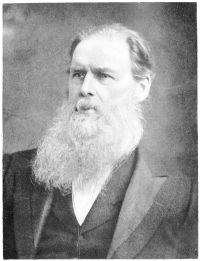 Edward B. Tylor,
Primitive culture, vol. 1 (of 2…
(1871)
Edward B. Tylor,
Primitive culture, vol. 1 (of 2…
(1871)
“ Can so great a part of the legendary lore of classic, barbarian, and mediæval Europe be taken up with the everlasting depiction of Sun and Sky, Dawn and Gloaming, Day and Night, Summer and Winter, Cloud and Tempest; can so many of the personages of tradition, for all their heroic human aspect, have their real origin in anthropomorphic myths of nature? ”
Portal:The Folk-Lore Society, Folk-Lore (1909)
“ I do not invite you, as on the last occasion, on a visit to Fairyland, but ask you to descend with me from the heights of classical literature and of refined society to the depths of popular literature and to that layer of society of which the education has apparently been neglected, and of the inner life of which only a glimpse is allowed to reach the sympathetic eye from time to time. We will descend to the masses, and turn to the unwritten lore of the people. ”
Portal:The Folk-Lore Society, Folk-Lore (1905)
“ The clerical authors drew their inspiration from the religious literature with which they lived in daily connection. They saw things only and solely through the glasses of ancient legendary lore and could not find greater praise for their own saints and heroes than to liken them to those that shone to them from the pages of the old books they so much revered and whose personages seemed to them the acme of human and divine achievement. ”
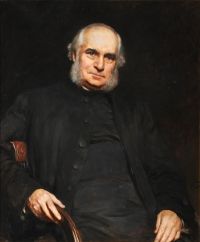 William Stubbs,
Seventeen lectures on the study of medieval and modern history and kindred subjects
(1886)
William Stubbs,
Seventeen lectures on the study of medieval and modern history and kindred subjects
(1886)
“ Most successful teachers of Modern History have passed through the gate of the ancient lore; but if they would look the truth in the face, they would see that the help which that ancient lore gave to the study of the modern, was first in the discipline of the mind, for which it furnishes an incomparable exercise, and secondly in the wealth of illustration with which it provides them ”
Portal:The Folk-Lore Society, Folk-Lore (1902)
“ The historical investigation of each custom, tale, superstition, or charm is the primary condition for the solution of some of the problems of folklore. We shall never solve the riddle of the human heart; and we dare not ignore (as is often done) all the intervening chains and links which bind nations and organizations together, nor content ourselves with finding sufficient ground for new elucidatory theories in a single casual parallel, or even in a number of parallels. ”
Various, Popular Science Monthly (1893)
“ Folk lore is a study to which almost every one can contribute something; (3) folk lore is a study which throws a flood of light on man's past mental evolution and culture-history, as the Germans call the study; (3) folk lore is a study in which the student of religions, the student of morals, the ethnologist, the antiquarian, the psychologist, the historian, the poet, and the littérateur, each finds a different interest and a different value. ”
“ While a story passes per ora virum we call it folk-lore, the moment it gets written down we call it literature, and it ceases to have interest for us quá folk-lorists. I cannot recognise any such hard and fast distinction. Books are but so many telephones preserving the lore of the Folk, or more often burying it and embalming it. For, after all, we are the Folk as well as the rustic, though their lore may be other than ours, as ours will be different from that of those that follow us. ”
“ We are steadily sweeping the counties, one by one, and collecting into our pigeon-holes and into our printed material all that has been gathered by those good old people called antiquaries, who noted facts for their own sake, and left meanings and definitions alone. We should rearrange all these items of folk-lore in proper scientific order, and write the biography of each specific item, whether it be custom, belief, superstition, or myth. ”
“ For when it is asked, who are the Folk whose Lore we study, the answer must be that they are those who have borne and who bear the burden of the world’s work. Indeed, the Humanity in whose name we are called upon to exercise our highest strivings is nothing other than the Folk whose feelings and inmost thoughts find their sole expression in the utterance and usages which Folk-lore collects, classifies, and reverently examines. ”
Albert S. Gatschet, A Migration Legend of the Creek Indians…
“ Whenever this traditionary lore is written down by a civilized people, then the gathering of these tales, half mythic and half historic, forms a commencement of historiography, and by later generations is regarded as valued material for clearing up the dawn of history. ”
John Cuming Walters, The Lost Land of King Arthur
“ What we know is that the interval between language and literature is crowded with shadowy mythological lore, and little of the light flashed back from to-day can illumine the haunted, mystic, twilight time of phantom and superstition. ”
The Rig Veda (1896)
“ O'er all the region with their uniform advance these have spread out the lore that giveth heroes strength. Back, with their course reversed, the others pass away: the pious lengthens life with those that are before. ”
Eleanor M. Ingram, A Man's Hearth
“ The most primitive savage and the most highly developed Caucasian find mystic meanings, symbols, sentiments and, above all, beauty in jewels and precious stones; it is of this magic lore that the distinguished author tells us. In past ages there has grown up a great literature upon the subject—books in every language from Icelandic to Siamese, from Sanskrit to Irish—the lore is as profound and interesting as one can imagine. ”
“ And finally, recognising this initiative among the Folk, and breaking down the distinction between the Folk of the past and of the present, we shall be able to study the lore of the present with happy results, I am sure, for our study of the lore of the past. Survivals are folk-lore, but folk-lore need not be all survivals. We ought to learn valuable hints as to the spread of folk-lore by studying the Folk of to-day. ”
Birds Illustrated by Color Photography Vol… (1898)
“ Thus the quaint and weird things which might seem unaccountable and often repulsive to us, have become, in lieu of book lore, a folk and fireside lore, out of which endless entertainment is secured; and underneath much of this there is a deep and earnest tenderness, such as all hearts know, for many things without apparent reason, that grow into life and ancestry, oft repeated homeside tale, beloved custom and that mysterious hallowing which comes upon changeless places and objects to men. ”
Various, The Wide World Magazine, Vol. 22…
“ It teems with ancient survivals and customs, and is a treasure-house of legendary lore. A certain imagination is displayed in all their tales; sly humour, picturesque turns of phrases, and distinct kindliness peep out everywhere. ”
Nathaniel Sands, The Philosophy of Teaching
“ There is a past which still lives and vivifies the present, but the quaint and filthy imagery in which the ancient priests disguised from the profane—from all but the initiated—the mysteries of their lore, can be of small account to a people whose great duty is the dissemination of light and truth. ”
Portal:The Folk-Lore Society, Folk-Lore (1904)
“ It is tradition, the oral handing on of oral knowledge, that is the means by which the most of our folklore material has been, and is being, preserved. Tradition as a process deserves examination. We ought to know what are its conditions, its limits, its possibilities. ”
Portal:The Folk-Lore Society, Folk-Lore (1899)
“ Folklore we define, in this connection at least, as the persistence of elements of a lower, or at all events of an outworn, stage of culture in the midst of a higher and more living one. But as to the mode and nature of their persistence hardly two investigators are agreed. Some would treat the lore of the folk as simply the weakened and distorted echo of what once engaged the thought or charmed the fancy of the higher minds of the race; others would regard it as the permanent substratum of all systems, social, religious, artistic, by which man has sought to regulate his life. ”
Portal:The Folk-Lore Society, Folk-Lore (1909)
“ In spite of all divergence in detail the Folklore of one nation is essentially that of almost every other nation. The same superstitions, the same legends, the same habits and modes of life at a certain stage of development appertain to them all. ”
Various, Popular Science Monthly (1891)
“ For the solution of such problems as this the young science of folk lore must wait, on the one hand, for a general advance in the field of anthropology, and, on the other, for the accumulation and collation of data exceeding a hundred-fold those accessible to the folk-lore student of to-day. ”
Benjamin Taylor, Storyology: Essays in Folk-Lore…
“ The student of folk-lore has to collect and compare the similar relics of old races, the surviving superstitions and traditions, and the ideas which still live. He is thus led to compare the usages, myths, and ideas of savages with those which remain among the European peasantry—classes which have least altered by education, and have shown the smallest change in progress. It is thus that we find even in our own country and in our own day such things as the beliefs in fairies and divination by smoke, which are as old as time. ”
Portal:The Folk-Lore Society, Folk-Lore (1910)
“ In recommending the utilization of folklore for filling in the details of the historic culture record, the President not only recalls us to a too-much-forgotten part of our work, but points out the way to enlist the support of many local antiquarianminded people who have little taste for either pre-history or for savage anthropology. ”
Portal:The Folk-Lore Society, Folk-Lore (1900)
“ If, however, we glance back for a moment at the past, we shall, I think, find nothing more remarkable in the history of the science of folklore than the change in the methods of record and study since the establishment of the Society twenty-two years ago. ”
Meyer Moldeven, A Grandpa's Notebook
“ PART FIVE LORE, MYTHS AND MEMOIRS Lore adapts to altered circumstances and lifestyles, and to cultures and environments other than the times and places where it had its roots. The familiar may be comfortable, but youngsters also listen eagerly to new twists in a myth, another version of a familiar legend, the results of experiments, and of trials as well as the joys in the human experience. ”
Portal:The Folk-Lore Society, Folk-Lore (1899)
“ In deciding between these opposing views, or between any modifications of them, our usual difficulty is that we lack precise knowledge concerning the history of most items of folklore. In many, perhaps in most, cases the loss is irreparable; we cannot really know, we can only surmise, why a particular rite is practised, in what way a particular belief has obtained credence or a particular legend currency. ”
Portal:The Folk-Lore Society, Folk-Lore (1899)
“ If such is a possible outcome of the folklorist's labours, directed though these may primarily be to other objects, may he not feel that he is working for mankind at large and for all time? In dwelling as I did upon the import of folklore for English literature in the past, in dwelling as I have just done upon its possible import for British literature in the future, I have no wish to unduly magnify the literary aspect of our studies as against others. ”
Frank Sidgwick, Ballads of Romance and Chivalry
“ The lore which has for its foundation permanent and universal acceptance in the hearts of mankind is preserved by tradition, and remains independent of the criteria applied instinctively and unconsciously to artistic compositions. ”
Portal:The Folk-Lore Society, The Folk-Lore Journal (1885)
“ It is true that it is often difficult to draw the line between folk-lore and mythology, to define exactly where the one ends and the other begins, and there are many instances in which the two terms overlap one another ”
Portal:The Folk-Lore Society, Folk-Lore (1900)
“ The term folklore, in fact, was confined to scraps of tradition; and anything like the conception of it we now hold was unknown. The Handbook of Folklore, issued by the Society in 1890, marks a long step in advance; and nine or ten years' subsequent experience has taken us beyond even that. Some people are said to prefer being in a minority. If there are such people, I am not one of them. ”
 Washington Irving,
The Sketchbook of Geoffrey Crayon…
(1819)
Washington Irving,
The Sketchbook of Geoffrey Crayon…
(1819)
“ one of these sequestered pools of obsolete literature to which modern authors repair, and draw buckets full of classic lore, or "pure English, undefiled," wherewith to swell their own scanty rills of thought. ”
Jessie L. Weston, The Three Days' Tournament: A Study in Romance and Folk-Lore
“ Of the value of folk-lore and folk-tale as witnesses in the case of a group of stories based largely upon popular tradition, and in their earlier stages of evolution the property of popular story-tellers, we are only slowly becoming aware. ”
Elizabeth Mary Wright, Rustic Speech and Folk-Lore
“ Here we meet with the outward and visible signs of old superstitions of mythical origin, popular beliefs, faith in charms, and quaint medical lore concerning all kinds of human ills, betokening a strange mixture of Christianity and creeds of heathen times, of pious faith and childlike dread of the unknown and mysterious still existing in the minds of our rural population. ”
Portal:The Folk-Lore Society, Folk-Lore (1910)
“ Added to these are his pamphlets in the series of Popular Studies in Mythology, Romance and Folk-lore, which are designed to make clear to the "man in the street" the significance of folklore as embodying, in far greater degree than that simple term implies, the serious beliefs of the past, and the rites and customs which are their outward and visible signs. ”
Baron John Francis Arundell Arundell of Wardour, Tradition, Principally with Reference to Mythology and the Law of Nations
“ Barely is there a discussion which provokes traditional lore or traditional sentiment which does not bring to light some such thought or experience, re-appearing, like the lines in family feature, after the lapse of several generations. ”
Portal:The Folk-Lore Society, The Folk-Lore Journal (1885)
“ But if the study of folklore has its starting-point in this age, the vestiges of which remain not only in the people but in all classes—just as vestiges of childhood remain during the whole life, both in the adult and in the old man — the study of folk-lore should include that of the people during the whole of its life as well in the actual exercise of its mental faculties, and in its practices and customs of to-day, as in the evidences which it preserves, by its customs and by oral tradition, of its anterior exercise of them, and of its past life. ”
